TSMC Commits Another $100 Billion to Arizona Chip Expansion

Mark Thompson
Major Semiconductor Investment Signals Supply Chain Resilience Push
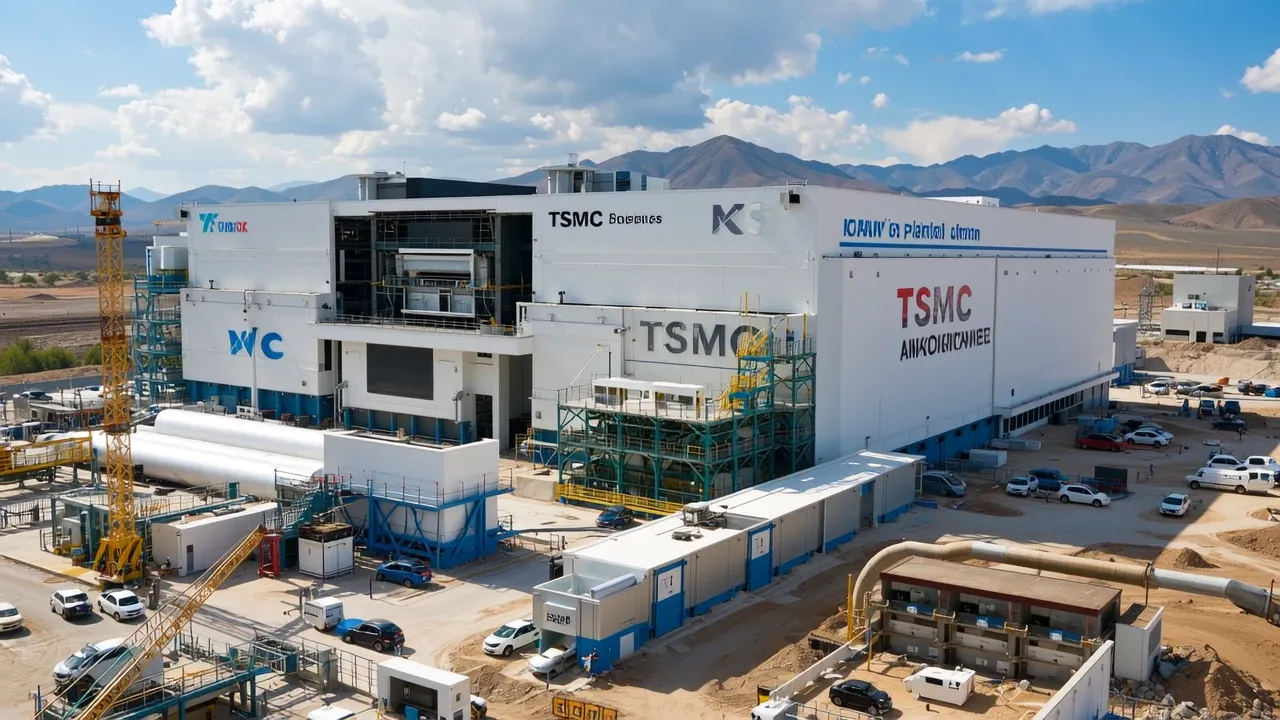
Taiwan Semiconductor Manufacturing Company (TSMC) has announced a substantial new investment of $100 billion into its operations in Arizona. This commitment significantly bolsters the company's presence in the United States, bringing its total projected investment to the region to $265 billion. The expansion includes the construction and commissioning of four new chip fabrication plants (fabs). This massive capital deployment underscores the strategic importance of semiconductor manufacturing within the global technology ecosystem and addresses geopolitical pressures surrounding critical technology supply chains.
This move is part of a broader trend where major technology players are diversifying their manufacturing footprints away from concentrated geographic regions. The establishment of these advanced fabs in Arizona requires complex, multi-stage logistics planning, spanning the procurement of specialized equipment, the transport of raw materials, and the eventual shipment of finished, highly sensitive components. The operational demands placed on the logistics network supporting this scale of production are immense, requiring meticulous management of inventory flow and customs compliance.
For logistics providers, this level of sustained, large-scale manufacturing expansion translates directly into increased demand for specialized transportation solutions. Moving high-value, sensitive semiconductor materials necessitates stringent handling protocols, often requiring specialized temperature control and security measures throughout the entire journey, from supplier to fabrication line. Understanding the intricacies of documentation, such as the proper use of a Bill of Lading (BOL), becomes paramount to maintaining operational continuity.
Industry analysts view this investment not just as a corporate expansion but as a critical component of national industrial strategy. The ability to reliably source and deliver the inputs for these advanced manufacturing processes directly impacts the viability of the entire semiconductor industry. As the complexity of these supply chains grows, managing the total cost of ownership (TCO) for materials becomes a critical factor for manufacturers, requiring deep integration between production schedules and logistics execution Total Cost of Ownership (TCO).
This development highlights the increasing need for robust, geographically diverse, and highly capable logistics infrastructure to support advanced manufacturing. The scale of this commitment, detailed further in reports such as the one found at supplychain247.com/article/tsmc-100-billion-arizona-chip-manufacturing-expansion, signals a long-term commitment to the U.S. market, which will reshape regional logistics demands for years to come. Furthermore, the movement of these high-value goods requires precise tracking, often involving the management of Four-Wall Inventory across multiple sites.
Explore More Articles

Operational Implications for Global Freight Networks
The construction and operation of four new fabs represent a sustained, multi-year logistical undertaking. Beyond the initial capital expenditure, the ongoing operational logistics present unique challenges. Semiconductor manufacturing relies on an incredibly precise flow of materials. Any disruption in the inbound supply chain—whether it involves specialized chemicals, silicon wafers, or advanced machinery—can halt production lines costing billions per day. This necessitates a logistics framework built on redundancy and predictability.
Managing the flow of these components requires sophisticated tracking systems that go beyond standard freight tracking. When dealing with international components arriving via ocean freight, the coordination between the Ocean Bill of Lading and the subsequent domestic transport, often requiring an Inland Bill of Lading, must be seamless. Delays in documentation or transit can severely impact the production schedule.
Governmental oversight and regulatory compliance are also heightened in this sector. As a critical technology supplier, the movement of materials is subject to rigorous scrutiny, requiring adherence to international trade regulations and domestic security protocols, as monitored by agencies such as the U.S. Department of Commerce. The sheer volume of components moving into and out of these Arizona facilities will place significant pressure on regional transportation corridors and warehousing capacity. For businesses managing these complex movements, optimizing the documentation process, including the accurate generation of the Master Bill of Lading, is not merely administrative but a core operational necessity.
Furthermore, the long-term stability of these operations depends on predictable costs. Analyzing the landed cost of inputs, factoring in duties, tariffs, and transportation expenses, is crucial for maintaining competitive pricing for the final chips. This detailed analysis helps stakeholders understand the true Total Landed Cost of the components entering the fabrication process. Reliable logistics partners are essential in providing the data integrity needed for accurate financial forecasting in such high-stakes manufacturing environments. Supporting this growth requires infrastructure investment across all modes of transport, from specialized drayage to long-haul trucking, as noted by recent DOT analyses on infrastructure needs [DOT Report Link Example].

Loading comments...