Malaysia Airlines
Connecting Asia and the world with premium service and seamless travel experiences


Company Overview
Malaysia Airlines is the national flag carrier of Malaysia, headquartered at Kuala Lumpur International Airport. The airline operates an extensive network across Asia, Australia, Europe, and the Middle East, focusing on both passenger and cargo services. As a member of the Oneworld alliance, it leverages strong partnerships to enhance its global reach.
Leadership & Employees
Malaysia Airlines employs approximately 12,000 people globally.
Key Leadership:
- CEO: Ahmad Luqman Mohd Azmi
Employee Statistics:
- Total Employees: ~12,000 globally
- Pilots: ~1,200
- Flight Attendants: ~2,600
Equipment & Technology
Malaysia Airlines maintains a modern fleet that includes the latest Airbus A330neo aircraft, supporting efficient passenger and cargo operations. The airline integrates advanced digital systems and real-time analytics for supply chain management, enhancing operational efficiency and safety. It is committed to state-of-the-art maintenance, repair, and overhaul (MRO) facilities, ensuring high fleet reliability and reduced turnaround times. Continued investment in sustainability and digital passenger services positions Malaysia Airlines among Asia's technologically advanced carriers.
Fleet Composition:
Total Aircraft: 85
| Aircraft Type | Quantity |
|---|---|
| Airbus A350-900 | 1 |
| Airbus A330-300 | 1 |
| Airbus A330neo | 1 |
| Boeing 737-800 | 1 |
| Boeing 737-8 | 1 |
Average Fleet Age: 9.8 years
Warehouses & Logistics Hubs
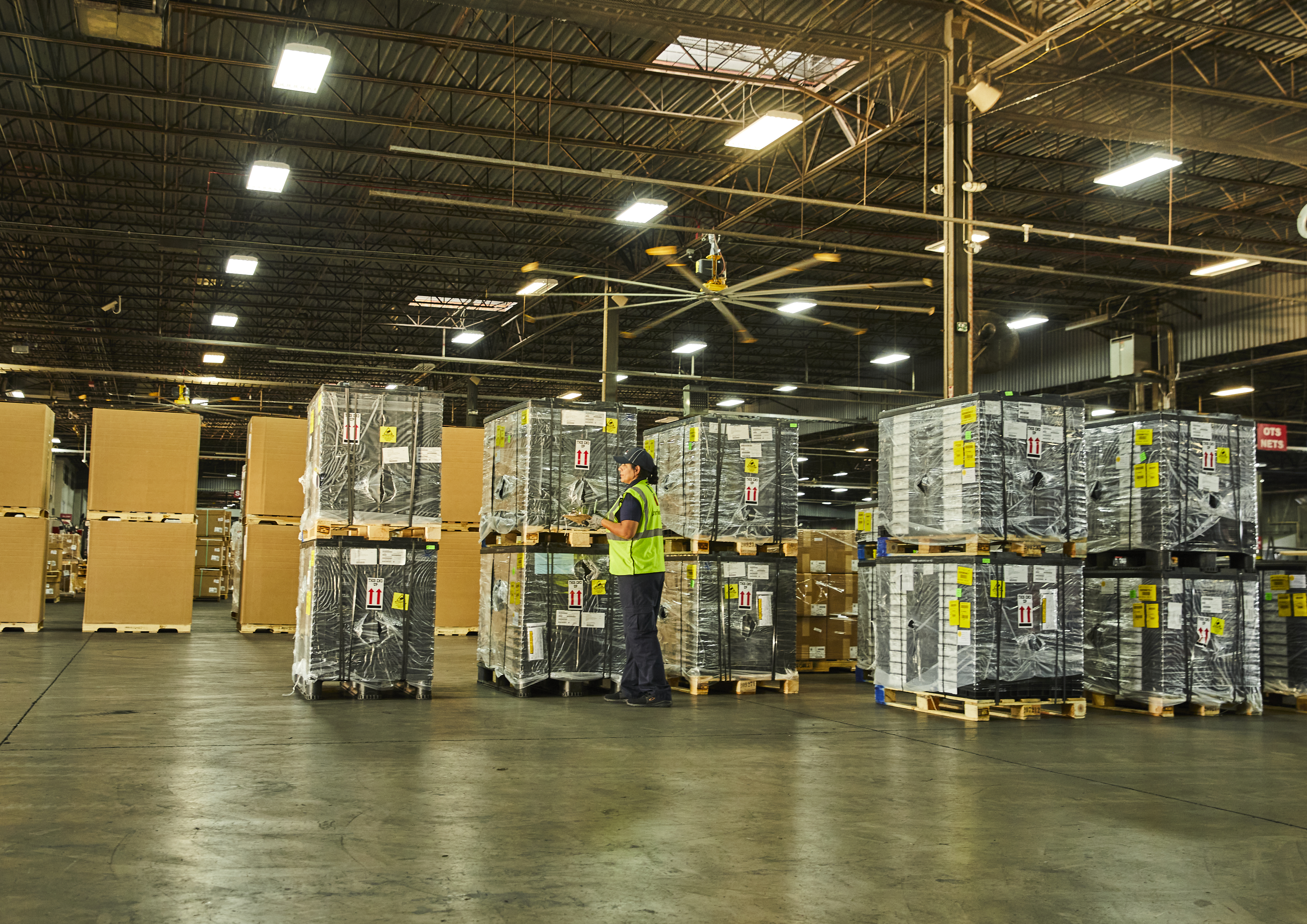
Malaysia Airlines delivers comprehensive logistics and supply chain solutions, with a core focus on reliable cargo management and dedicated spare parts logistics. The airline operates world-class cargo handling facilities at Kuala Lumpur International Airport, backed by integrated ground support and technology-driven logistics systems. Its logistics arm facilitates time-critical shipments and offers tailored solutions for international partners. Strategic partnerships further enhance efficiency and create a seamless connection between cargo, ground services, and passenger operations.
Key Hub Locations:
| Location | Type | Facilities |
|---|---|---|
| Kuala Lumpur (KUL) | main | Main hub facilities |
| Kota Kinabalu (BKI) | secondary | Secondary hub facilities |
| Kuching (KCH) | secondary | Secondary hub facilities |
| Kuala Lumpur (KUL) | cargo | Cargo hub facilities |
Certifications & Compliance:
- • IOSA
- • ISO 9001
Global Locations & Network
Malaysia Airlines operates a robust global network centered on strategic Asian, Australasian, and select European markets, connecting over 50 destinations worldwide. With its primary hub at Kuala Lumpur International Airport, the airline offers extensive connections to key markets in China, India, Australia, and the Middle East. Its membership in Oneworld provides access to hundreds of codeshare routes and loyalty benefits for international travelers. Forward-thinking route planning focuses on emerging demand and partnering with aviation stakeholders for network resilience. Malaysia Airlines' strong cargo logistics capability supports global trade alongside its passenger services. The airline’s competitive advantage lies in bridging Southeast Asia to the world while delivering integrated logistics and aviation solutions.

Partners & Alliances:
Oneworld
alliance
Qantas
codeshare
Japan Airlines
codeshare
British Airways
codeshare
Qatar Airways
codeshare
Cathay Pacific
codeshare
SriLankan Airlines
codeshare
Royal Jordanian
codeshare
Carrier Partners & Alliances
Malaysia Airlines operates a robust global network centered on strategic Asian, Australasian, and select European markets, connecting over 50 destinations worldwide. With its primary hub at Kuala Lumpur International Airport, the airline offers extensive connections to key markets in China, India, Australia, and the Middle East. Its membership in Oneworld provides access to hundreds of codeshare routes and loyalty benefits for international travelers. Forward-thinking route planning focuses on emerging demand and partnering with aviation stakeholders for network resilience. Malaysia Airlines' strong cargo logistics capability supports global trade alongside its passenger services. The airline’s competitive advantage lies in bridging Southeast Asia to the world while delivering integrated logistics and aviation solutions.
Strategic Partnerships:
| Partner | Type |
|---|---|
| Oneworld | alliance |
| Qantas | codeshare |
| Japan Airlines | codeshare |
| British Airways | codeshare |
| Qatar Airways | codeshare |
| Cathay Pacific | codeshare |
| SriLankan Airlines | codeshare |
| Royal Jordanian | codeshare |
Financial Metrics & Stability
Malaysia Airlines has demonstrated steady improvement in financial performance, reflecting successful restructuring, enhanced cost management, and a renewed strategic focus. Revenue trends are improving with increased demand for both passenger and cargo operations in Asia-Pacific, though profitability remains a key focus for long-term sustainability. The airline is well-positioned in the regional aviation market due to its strong brand and network, despite ongoing challenges from global market volatility.
Key Financial Metrics:
| Metric | Value |
|---|---|
| Annual Revenue | $2.2 billion |
| Profit Margin | 4.1% |
| Net Profit | $90.0 million |
| Financial Year | 2024 |
Service Portfolio
Malaysia Airlines provides a comprehensive service portfolio across the aviation value chain, excelling in passenger services, cargo logistics, maintenance and engineering, and ground handling. Its passenger offering includes multiple cabin classes, known for hospitality and modern amenities. The airline’s cargo division delivers specialized solutions including perishables, live animals, and express shipments, with a focus on reliability and safety. Maintenance and engineering services are supported by advanced MRO infrastructure, serving both its own fleet and third-party clients. Ground operations deliver efficient turnaround and seamless connections for passengers and cargo alike. Malaysia Airlines’ commitment to integrated, customer-focused services supports both its own growth and the success of global aviation partners.
Our Services:
First Class
Passenger Service: First Class
Business Class
Passenger Service: Business Class
Economy Class
Passenger Service: Economy Class
general cargo
Cargo Service: general cargo
express freight
Cargo Service: express freight
perishable goods
Cargo Service: perishable goods
live animal transport
Cargo Service: live animal transport
dangerous goods handling
Cargo Service: dangerous goods handling
maintenance and engineering
Additional Service: maintenance and engineering
training
Additional Service: training
ground handling
Additional Service: ground handling
aviation consulting
Additional Service: aviation consulting

Tools & Resources
Tools, portals, and resources for Malaysia Airlines.
Latest News & Updates
Recent developments and updates for Malaysia Airlines.
Navigating growth in Asia's aviation and cargo landscape
As Asia enters a defining decade for trade, travel, and logistics, the region's aviation and air cargo sectors are moving into a new phase of recovery and expansion.
Global air cargo demand rises by 5.6 per cent at start of 2026
The International Air Transport Association (IATA) has released data on global air cargo markets for January 2026, showing that air freight demand began the year on a strong footing, with total demand rising by 5.6 per cent year-on-year.
Air Freight Market to Hit USD 225.26 Bn by 2031: Freight Forwarding held 44.5% of the 2025 Market Share, Says a 2026 Mordor Intelligence Report
According to Mordor Intelligence, the air freight market was valued at USD 160.17 billion in 2025 and is projected to grow from U SD 169.53 billion in 2026 to reach USD 225.26 billion by 2031, growing at a CAGR of 5.
Data & Reports
Official statistics, research reports, and data tracking for Malaysia Airlines.
IATA — Air Freight Statistics
Monthly and annual air cargo market statistics.
DOT BTS — Air Freight Data
Bureau of Transportation Statistics air cargo data.
FAA — Aviation Data & Statistics
Federal Aviation Administration official data.
World Bank — Air Transport Statistics
Global air freight volume and logistics performance.
Seabury Cargo — Market Outlook
Air cargo market trend reports.
Location & Maps
Find Malaysia Airlines on popular mapping services.
Interactive Map
Map Legend
Loading Google Maps...
For More Info
Third-party resources, government portals, ratings, and more.
