Al Najaf International Airport
Iraq’s second largest airport and a major gateway for religious pilgrims visiting Najaf and Karbala.

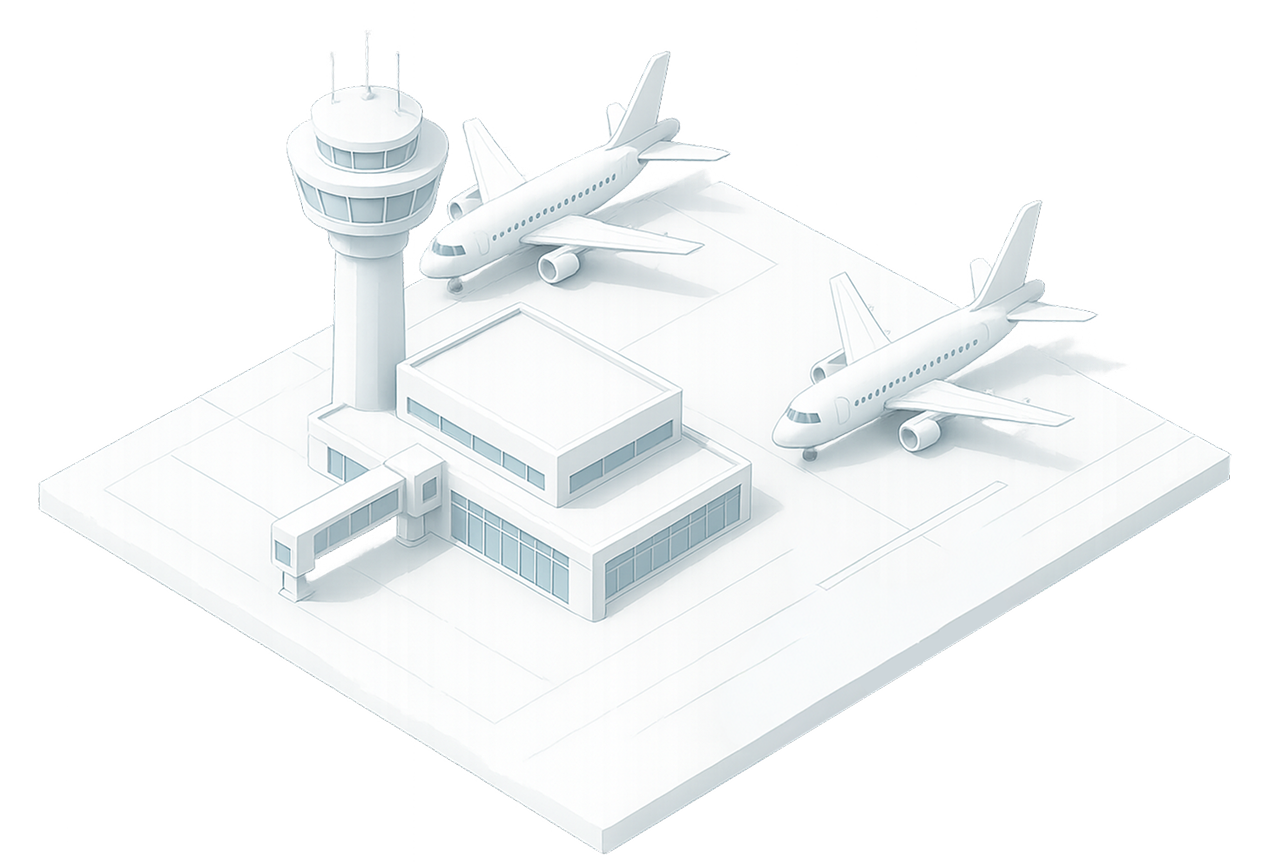

Overview of the Airport
Al Najaf International Airport (NJF) is located on the eastern side of Najaf, about 8 km from the city center. It serves as a primary hub for religious tourism, connecting millions of pilgrims annually to the holy sites of Najaf and Karbala. The airport features modern terminals and facilities, supporting both domestic and international flights.
31.989853, 44.404317
Growth Trend
Passenger traffic has grown steadily, with a 4.5% increase in 2023 driven by rising religious tourism.

Employment
2,300
Staff includes airline, ground handling, security, concessions, and airport authority personnel.

Global Ranking
Market Share of Major Airlines
Capacity Expansion
Ongoing terminal and runway expansions are set to increase annual passenger capacity beyond 4 million.

Technological Advancements
Recent upgrades include modern navigation aids, expanded security screening, and digital passenger information systems.

Sustainability Initiatives
Initiatives include energy-efficient lighting, water conservation, and plans for improved waste management.

Latest News & Updates
Recent developments and updates for Al Najaf International Airport.
Al-Najaf International Airport Welcomes First Flight Since Pandemic Restrictions
Al-Najaf International Airport (NJF) welcomed its first commercial flight since the lifting of COVID-19 related travel restrictions. The flight, operated by Iraqi Airways, marks a significant step in the airport's recovery and resumption of passenger operations.
Al-Najaf International Airport Receives First Private Airline Flight
Al-Najaf International Airport recently welcomed its first private airline flight, marking a new chapter for the airport and opening doors for increased commercial activity. The flight, operated by Baghdad Airways, signifies a move towards diversifying passenger services at NJF.
Al-Najaf Airport Announces New Routes and Partnerships
Al-Najaf International Airport is expanding its network with the announcement of new routes and strategic partnerships, aiming to boost tourism and connectivity. The airport is focusing on attracting more international and domestic flights to enhance its role as a major transportation hub in Iraq.

Operations Logistics & Timelines
Step-by-step process transit times for passengers and cargo.
For Clients
Passenger process times from arrival to gate.
- Arrival & Baggage Claim15-45 mins
- Immigration & Customs30-60 mins
- Ground Transportation to Terminal5-15 mins
- Terminal Navigation10-20 mins
- Gate Arrival10-30 mins
For Employees
Cargo handling deadlines and operational procedures.
- General Cargo Cut-off90 minutes pre-departure
- Hand Carry Cut-off60 minutes pre-departure
- Dangerous Goods Submission Cut-off48 hours pre-departure
- Overweight/Over-Size Cargo Cut-off48 hours pre-departure
- Passenger Baggage Load Completion30 minutes pre-departure
- Cargo Manifest Verification15 minutes pre-departure
- Cargo Loading Commencement10 minutes pre-departure
- Aircraft Pushback Time5 minutes pre-departure
Passengers' Tips & Tricks
- 1
Check Baggage Allowance Carefully
Al Najaf International Airport has strict baggage regulations, particularly regarding oversized or prohibited items. Confirm your airline's specific allowance and ensure all items comply with Saudi Arabian customs rules to avoid delays or confiscation.
- 2
Visa Requirements are Crucial
Ensure you have the necessary visa for entry into Iraq before arriving at NJF. The airport staff will likely verify your visa, and issues can lead to significant delays. Double-check the type of visa required for your nationality.
- 3
Currency Exchange at the Airport
While ATMs are available, exchange rates at the airport currency exchange counters can be less favorable. Consider exchanging some currency beforehand for immediate needs upon arrival.
- 4
Be Aware of Local Customs and Dress Code
Al Najaf is a conservative city. Dress modestly, covering shoulders and knees, particularly when venturing outside the airport. Respect local customs and traditions.
- 5
Airport Transportation Options – Arrange in Advance
Pre-booking your airport transfer is highly recommended. Options include taxis, private cars, and airport shuttle services. Traffic can be heavy, so having a pre-arranged pickup streamlines your journey to your final destination.
Cargo Tips & Tricks
- 1
Understand Baggage Allowance Restrictions
Al Najaf International Airport (NJF) adheres to strict international baggage allowance regulations. Carefully check the specific rules for your airline and destination country regarding weight, size, and prohibited items to avoid delays or extra charges. Documentation requirements for exceeding allowances are often stringent.
- 2
Customs and Immigration Procedures
The customs and immigration process at NJF can be lengthy, particularly during peak travel times. Be prepared to present your passport, visa (if required), and any necessary documentation for your goods. Declare all items accurately and honestly. Allow ample time for processing.
- 3
Utilize Airport Logistics Services
Consider using the airport's cargo logistics services for larger shipments or specialized goods. NJF offers various freight handling options, and utilizing these services can streamline the process and ensure proper documentation and security procedures are followed.
- 4
Security Protocols & ID Checks
NJF maintains strict security protocols. Expect thorough ID checks and screening of all passengers and baggage. Have your travel documents readily available and comply fully with all security instructions from airport personnel.
- 5
Local Transportation Options
Plan your transportation from the airport to your final destination in advance. Taxis and ride-sharing services are available, but traffic can be heavy. Consider pre-booking a transfer or arranging transportation through your hotel to avoid potential difficulties upon arrival.
Tools & Resources
Essential tools, portals, and resources for clients and partners.
Data & Reports
Official statistics, research reports, and data tracking for Al Najaf International Airport.
Wikipedia - Al Najaf International Airport
Provides basic information about the airport, including runway length, location, and expansion plans.
ACI World Data Center
ACI World's data center provides access to a wide range of airport and air travel industry data, including passenger and cargo traffic statistics.
IATA World Air Transport Statistics (WATS)
A comprehensive database of aviation statistics, updated annually with data from over 250 international airlines.
Airport Statistics Najaf | Al Najaf International | NJF
Provides constantly updated airport statistics for Najaf International Airport, including delay indexes and movement charts.
Al Najaf International Airport NJF Flight Statistics
Offers comprehensive flight statistics for Al Najaf International Airport, including on-time performance, delay frequencies, and flight cancellations.
Location & Maps
Find Al Najaf International Airport on popular mapping services.
Interactive Map
Map Legend
Loading Google Maps...
Frequently Asked Questions
Common inquiries about operations and logistics at Al Najaf International Airport.
What is the typical passenger process at Al Najaf International Airport (NJF)?
Passengers arriving at NJF typically go through immigration, baggage claim, and customs. After clearing customs, you can proceed to ground transportation options such as taxis, private cars, or airport shuttle services. The process can vary slightly depending on your nationality and destination, so it's always best to check with your airline for specific details. Allow ample time for these procedures, especially during peak travel periods.
How does cargo handling operate at NJF?
NJF handles cargo through its dedicated cargo terminal. Cargo handlers manage the receipt, storage, and dispatch of both general and perishable goods. Shippers typically arrange for pickup of their cargo from their origin and delivery to their destination through established logistics partners. The airport primarily facilitates cargo transport via air and road.
What transport options are available from Al Najaf International Airport?
A variety of transport options are available from NJF, including taxis (available outside the terminal), private car services, airport shuttle buses, and fixed-route buses that connect to major cities in Iraq, particularly Najaf and Karbala. Rental car services are also available, though regulations and requirements may apply.
Does NJF offer VIP services or private aviation facilities?
While Al Najaf International Airport is developing its infrastructure, currently, it does not have dedicated, fully-fledged VIP services or private aviation facilities like a private terminal. However, arrangements for private transportation and assistance can often be made through ground transportation providers or your airline to ensure a smoother arrival and departure experience.
For More Info
Third-party resources, government portals, ratings, and more.
