Berlin Brandenburg Airport Willy Brandt
Germany's third busiest airport, serving as the main gateway for Berlin and Brandenburg.


Overview of the Airport
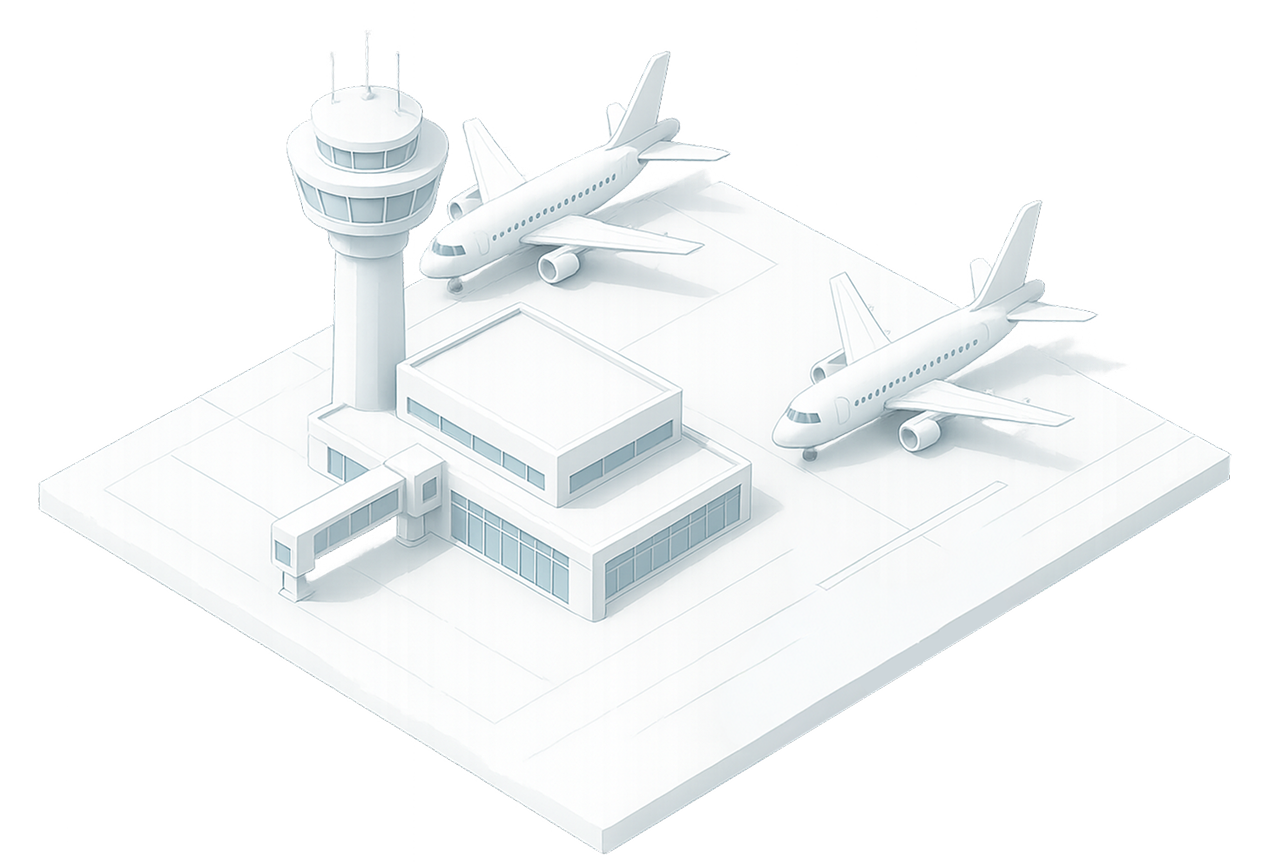
Berlin Brandenburg Airport (BER) is located 18 km southeast of Berlin city center in Schönefeld, Brandenburg. It serves as the sole commercial airport for Berlin and the surrounding region, replacing Tegel and Schönefeld airports. BER is a major hub for European and select intercontinental flights.
52.36667, 13.50333
Growth Trend
Passenger traffic increased by approximately 3.5% year-over-year in 2025, with monthly records set in August and September.

Employment
22,000
Workers include airline staff, ground services, security, concessions, and airport operations.
Global Ranking
Market Share of Major Airlines
Capacity Expansion
Current annual capacity is 46 million passengers, with expansion plans to reach 58 million by 2035.

Technological Advancements
Deployment of biometric screening, automated baggage handling, and digital passenger services enhances efficiency.
Sustainability Initiatives
Implementation of green building standards, solar energy, and sustainable aviation fuel programs aligns BER with EU climate goals.

Latest News & Updates
Recent developments and updates for Berlin Brandenburg Airport Willy Brandt.
Berlin Brandenburg Airport's new terminal opens after years of delays
The new Terminal E has officially opened at Berlin Brandenburg Airport (BER), marking a significant milestone after decades of delays and cost overruns. This opening aims to alleviate congestion and improve the overall passenger experience at the airport.
Berlin Brandenburg Airport: Is this the end of the nightmare?
After years of delays, technical problems, and operational issues, Berlin Brandenburg Airport is finally aiming for a smoother operation with the opening of its new Terminal E. However, concerns remain about the long-term stability and efficiency of the airport.
BER airport: new terminal E opens, but problems persist
The opening of Terminal E at Berlin Brandenburg Airport (BER) represents a step forward, but ongoing issues with baggage handling and security checks continue to plague the airport's operations. Passengers are experiencing significant delays and disruptions despite the new infrastructure.
Operations Logistics & Timelines
Step-by-step process transit times for passengers and cargo.
For Clients
Passenger process times from arrival to gate.
- Arrival & Baggage Claim15-45 mins
- Immigration (if applicable)15-30 mins
- Collecting Luggage & Customs10-30 mins
- Terminal Walk/Shuttle to Gate5-15 mins
- Security Checkpoint15-45 mins
For Employees
Cargo handling deadlines and operational procedures.
- General Cargo Cut-off (All Flights)90 minutes pre-departure
- Hand Baggage Cut-off (All Flights)60 minutes pre-departure
- B737 Cut-Off60 minutes pre-departure
- A320 Cut-Off60 minutes pre-departure
- A330 Cut-Off60 minutes pre-departure
- A380 Cut-Off60 minutes pre-departure
- Passenger Baggage Cut-Off (All Flights)30 minutes pre-departure
- Cargo Charter Cut-Off45 minutes pre-departure
- Cargo Departure – Security Checkpoint60 minutes pre-departure
- Cargo Departure – Loading Dock30 minutes pre-departure
Passengers' Tips & Tricks
- 1
Utilize the Sky Park
BER boasts a massive outdoor Sky Park - a completely free area offering stunning views, food trucks, and a relaxing atmosphere. It's a great place to kill time before or after your flight, especially during inclement weather. Just follow the signs to access it from Terminal 1 or 2.
- 2
Navigating the Terminals is Key
BER is a sprawling airport with two main terminals (T1 & T2) and a central transit area. Understand the connections - T2 is generally considered more luxurious and has direct access to the city center via the Airport Link train. Allow extra time for transfers between terminals, as they can be complex.
- 3
Take Advantage of the Airport Link
The Airport Link is the fastest and most convenient way to reach Berlin city center. It's a direct train that runs every 12-20 minutes and takes around 30 minutes to reach destinations like Hauptbahnhof (main train station). Purchase tickets at ticket machines in the terminals.
- 4
Charging Stations are Available
BER has numerous charging stations available throughout the terminals for your electronic devices. Locate them using the airport map or the airport app. This is particularly useful for international flights and extended layovers.
- 5
Check for Schlage Tower Access
If you’re interested in architecture, the Schlage Tower (former headquarters of the British Secret Intelligence Service) is located in Terminal 1. While access is limited and requires advance booking, it's a fascinating historical site worth considering.
Cargo Tips & Tricks
- 1
Utilize BER's Dedicated Cargo Terminals
BER boasts significant dedicated cargo terminals (Ground Cargo Terminal & Logistics Center). Leveraging these terminals offers streamlined handling, faster connections, and reduced congestion compared to passenger terminals. Pre-booking cargo handling is highly recommended.
- 2
Consider Night Flights for Reduced Congestion
BER’s operational hours are optimized for night flights. Utilizing nighttime cargo operations can minimize delays caused by passenger traffic and improve overall throughput. Coordinate with the airport's ground handling team for best scheduling.
- 3
Plan for Potential Ground Transport Delays
BER is integrated with the wider Berlin transport network. Account for potential delays related to road traffic, especially during peak hours. Consider utilizing BER's Park & Fly facilities for convenient transport connections.
- 4
Communicate Clearly with Airport Operations
Maintaining open communication with BER’s ground handling, security, and air traffic control teams is vital. Provide accurate shipment details, flight schedules, and any potential changes proactively. Using the airport's online tracking system for updates is encouraged.
- 5
Familiarize Yourself with Customs and Border Regulations
Germany, as part of the European Union, has specific customs and border control procedures. Ensure all shipments comply with relevant regulations and have the necessary documentation prepared in advance. The airport’s customs office can provide guidance.
Tools & Resources
Essential tools, portals, and resources for clients and partners.
Data & Reports
Official statistics, research reports, and data tracking for Berlin Brandenburg Airport Willy Brandt.
Traffic Statistics - Berlin Brandenburg Airport
Provides monthly traffic statistics including aircraft movements, passengers, air freight, and air mail. This page reflects data from before the opening of BER on 31 October 2020, when Schönefeld and Tegel were both operating.
Publications - Flughafen Berlin Brandenburg GmbH
Downloads publications and reports issued by Flughafen Berlin Brandenburg GmbH, covering various aspects of the airport's operations and performance.
BER - Overview
Provides a general overview of Berlin Brandenburg Airport (BER), its location, IATA code, and its role as the central air traffic hub for the Berlin-Brandenburg region.
BER Records 1.71 Million Passengers in February - Press Release
A press release detailing passenger figures for February 2025, showing a 8.9% increase compared to February 2024, along with rising cargo volumes.
Verkehrsstatistik - Berlin Schönefeld Airport
Provides monthly traffic statistics, similar to the main 'Traffic Statistics' page but available in German.
Location & Maps
Find Berlin Brandenburg Airport Willy Brandt on popular mapping services.
Interactive Map
Map Legend
Loading Google Maps...
Frequently Asked Questions
Common inquiries about operations and logistics at Berlin Brandenburg Airport Willy Brandt.
What is the typical passenger process for arriving at and departing from BER?
Passengers arriving at BER typically proceed through security checks after clearing passport control. Departure involves checking in luggage, going through security again, and then heading to your gate. The airport utilizes a hub-and-spoke model with several terminals connected by trains and walkways. Clear signage and digital information displays are available throughout the airport to guide passengers.
How does cargo handling operate at BER?
BER operates a state-of-the-art cargo facility, the ‘HANSA Cargo Terminal,’ which is one of the largest in Europe. It utilizes automated processes for handling cargo, including automated guided vehicles (AGVs) for moving pallets and a high-bay warehouse for storage. There are dedicated areas for handling various types of cargo, including general cargo, temperature-sensitive goods, and dangerous goods.
What transportation options are available to and from BER?
BER is exceptionally well-connected. The Airport Express (FEX) train provides a rapid connection to Berlin Hauptbahnhof (main train station) in just 12-18 minutes. Regional and S-Bahn trains also connect to various parts of Berlin. There are numerous bus routes, and taxis are readily available. Furthermore, the airport has a dedicated area for car parking.
Why was BER built and what makes it 'unique' compared to previous Berlin airports?
BER was built due to the significant overcrowding and operational limitations of the former Tempelhof and Tegel airports. Its construction was significantly delayed and over budget, largely due to political complexities and design changes. What makes it unique is its massive scale, its reliance on a hub-and-spoke network with high-speed rail connections, and the integration of cutting-edge technology, particularly in its cargo handling operations, representing a significant investment and a deliberate effort to modernize Berlin's air travel infrastructure.
For More Info
Third-party resources, government portals, ratings, and more.
