Blaise Diagne International Airport
West Africa’s leading airport, serving as Dakar’s main international gateway and regional hub.


Overview of the Airport
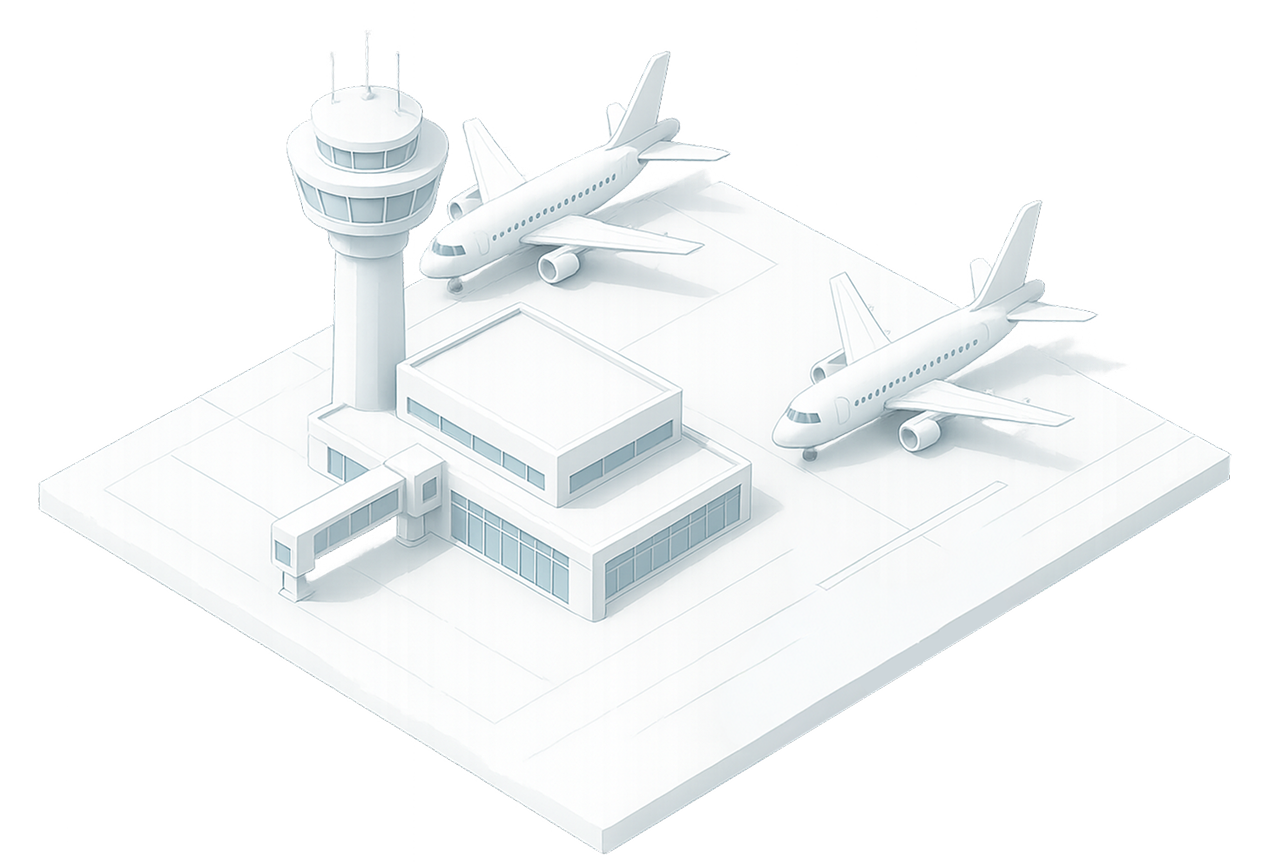
Blaise Diagne International Airport (DSS) is located near Diass, 43 km east of Dakar. It replaced Léopold Sédar Senghor International Airport and is the primary hub for international and domestic flights in Senegal, supporting connectivity across Africa and beyond.
14.6708, -17.0732
Growth Trend
Passenger traffic increased by 4.2% year-over-year in 2024.

Employment
3,500
Workers include airline staff, ground services, security, concessions, and airport operations.

Global Ranking
Market Share of Major Airlines
Capacity Expansion
Expansion projects will increase annual passenger capacity to over 5 million and cargo capacity to 70,000 tons by 2030.

Technological Advancements
Deployment of biometric screening, e-gates, and digital baggage tracking enhances security and efficiency.

Sustainability Initiatives
Implementation of solar energy systems and carbon accreditation programs supports environmental sustainability.

Latest News & Updates
Recent developments and updates for Blaise Diagne International Airport.
Air Senegal launches first commercial flight at Blaise Diagne Airport
Air Senegal, Senegal’s national carrier, took to the skies for its inaugural commercial flight departing from Blaise Diagne International Airport (DSS) on June 18, 2023.
Blaise Diagne Airport welcomes first international flight after $827m upgrade
The recently completed $827 million upgrade to Blaise Diagne International Airport (DSS) saw its first international flight, Air Senegal’s flight to Lisbon, on July 19, 2023.
Senegal’s Blaise Diagne Airport surpasses expectations in first month of operation
Blaise Diagne International Airport (DSS) reported impressive passenger numbers in its first month of operation, exceeding initial projections and highlighting the success of the airport’s recent development.
Operations Logistics & Timelines
Step-by-step process transit times for passengers and cargo.
For Clients
Passenger process times from arrival to gate.
- Arrival & Baggage Claim15-30 mins
- Check-in/Security Screening20-45 mins
- Immigration (if required)15-45 mins
- Transfer to Gate5-15 mins
- Boarding10-20 mins
- Final Security Check (if needed)5-10 mins
For Employees
Cargo handling deadlines and operational procedures.
- General Cargo Cut-off60 mins pre-departure
- Baggage Manifest Submission45 mins pre-departure
- Security Screening & X-ray30 mins pre-departure
- Weighing & Measurement15 mins pre-departure
- Label Verification & Documentation Check10 mins pre-departure
- Staging & Loading Preparation5 mins pre-departure
- Loading onto AircraftVariable (dependent on aircraft & load capacity)
Passengers' Tips & Tricks
- 1
Arrive Early
Allow extra time for potential delays, including immigration, baggage claim, and security. Traffic around Blaise Diagne International Airport can be unpredictable.
- 2
Check Visa Requirements
Ensure you have the necessary visa for your destination country well in advance. Processing times can vary, and last-minute visa denials are common.
- 3
Currency Exchange
Exchange currency at the airport's official exchange counters or reputable banks before your flight. Airport exchange rates are generally higher.
- 4
Mobile Data & Communication
Purchase a local SIM card upon arrival for affordable data and communication. International roaming charges can be extremely expensive.
- 5
Baggage Handling
Label your luggage clearly with your full name, address, and phone number. Consider using luggage straps for added security.
Cargo Tips & Tricks
- 1
Book in Advance
Booking cargo shipments well in advance, particularly during peak seasons (like the Harmattan winds), is crucial to secure space on flights and avoid last-minute surcharges. This allows Blaise Diagne International Airport to manage capacity effectively.
- 2
Understand Local Regulations
Thoroughly research and comply with Senegalese customs regulations, including import/export permits, documentation requirements, and hazardous goods restrictions. DSS handles a significant amount of international trade, so accuracy is vital.
- 3
Leverage Strategic Partnerships
Develop strong relationships with local freight forwarders, customs brokers, and logistics providers experienced in operating at DSS. These partnerships can streamline processes and ensure smooth handling.
- 4
Utilize Airport Terminal Expertise
Blaise Diagne International Airport's terminal operators have expertise in handling cargo. Engage them early in the process for optimal routing, documentation assistance, and potential expedited clearance.
- 5
Consider Regional Hubs
Evaluate utilizing nearby regional hubs (e.g., Lisbon, Casablanca) for transshipment if direct flights to DSS are limited or costly. This can optimize routing and potentially reduce overall transit times.
Tools & Resources
Essential tools, portals, and resources for clients and partners.
Data & Reports
Official statistics, research reports, and data tracking for Blaise Diagne International Airport.
Blaise Diagne International Airport - Annual Report 2022
The official annual report detailing the airport's performance metrics, financial information, and strategic goals for 2022.
Blaise Diagne International Airport - Strategic Plan 2023-2028
Outlines the airport's strategic vision, objectives, and key initiatives for the next six years. Focuses on development and operational improvements.
Blaise Diagne International Airport - Environmental Management System (EMS)
Details the airport's commitment to environmental sustainability, including implemented policies, monitoring programs, and targets.
Blaise Diagne International Airport - Operational Statistics – Q3 2023
Provides data on passenger numbers, aircraft movements, and cargo handling for the third quarter of 2023. Offers key indicators for operational performance.
Blaise Diagne International Airport – Website - About Us
Provides background information on the airport, including its history, location, and key stakeholders. Although not a dedicated report, it’s an official page with crucial organizational details.
Location & Maps
Find Blaise Diagne International Airport on popular mapping services.
Interactive Map
Map Legend
Loading Google Maps...
Frequently Asked Questions
Common inquiries about operations and logistics at Blaise Diagne International Airport.
What is the passenger processing procedure at DSS?
Passengers typically proceed through check-in, security screening, and then to their departure gate. Biometric scanning and baggage drop-off are available at most counters. Customs and immigration are located post-security.
How does cargo/freight handling operate at Blaise Diagne?
DSS handles cargo through a dedicated freight terminal equipped with loading docks and storage facilities. Customs clearance for freight is conducted within this terminal prior to onward transport. Handling typically involves customs brokers and dedicated logistics providers.
What transport options are available to and from DSS?
Taxis and private car services are readily available outside the airport terminal. Airport buses provide fixed-route service to various points in Dakar city. Ride-hailing services operate within the airport transport zone.
For More Info
Third-party resources, government portals, ratings, and more.
