Düsseldorf Airport
Germany's fourth-busiest airport and a key hub for the Rhine-Ruhr metropolitan region.

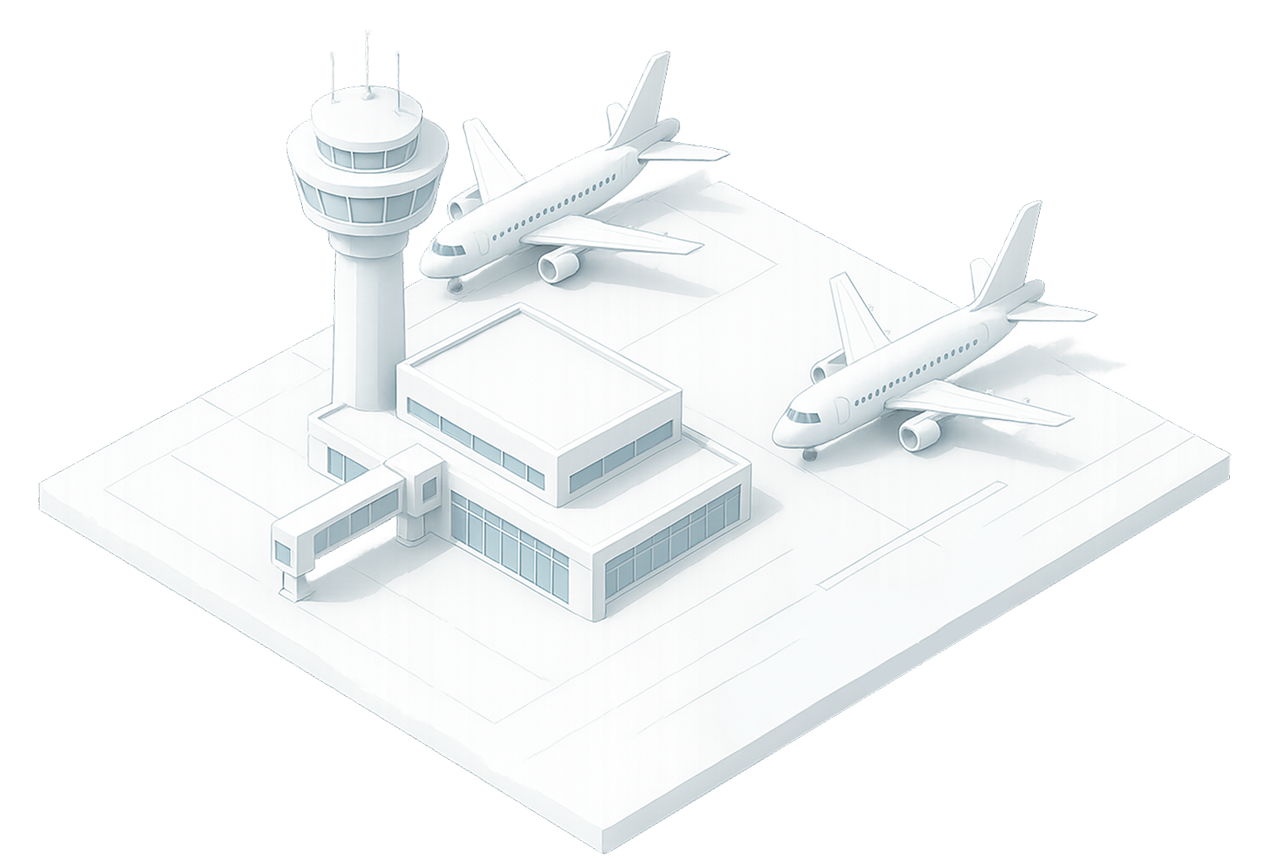

Overview of the Airport
Düsseldorf Airport (DUS) is located 7 kilometers north of Düsseldorf city center, serving as the main international gateway for North Rhine-Westphalia. It connects the region to major European and intercontinental destinations and is a primary hub for Eurowings.
{"latitude":51.289501,"longitude":6.76678}
Growth Trend
Passenger traffic increased by 4.7% from 2023 to 2024, reflecting steady post-pandemic recovery.

Employment
20,000
Employees include airline staff, ground handlers, security, retail, and airport operations personnel.
Global Ranking
Market Share of Major Airlines
Capacity Expansion
Ongoing terminal upgrades and apron expansions are designed to accommodate rising passenger volumes and improve operational efficiency.

Technological Advancements
Deployment of digital queue management, self-service check-in, and biometric security screening enhances passenger flow and safety.
Sustainability Initiatives
Initiatives include increased use of renewable energy, electric ground vehicles, and programs to reduce airport carbon emissions.

Latest News & Updates
Recent developments and updates for Düsseldorf Airport.
Düsseldorf Airport expands its partnership with Lufthansa
Düsseldorf Airport and Lufthansa have extended their long-standing partnership, solidifying Lufthansa's commitment to the airport as its largest hub in Germany. The agreement will continue to offer passengers a wide range of destinations and benefits.
Düsseldorf Airport reports record passenger numbers in April
Düsseldorf Airport experienced a significant surge in passenger numbers during April, surpassing previous records and demonstrating strong travel demand. The airport attributes this success to increased international flights and a growing domestic market.
Düsseldorf Airport welcomes new regional route to Tallinn
Düsseldorf Airport has announced a new route connecting it to Tallinn, Estonia, marking an expansion of its Baltic offering for passengers. This new route aims to cater to the growing demand for travel to Northern Europe.
Operations Logistics & Timelines
Step-by-step process transit times for passengers and cargo.
For Clients
Passenger process times from arrival to gate.
- Arrival at Düsseldorf Airport (DUS)N/A
- Immigration & Customs30-60 mins
- Baggage Claim15-30 mins
- Terminal 1 to Terminal 2 Transfer (via Central Hall)5-10 mins
- Terminal 2 to Gate5-15 mins
For Employees
Cargo handling deadlines and operational procedures.
- General Cargo Cut-off - Passenger90 minutes pre-departure
- General Cargo Cut-off - Freighter60 minutes pre-departure
- Dangerous Goods Cut-off - Passenger45 minutes pre-departure
- Dangerous Goods Cut-off - Freighter30 minutes pre-departure
- Hand Baggage Cut-off60 minutes pre-departure
- Full Freighter Departure Cut-off30 minutes pre-departure
- Last Accepted Time for Normal CargoDependent on flight schedule - Refer to specific flight manifest
- Last Accepted Time for Dangerous GoodsDependent on flight schedule - Refer to specific flight manifest
- Airport Operational Hours05:00 - 00:00
- Contact Information - Cargo OperationsAvailable on DUS website
Passengers' Tips & Tricks
- 1
Utilize the Fast Track Security Lanes
Düsseldorf Airport offers several Fast Track security lanes for passengers with a Lufthansa Miles & More card, business class tickets, or a Premium Plus ticket. This can significantly reduce your wait time during security screening, especially during peak hours.
- 2
Explore the Terminal's Shops and Restaurants
Terminal B has a wide selection of shops, restaurants, and bars. Terminal A has a more limited selection. Allow extra time to browse and grab a bite to eat, as there are good options available for all budgets.
- 3
Take Advantage of the Free Wi-Fi
Düsseldorf Airport provides free Wi-Fi throughout the terminals. Simply connect to ‘DUS_WiFi’ and you’ll be able to browse the internet or stay connected with loved ones.
- 4
Check Baggage Online (if possible)
If your airline offers online check-in, do it in advance to save time at the airport check-in counters. This is especially useful for Lufthansa and other major airlines.
- 5
Public Transport Connections are Excellent
Düsseldorf Airport is very well-connected to the city center via the U-Bahn (subway) and S-Bahn (commuter train). Lines U7 and S8 run directly to the airport and offer frequent departures. Plan your journey in advance using the local transport website.
Cargo Tips & Tricks
- 1
Understand Customs Regulations
Germany has strict customs regulations. Ensure all goods are properly declared and have the necessary documentation, including invoices and permits, to avoid delays and potential fines. Check the official German Customs website for the latest requirements: [https://www.zoll.de/](https://www.zoll.de/)
- 2
Utilize Airport Cargo Services
Düsseldorf Airport offers dedicated cargo services through partners like Lufthansa Cargo and other freight forwarders. Utilizing these services can streamline the process, offering specialized handling, customs clearance, and tracking options. Research and select a reputable freight forwarder experienced with DUS.
- 3
Plan for Terminal Transfers
Düsseldorf Airport operates with separate terminals for passenger and cargo traffic. Be aware of the transfer procedures and allow ample time for moving your cargo between terminals – typically via shuttle buses. Confirm the transfer schedule with your freight forwarder.
- 4
Securement Requirements for Cargo
Cargo must be securely loaded and fastened within the aircraft to comply with IATA regulations and airline requirements. Ensure your freight forwarder provides adequate securing measures to prevent movement during flight. Review the specific airline’s cargo regulations beforehand.
- 5
Traffic and Airport Operations Awareness
Düsseldorf Airport experiences significant air traffic. Be aware of potential delays due to flight schedules and weather conditions. Stay informed about airport operational updates through the airport's official website: [https://www.dus.de/en/](https://www.dus.de/en/)
Tools & Resources
Essential tools, portals, and resources for clients and partners.
Data & Reports
Official statistics, research reports, and data tracking for Düsseldorf Airport.
Annual Report 2024
Düsseldorf Airport's annual report for 2024 detailing its performance and achievements, including passenger numbers and the Off-Block quality initiative.
Passenger & Cargo Data 2024
Information about Düsseldorf Airport's passenger and cargo statistics for 2024, highlighting its status as Germany's fourth busiest airport.
Airport Statistics for Dusseldorf International Airport (DUS)
Detailed monthly passenger and flight data for Düsseldorf International Airport, allowing for comparisons over time.
Data Center - ACI World
ACI World's data center providing access to a wide range of airport and air travel industry data, including passenger and cargo traffic statistics.
Catalogue - ICAO Data+
The ICAO Data+ catalogue provides comprehensive airport traffic data, including aircraft movements, passengers, and cargo, covering over 2,500 airports worldwide.
Location & Maps
Find Düsseldorf Airport on popular mapping services.
Frequently Asked Questions
Common inquiries about operations and logistics at Düsseldorf Airport.
What is the typical passenger process at Düsseldorf Airport (DUS)?
Passengers typically arrive at Terminal 1, proceed through security screening, and then head to their departure gate. Terminal 2 is used primarily for international flights. Check-in is available at various airline counters in both terminals, and baggage claim is located in designated areas after arrival. Passengers can also utilize self-service kiosks for check-in and baggage drop-off.
How does cargo handling operate at Düsseldorf Airport?
Düsseldorf Airport operates a dedicated cargo center (CFI) and handles approximately 4.7 million tonnes of cargo annually. Cargo handlers include Lufthansa Cargo, FedEx Express, and DHL. The airport offers a wide range of services including warehousing, customs clearance, and trucking services. The focus is on handling time-sensitive and temperature-controlled goods.
What transport options are available to and from Düsseldorf Airport?
Düsseldorf Airport is well-connected. Public transport includes the U7 rapid transit line directly to the city center (approx. 15 minutes), S-Bahn trains connecting to surrounding towns, and numerous bus routes. Taxi stands are available at both terminals, and rental car agencies are located nearby. Road access is via the A3 freeway.
Does Düsseldorf Airport offer dedicated parking facilities for passengers?
Yes, DUS offers a range of parking options, including long-term, short-term, and premium parking facilities located both on-site and at nearby partner locations. Advance bookings and online payment options are available for increased convenience.
For More Info
Third-party resources, government portals, ratings, and more.
