Faro Airport
Portugal’s third-busiest airport and the main gateway to the Algarve region, serving record leisure and international traffic.


Overview of the Airport
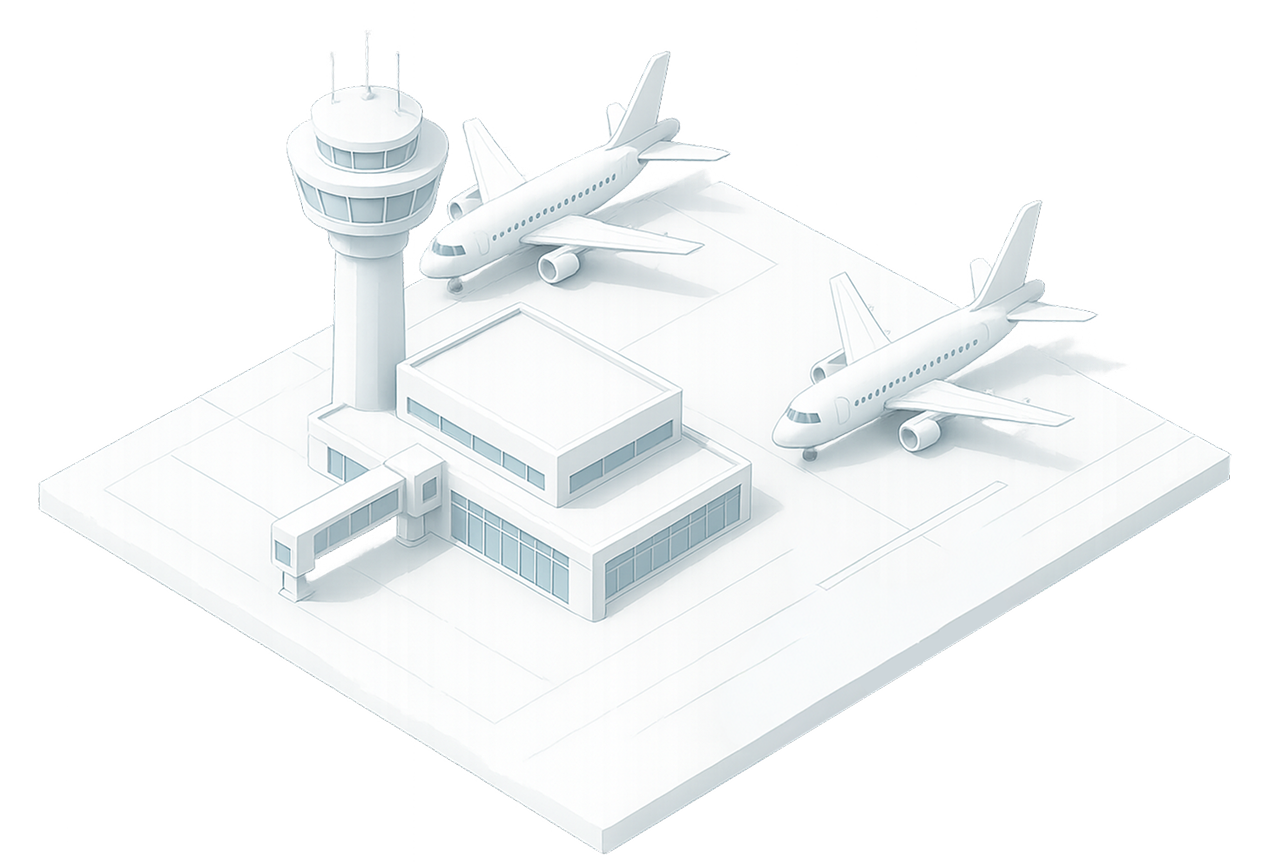
Faro Airport (FAO) is located 4 km west of Faro city center in southern Portugal. It serves as the primary international gateway to the Algarve, a major European tourist destination, and handles significant seasonal traffic.
37.0144, -7.9659
Growth Trend
Passenger traffic increased by 2.0% year-over-year in 2024 and is projected to surpass 10 million in 2025[6][7][9].

Employment
3,200
Employees include airline staff, ground handlers, security, concessions, and airport operations personnel.

Global Ranking
Market Share of Major Airlines
Capacity Expansion
Recent terminal expansions and apron upgrades have increased capacity to handle over 10 million passengers annually[7][9].

Technological Advancements
Deployment of automated border control gates and digital wayfinding enhances passenger flow and security.

Sustainability Initiatives
Initiatives include solar energy generation, LED lighting, and participation in airport carbon accreditation programs.

Latest News & Updates
Recent developments and updates for Faro Airport.
Flights at Faro Airport Cancelled Due to Storm
Severe weather conditions in the Algarve region, including heavy rain and strong winds, have caused widespread flight cancellations at Faro Airport. Airlines are advising passengers to check for updates before traveling.
Faro Airport Experiences Significant Delays Amidst Holiday Travel
Faro Airport is experiencing longer than usual queues and delays due to high passenger volumes associated with the Easter holiday period. Staffing shortages and a surge in demand are contributing to the disruption.
Faro Airport Announces New Security Measures Following Incidents
Following a series of minor security incidents, Faro Airport has announced the implementation of enhanced security protocols, including increased screening and stricter baggage checks. The airport authority stated this is a preventative measure to ensure passenger safety and operational efficiency.
Operations Logistics & Timelines
Step-by-step process transit times for passengers and cargo.
For Clients
Passenger process times from arrival to gate.
- Arrival at Faro Airport (FAO)N/A
- Immigration & Customs30-60 mins
- Luggage Collection15-30 mins
- Terminal Navigation - Arrivals Area5-10 mins
- Shops/Restaurants/Information Desk10-20 mins
- Bus Transfer to Terminal 2 (if applicable)5-10 mins
- Gate Transfer (Walking)5-15 mins
For Employees
Cargo handling deadlines and operational procedures.
- General Cargo Cut-off - Domestic60 mins pre-departure
- General Cargo Cut-off - International90 mins pre-departure
- Dangerous Goods Cut-off - Domestic45 mins pre-departure
- Dangerous Goods Cut-off - International75 mins pre-departure
- Oversized Cargo Cut-off48 hours pre-departure
- Live Animals Cut-off24 hours pre-departure
- Consignment Security Briefing24 hours pre-departure
- Passenger Boarding Cut-off (General Cargo)60 mins pre-departure
- Passenger Boarding Cut-off (Dangerous Goods)45 mins pre-departure
- Flight Manifest Submission Deadline30 mins pre-departure
- Security Screening Deadline15 mins pre-departure
Passengers' Tips & Tricks
- 1
Utilize the Self-Service Luggage Drop-Off
Faro Airport has a convenient self-service luggage drop-off service at Terminal 1. This allows you to drop off your bags before security, speeding up your passage through the airport and avoiding potential queues at the check-in desks.
- 2
Take Advantage of the Free Wi-Fi
Faro Airport offers free and reliable Wi-Fi throughout the terminals. It's a great way to stay connected, catch up on emails, or entertain yourself while waiting for your flight. The network is usually named 'FreeWi-FAO'.
- 3
Explore the Airport Shops and Restaurants
Faro Airport offers a decent selection of shops and restaurants, providing opportunities for last-minute souvenir shopping or a meal before your departure. There are options for all budgets.
- 4
Know Your Terminal Transfer Options
Depending on your airline, you might be directed to Terminal 1 or Terminal 2. Faro Airport has a free shuttle bus service operating between the two terminals, which is a straightforward and efficient way to move between them.
- 5
Check for 'Fast Track' Options
If you're travelling during peak times, consider purchasing a 'Fast Track' security pass. This can significantly reduce your wait time in the security queue, saving you valuable time.
Cargo Tips & Tricks
- 1
Understand Airport Layout & Customs
Faro Airport has a sprawling layout. Familiarize yourself with the cargo area location (Terminal 1, Level -1) and the customs procedures for importing goods. Knowing where to go minimizes delays and confusion. Check the airport website for detailed maps.
- 2
Pre-Arrival Documentation is Key
Ensure all your shipping documents (Bill of Lading, commercial invoice, packing list) are meticulously prepared and readily available. Faro Customs can impose delays if paperwork is incomplete or inaccurate. Digital copies are highly recommended.
- 3
Consider Airport Customs Clearance Times
Allow ample time for customs clearance, especially for larger shipments. Peak periods can significantly increase processing times. Check current customs operational status via the airport website or contacting customs directly beforehand.
- 4
Utilize Cargo Handling Services
Several reputable cargo handling companies operate at Faro Airport (e.g., Kuehne + Nagel, DHL). Using a professional service can streamline the process, handle documentation, and arrange transfers efficiently, particularly for complex shipments.
- 5
Check Ground Transportation Options
Plan your onward transportation from the airport in advance. While taxis are available, pre-booking a private transfer or using a shuttle service can save time and ensure a smooth transition. Traffic around Faro can be heavy, so factor that into your plans.
Tools & Resources
Essential tools, portals, and resources for clients and partners.
Data & Reports
Official statistics, research reports, and data tracking for Faro Airport.
Aena - Faro Airport Official Website
The official website for Faro Airport, providing information on flights, services, and travel details.
Aena - Faro Airport - Statistics
This page provides a detailed overview of passenger and aircraft movements at Faro Airport.
Aena - Investor Relations
This section of Aena's website contains financial information and reports related to Faro Airport as part of the overall group.
Aena - Annual Report 2023
Aena publishes an annual report detailing the performance of all its airports, including Faro Airport.
INE - Air Transport Statistics
The Portuguese National Institute of Statistics (INE) provides air transport statistics, including data for Faro Airport.
Location & Maps
Find Faro Airport on popular mapping services.
Interactive Map
Map Legend
Loading Google Maps...
Frequently Asked Questions
Common inquiries about operations and logistics at Faro Airport.
What is the passenger process like at Faro Airport?
Passengers arriving at Faro Airport typically follow these steps: 1. Disembark the aircraft. 2. Proceed through customs (if required based on your nationality and destination). 3. Collect your baggage from the baggage carousels. 4. Exit the terminal via the designated exits. For departures, passengers check in, go through security, and then proceed to the departure lounge before boarding their aircraft.
How does cargo handling operate at Faro Airport?
Faro Airport handles cargo through its dedicated cargo terminal, which offers services like warehousing, sorting, customs clearance, and trucking. The airport primarily focuses on handling freight for airlines operating in the region, primarily for cargo of European origin. Specific handling procedures vary depending on the cargo type and airline requirements.
What transportation options are available to and from Faro Airport?
Several transportation options connect Faro Airport with the surrounding area. These include: * **Taxi:** Readily available outside the terminal. * **Bus:** Lines 31, 32, 33, and 36 operate regular routes to Faro city center and other locations. * **Train:** The Algarve Regional Train (TER) provides connections to Faro and other towns along the coast. * **Rental Cars:** Numerous car rental agencies are located at the airport.
Does Faro Airport have a dedicated 'lost and found' service that also handles items related to aircraft maintenance or operations?
Yes, Faro Airport has a comprehensive Lost and Found service located within the Arrivals Hall. However, specifically for items lost during aircraft maintenance operations, passengers should first contact their airline as they are typically responsible for reporting and recovering items associated with their flight or aircraft, as the airport's Lost and Found primarily deals with lost luggage and personal belongings of passengers.
For More Info
Third-party resources, government portals, ratings, and more.
