Felipe Ángeles International Airport
Mexico's newest major airport, rapidly expanding as a key hub for both passenger and cargo operations.

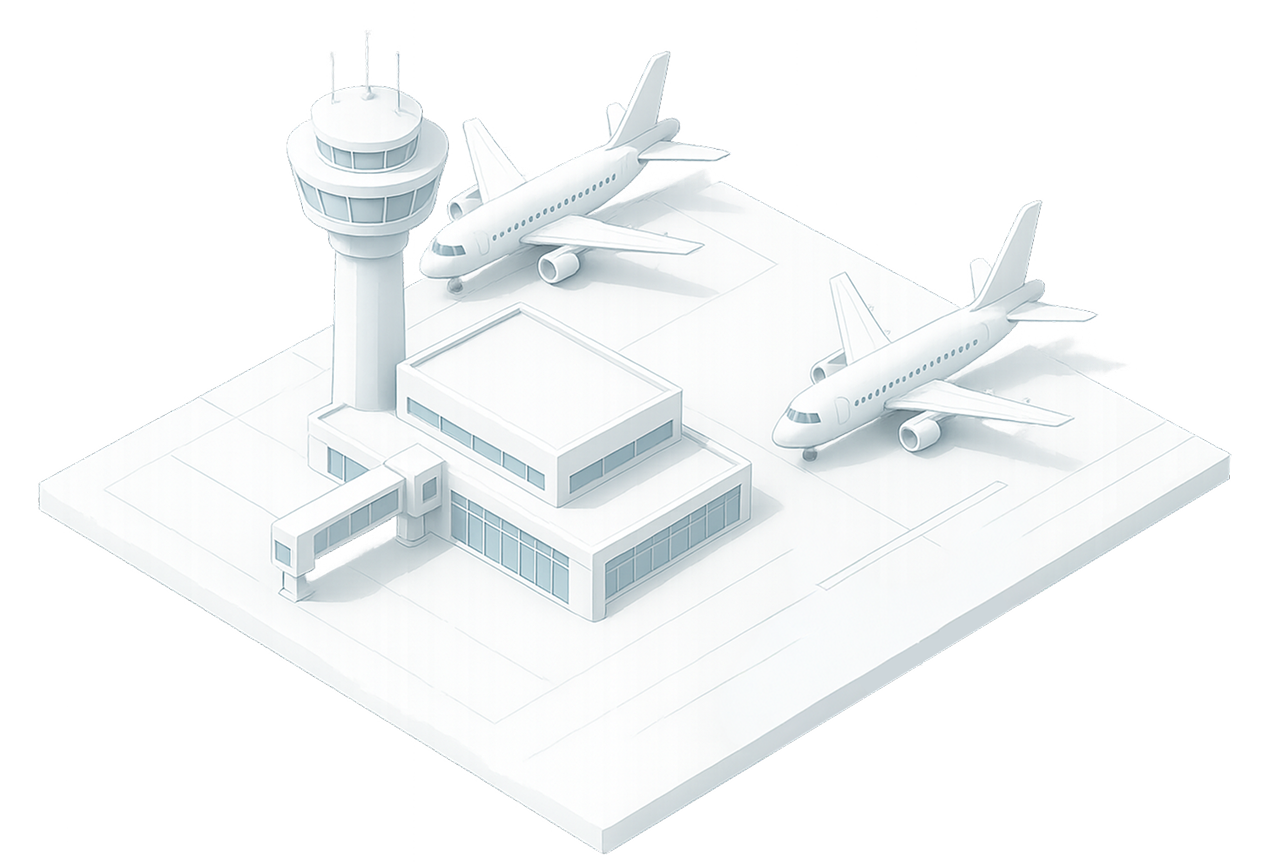

Overview of the Airport
Felipe Ángeles International Airport (NLU) is located in Zumpango, State of Mexico, approximately 35 km north of Mexico City. Opened in 2022, it serves as the third airport for Greater Mexico City and is a primary hub for Mexicana and major cargo carriers. The airport is designed to relieve congestion from Mexico City's main airport and supports both civilian and military operations.
19.75667, -99.01528
Growth Trend
Passenger traffic increased by 140% from 2023 to 2024, reflecting rapid adoption by airlines and travelers.

Employment
5,200
Personnel include airline staff, ground handlers, security, concessions, and government operators.

Global Ranking
Market Share of Major Airlines
Capacity Expansion
The airport is built to handle up to 20 million passengers annually, with future expansion planned for both passenger and cargo operations.

Technological Advancements
Performance-based navigation (PBN) enables simultaneous operations with other Mexico City airports, improving efficiency.

Sustainability Initiatives
The airport incorporates energy-efficient systems and sustainable construction practices to minimize environmental impact.

Latest News & Updates
Recent developments and updates for Felipe Ángeles International Airport.
Mexico's New Airport Faces Delays, Cost Overruns
Despite ambitious timelines, the Felipe Ángeles International Airport (NLU) continues to experience delays in its completion, with concerns raised about rising costs and potential challenges in attracting airlines.
Mexico's Felipe Ángeles Airport Expansion Moves Forward
The Mexican government has announced further investments to expand the Felipe Ángeles International Airport's capacity, including additional terminals and parking facilities.
Mexico's New Airport Struggling to Attract Airlines
Despite being operational, Felipe Ángeles International Airport (NLU) is facing difficulties in attracting major airlines, primarily due to its strategic location outside Mexico City.

Operations Logistics & Timelines
Step-by-step process transit times for passengers and cargo.
For Clients
Passenger process times from arrival to gate.
- Arrival & Baggage Claim15-30 mins
- Check-in/Immigration10-20 mins
- Security Screening20-45 mins
- Boarding5-10 mins
- Travel to Gate5-10 mins
For Employees
Cargo handling deadlines and operational procedures.
- General Cargo Cut-off60 mins pre-departure
- Cargo Receipt & VerificationUpon arrival
- Document VerificationWithin 30 mins post-receipt
- Hazardous Goods Inspection (if applicable)Immediately
- Weight & Measurement VerificationWithin 60 mins post-receipt
- Labeling & Marking ComplianceBefore loading
- Loading & StowageAs per airline and cargo requirements
- Manifesting & System UpdatePrior to departure
Passengers' Tips & Tricks
- 1
Arrive Early
Due to ongoing construction and potential delays, it’s highly recommended to arrive at least 2-3 hours before your international flight departure. Domestic flights may require 1.5-2 hours.
- 2
Utilize the Airport Train (Chentania)
The Chentania train is the fastest and most efficient way to get from the airport to Mexico City’s historic center. Purchase your tickets in advance through the official app or website.
- 3
Understand Terminal Layout
NLU is currently operating with two terminals (A and B). Familiarize yourself with the layout of your terminal and gate to avoid confusion.
- 4
Check Baggage Claim Carefully
With a new airport, processes are still being refined. Double-check baggage claim areas and allow for potential delays in luggage retrieval.
- 5
Currency Exchange Options
While ATMs are available, exchange currency at the airport's authorized exchange counters for better rates and security. Consider using a credit card for larger purchases.
Cargo Tips & Tricks
- 1
Book in Advance
Air freight capacity at NLU is limited, especially during peak season. Booking shipments well in advance—ideally 6-8 weeks—significantly increases the likelihood of securing space and obtaining competitive rates. Early booking also allows for better coordination with airlines and customs.
- 2
Utilize Specialized Cargo Agents
Working with experienced cargo agents specializing in operations at NLU is crucial. These agents possess in-depth knowledge of the airport’s procedures, airline relationships, and customs regulations, streamlining the process and mitigating potential delays.
- 3
Prepare Thorough Documentation Precisely
Mexican customs regulations can be stringent. Ensure all shipping documentation—including commercial invoices, packing lists, certificates of origin, and export/import licenses—is meticulously prepared, accurately translated into Spanish, and completely compliant with current regulations. Errors lead to significant delays.
- 4
Understand Ground Handling Procedures
NLU’s ground handling infrastructure is continually developing. Stay informed about specific requirements for unloading, securing, and storing cargo. Coordinate closely with ground handlers to ensure seamless transfer from aircraft to final destination.
- 5
Strategic Routing and Consolidation
Explore alternative routes and consider consolidating shipments to maximize efficiency and minimize handling costs. Consulting with your agent about optimizing the supply chain can drastically reduce transit times and associated fees. Utilizing NLU's connections to other Latin American airports strategically is key.
Tools & Resources
Essential tools, portals, and resources for clients and partners.
Data & Reports
Official statistics, research reports, and data tracking for Felipe Ángeles International Airport.
Project Overview - Felipe Ángeles International Airport
This page provides a high-level overview of the project, including its objectives, timeline, and key stakeholders. It details the rationale behind the airport's location and its intended impact on the Philippine economy.
Financial Report - Felipe Ángeles International Airport (2023)
Official financial report detailing the airport's expenditures and revenue for the year 2023. Provides insights into the project's financial performance.
Progress Report - Felipe Ángeles International Airport (January 2024)
A detailed report outlining the progress made on key construction milestones and operational preparations as of January 2024. Includes updates on infrastructure development and staff training.
FAQs - Felipe Ángeles International Airport
Frequently Asked Questions section addressing common inquiries regarding the airport, including its location, operations, and impact on the surrounding communities.
Press Release - Felipe Ángeles International Airport Opens its Doors
Official press release announcing the official opening of the Felipe Ángeles International Airport on March 27, 2024, marking a significant milestone in the Philippines’ aviation infrastructure development.
Location & Maps
Find Felipe Ángeles International Airport on popular mapping services.
Interactive Map
Map Legend
Loading Google Maps...
Frequently Asked Questions
Common inquiries about operations and logistics at Felipe Ángeles International Airport.
How long does passenger processing take?
Passenger processing times generally range from 30 to 60 minutes, depending on security procedures and flight volume. Automated kiosks and dedicated lanes are available to expedite the check-in and security screening process. Staff are available to assist with any questions or needs.
What cargo services are offered?
Felipe Ángeles International Airport handles a variety of cargo/freight operations, including domestic and international shipments. Specialized handling services cater to diverse cargo types, with dedicated facilities for secure storage and efficient transfer. The airport supports both general cargo and priority freight movements.
What transport options are available to the airport?
Several ground transportation options are available, including private car services, taxis, and the airport’s dedicated bus service. This bus service connects to major highway corridors, providing convenient access to downtown Mexico City and surrounding areas. Rideshare services are also operational at the airport.
For More Info
Third-party resources, government portals, ratings, and more.
