Fès–Saïs Airport
A key international gateway for northern Morocco, connecting Fès to major European and regional destinations.

Overview of the Airport
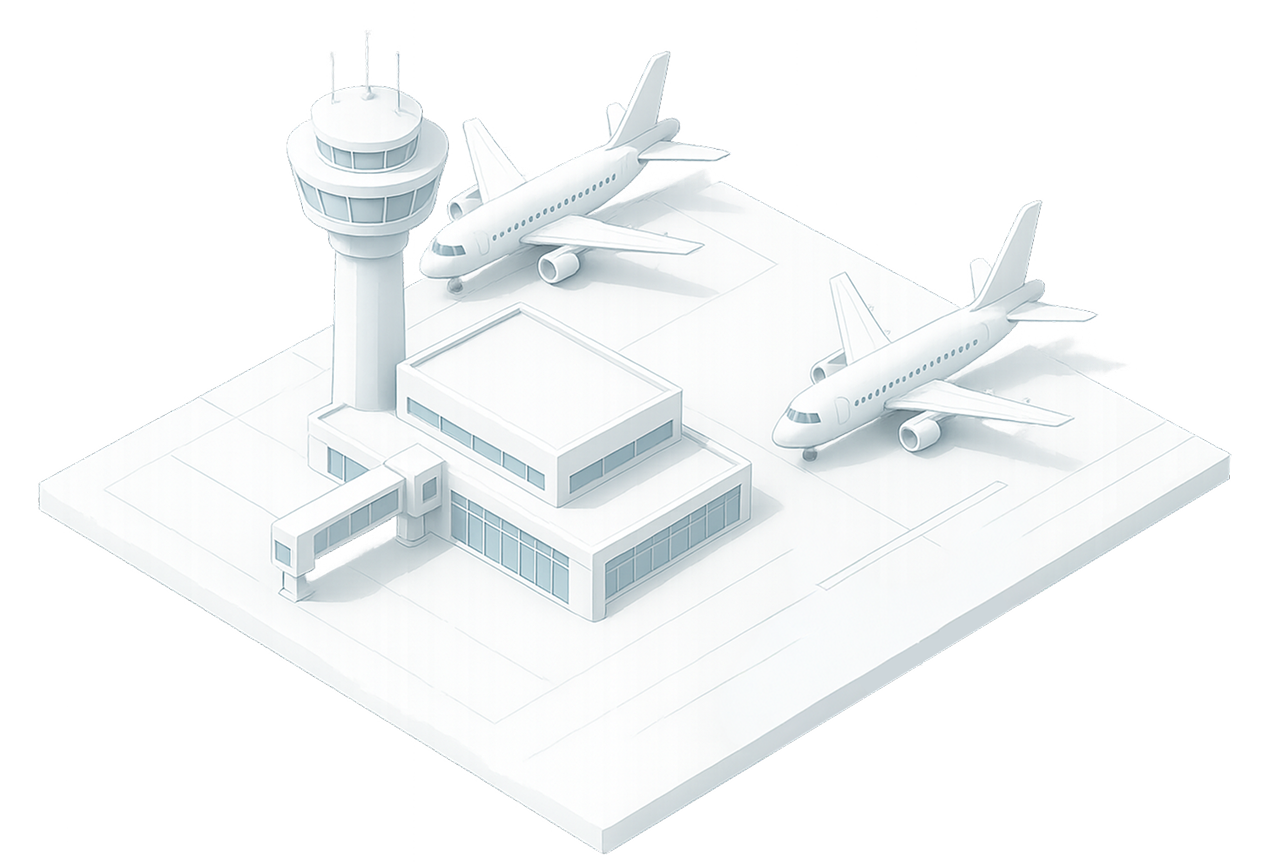
Fès–Saïs Airport (FEZ) is located approximately 15 kilometers south of Fès, serving as the primary international airport for the Fès-Meknes region. The airport features two terminals and supports both domestic and international flights, with extensive links to Europe and North Africa.
33.9267, -4.9783
Growth Trend
Passenger traffic has rebounded post-pandemic, with a steady increase following the 2019 expansion.

Employment
1,200
Staff include airline personnel, ground handlers, security, concessions, and airport operations teams.

Global Ranking
Market Share of Major Airlines
Capacity Expansion
The recent terminal expansion has increased annual capacity to 2.5 million passengers, supporting future growth.

Technological Advancements
Modern terminal facilities include advanced security screening and digital passenger information systems.

Sustainability Initiatives
Terminal 2 incorporates energy-efficient lighting and natural ventilation to reduce environmental impact.

Latest News & Updates
Recent developments and updates for Fès–Saïs Airport.
Morocco’s Fes-Saïs Airport Launches New Terminal to Boost Capacity
The Fès-Saïs Airport (FEZ) has unveiled a new terminal aimed at increasing passenger capacity by 60%. The expansion is expected to significantly improve the airport’s ability to handle growing demand for air travel in the region.
Morocco's Fes-Saïs Airport Experiences Record Passenger Numbers in January
Fès-Saïs Airport (FEZ) reported a record number of passengers in January 2024, demonstrating strong recovery and demand for air travel. The airport processed over 350,000 passengers during the month, surpassing previous records.
Fes-Saïs Airport Receives New Aircraft from Royal Air Maroc
Royal Air Maroc has added a new Airbus A320neo aircraft to its fleet, commencing operations from Fès-Saïs Airport (FEZ). This expansion reinforces FEZ’s role as a key hub for the airline’s domestic and international routes.
Operations Logistics & Timelines
Step-by-step process transit times for passengers and cargo.
For Clients
Passenger process times from arrival to gate.
- Check-in5-15 mins
- Security Screening20-45 mins
- Passport Control15-30 mins
- Baggage Claim10-20 mins
- Arrival at Gate5-10 mins
- Boarding10-20 mins
For Employees
Cargo handling deadlines and operational procedures.
- General Cargo Cut-off60 mins pre-departure
- Security Screening30 mins
- X-Ray Screening45 mins
- Document Verification15 mins
- Loading onto Aircraft60 mins
- Baggage Tagging15 mins
- Final Security Check15 mins
Passengers' Tips & Tricks
- 1
Arrive Early
Allow extra time for security and potential delays, especially during peak season. Moroccan customs can take longer than expected.
- 2
Validate Your Ticket
Ensure your airline ticket is properly validated before you proceed through security. Many agents offer this service at the airport.
- 3
Currency Exchange
Exchange currency at the airport's official exchange rate (typically better than rates in the city center). ATMs are also available but may have higher fees.
- 4
Baggage Handling
Fès-Saïs Airport is smaller, so baggage handling might be slower. Double-check your baggage tags upon retrieval.
- 5
Transportation Options
Pre-book a taxi or arrange transportation with your hotel beforehand. Official taxis are recommended; avoid touts outside the terminal.
Cargo Tips & Tricks
- 1
Book in Advance
Air freight capacity at FEZ is often limited, particularly during peak seasons. Booking shipments well in advance (at least 2-3 weeks, ideally more) significantly increases the chances of securing space and obtaining the most competitive rates.
- 2
Utilize FEZ’s Cargo Terminal Expertise
The FEZ Cargo Terminal team possesses extensive knowledge of local regulations, customs procedures, and logistical solutions specific to the region. Engage their expertise early in the planning process to avoid delays and ensure smooth clearance.
- 3
Optimize Cargo Consolidation
Consolidate smaller shipments into larger pallets or containers to reduce handling costs and maximize space utilization. FEZ’s terminal can facilitate consolidation services if needed.
- 4
Prepare Thorough Documentation Accurately
Timely and accurate documentation, including commercial invoices, packing lists, and certificates of origin, is crucial for swift customs clearance. Ensure all documents comply with Moroccan and destination country regulations.
- 5
Consider Regional Hubs for Optimization
For shipments originating from Europe, consider utilizing FEZ as a regional hub to connect with onward transport options to other African destinations, potentially optimizing transit times and costs.
Tools & Resources
Essential tools, portals, and resources for clients and partners.
Data & Reports
Official statistics, research reports, and data tracking for Fès–Saïs Airport.
Fès–Saïs Airport - Annual Report 2022
Official annual report detailing passenger statistics, aircraft movements, and operational performance for Fès–Saïs Airport in 2022. Includes key performance indicators and analysis.
Fès–Saïs Airport - Passenger Statistics (2023)
Detailed passenger statistics for 2023, broken down by national and international arrivals and departures. Provides a granular view of passenger traffic.
Fès–Saïs Airport - Aircraft Movements Statistics (2023)
Statistics on aircraft movements for 2023, including the number of landings and take-offs, and aircraft types operating at the airport.
Fès–Saïs Airport - Airport Master Plan 2021-2027
The Airport Master Plan outlining the airport's development strategy, expansion plans, and infrastructure upgrades for the period 2021-2027. Important for understanding future airport capacity.
Fès–Saïs Airport - Environmental Impact Assessment (EIA)
The Environmental Impact Assessment report conducted for the airport expansion project, outlining potential environmental impacts and mitigation measures.
Location & Maps
Find Fès–Saïs Airport on popular mapping services.
Interactive Map
Map Legend
Loading Google Maps...
Frequently Asked Questions
Common inquiries about operations and logistics at Fès–Saïs Airport.
What is the passenger processing procedure?
Passengers proceed through security screening upon arrival and departure. All travelers must present valid identification and any required visas. Customs officials inspect baggage before release.
How is cargo/freight handled at FEZ?
FEZ handles cargo through designated freight terminals. Customs clearance procedures are followed for all shipments, and tracking services are available. Dangerous goods are handled according to international regulations.
What transport options are available to/from the airport?
Taxis, private car services, and airport shuttle buses provide access to Fès city center. Pre-booked airport transfers are also readily available. Public bus services connect the airport to some surrounding areas.
For More Info
Third-party resources, government portals, ratings, and more.
