Hiroshima Airport
The largest airport in the Chugoku and Shikoku region, serving as a key domestic and international gateway.

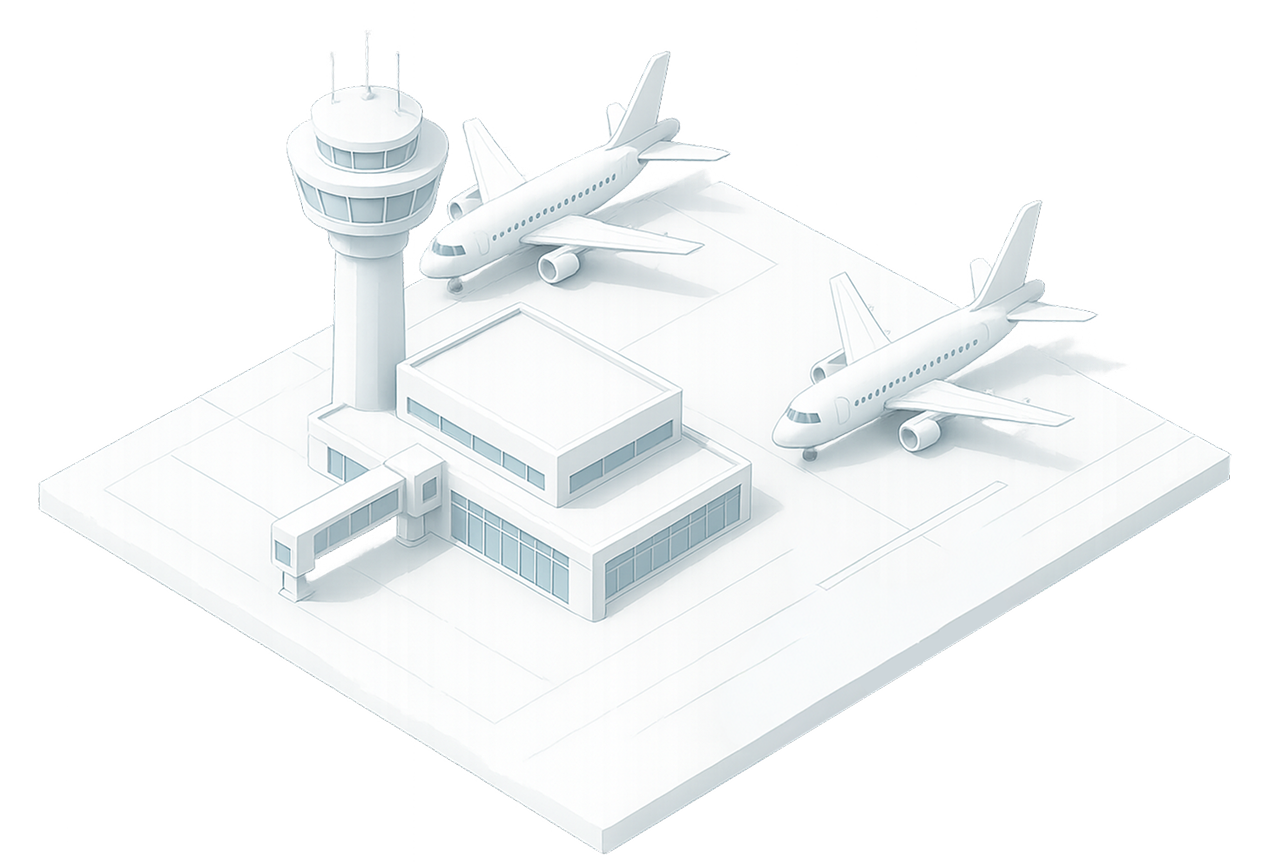

Overview of the Airport
Hiroshima Airport (HIJ) is located 50 km east of Hiroshima city in Mihara, Hiroshima Prefecture. It is the primary airport for the region, handling both domestic and international flights with a 3,000-meter runway.
34.43611, 132.91944
Growth Trend
Passenger traffic increased by 57% from 2021 to 2022, reflecting post-pandemic recovery.

Employment
2,100
Staff across airlines, ground handling, security, concessions, and airport operations.
Global Ranking
Market Share of Major Airlines
Capacity Expansion
The airport's 3,000-meter runway and terminal upgrades support widebody aircraft and increased passenger capacity.

Technological Advancements
Upgraded to CAT-IIIb ILS and implemented advanced air traffic management systems.
Sustainability Initiatives
Initiatives include energy-efficient terminal operations and participation in national carbon reduction programs.

Latest News & Updates
Recent developments and updates for Hiroshima Airport.
Hiroshima Airport’s expansion project approved amid concerns over environmental impact
The Hiroshima Airport expansion project has received approval from the Hiroshima prefectural government, despite concerns raised by local residents and environmental groups regarding its potential impact on the surrounding area.
Japan’s Hiroshima Airport to add more international flights as demand increases
Hiroshima Airport is anticipating a rise in international flights due to increased tourism and business travel. Officials are working to expand facilities to accommodate the growing demand and enhance passenger experience.
Hiroshima Airport to Launch New Terminal 2 to Increase Capacity
Hiroshima Airport is set to open a new terminal 2, aiming to double its passenger handling capacity and cater to growing tourist demand. The expansion reflects the airport's role as a key transportation hub in western Japan.
Operations Logistics & Timelines
Step-by-step process transit times for passengers and cargo.
For Clients
Passenger process times from arrival to gate.
- Arrival & Baggage Claim15-30 mins
- Check-in5-15 mins
- Security Screening20-45 mins
- Immigration (if required)10-20 mins
- Collecting Baggage10-20 mins
- Proceed to Gate5-10 mins
For Employees
Cargo handling deadlines and operational procedures.
- General Cargo Cut-off60 mins pre-departure
- Manifest Submission Cut-off24 hours pre-departure
- Security Screening30 mins pre-departure
- Baggage Drop-off60 mins pre-departure
- Cargo Weighing and Measurement45 mins pre-departure
- Loading onto Aircraft30 mins pre-departure
- Final Security Check15 mins pre-departure
Passengers' Tips & Tricks
- 1
Arrive Early
Due to potential customs and immigration delays, particularly during peak seasons, allow at least 2-3 hours before your international flight departure. Japanese procedures can take longer than anticipated.
- 2
Utilize the Airport Shuttle
Hiroshima Airport primarily serves domestic flights. To reach the city center, utilize the efficient and affordable Airport Shuttle bus services (lines 1 & 2). Purchase tickets in advance to avoid queues.
- 3
Japanese Phrases are Helpful
While many airport staff speak some English, knowing basic Japanese phrases (e.g., 'Sumimasen' - Excuse me, 'Arigato' - Thank you) will greatly enhance your experience.
- 4
Check Luggage Handling Procedures
Hiroshima Airport has limited luggage handling services. Confirm your luggage is checked through to your final destination if flying internationally. Consider using a luggage forwarding service if necessary.
- 5
Explore the Airport Shops
The airport offers a selection of souvenir shops, convenience stores, and restaurants. It's a good place to purchase last-minute essentials or enjoy a meal before your journey.
Cargo Tips & Tricks
- 1
Book in Advance
Air freight capacity at Hiroshima Airport (HIJ) can be limited, particularly during peak seasons and major events. Booking cargo shipments well in advance, ideally 4-6 weeks or more, significantly increases the chances of securing space and preferred routing.
- 2
Utilize HIJ's Cargo Terminal Expertise
Hiroshima Airport’s cargo terminal possesses strong relationships with local logistics providers and customs brokers. Leverage their expertise to expedite customs clearance, handling, and documentation, streamlining the import/export process.
- 3
Consider Regional Hubs for Efficiency
While HIJ offers direct access, evaluating alternative regional hubs like Osaka (KIX) or Nagoya (NGO) might provide more competitive rates and greater air freight network connectivity for your goods.
- 4
Proper Packaging and Labeling are Crucial
Adhere strictly to IATA (International Air Transport Association) regulations for packaging and labeling. Accurate and clearly labeled shipments minimize delays, damage, and potential inspection issues at customs and within the terminal.
- 5
Communicate Effectively with the Airport and Carrier
Maintain proactive and transparent communication with Hiroshima Airport's operations team and your chosen cargo carrier. Timely updates regarding shipment status, any potential issues, and special requirements ensure a smooth and efficient flow of goods.
Tools & Resources
Essential tools, portals, and resources for clients and partners.
Data & Reports
Official statistics, research reports, and data tracking for Hiroshima Airport.
Hiroshima Airport Official Website (Japanese)
The official website of Hiroshima Airport, providing flight information, facilities, and services.
Hiroshima Airport - Wikipedia
Wikipedia page detailing the history, operations, and location of Hiroshima Airport.
Hiroshima Airport - Japan Airport Industries Corp.
Official information from the Japan Airport Industries Corp. about Hiroshima Airport.
HIJ – Hiroshima Airport
Aviation Herald page with details about flights and operations at Hiroshima Airport.
Hiroshima Airport Terminal (Japanese)
The terminal building's official page on the Hiroshima Airport website. Details the services offered and information about the facilities.
Location & Maps
Find Hiroshima Airport on popular mapping services.
Interactive Map
Map Legend
Loading Google Maps...
Frequently Asked Questions
Common inquiries about operations and logistics at Hiroshima Airport.
How long does passenger processing take?
Passenger processing at Hiroshima Airport typically takes between 30 and 60 minutes, depending on customs and immigration checks. This includes passport verification, baggage claim, and any necessary announcements. Allow ample time for security screening before your flight.
What cargo services are available?
Hiroshima Airport handles freight primarily through dedicated cargo handlers. Standard cargo services include domestic and international air cargo, with a focus on time-sensitive goods and electronic components. The airport supports BFE (Basic Freight Express) operations.
How can I get to the city center from the airport?
Several bus routes connect Hiroshima Airport to the city center, with the Airport Bus being the most common option. The bus journey takes approximately 30-40 minutes and departs regularly throughout the day. Taxi services are also available for direct transport.
For More Info
Third-party resources, government portals, ratings, and more.
