Hong Kong International Airport
Asia’s leading international aviation hub and one of the world’s busiest cargo airports.


Overview of the Airport
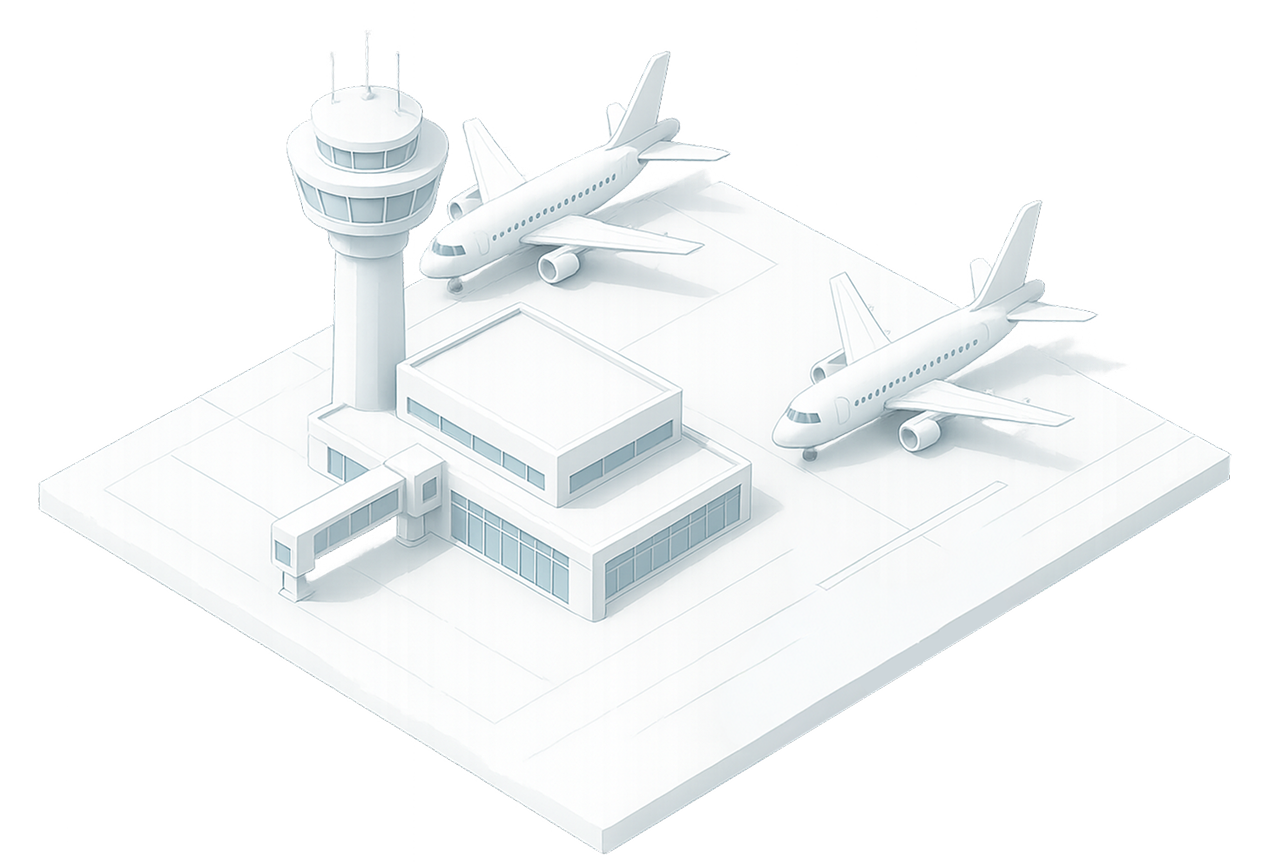
Hong Kong International Airport (HKG) is located on Chek Lap Kok island, 34 km northwest of Hong Kong’s city center. It serves as a major gateway for passengers and cargo in Asia, connecting over 220 destinations worldwide.
22.3080, 113.9185
Growth Trend
Passenger traffic increased by 17.3% year-over-year, with cargo throughput up 5.4%.

Employment
73,000
Staff across airlines, ground handling, logistics, retail, catering, and airport operations.

Global Ranking
Market Share of Major Airlines
Capacity Expansion
The Three-Runway System, opened in late 2024, increases peak-hour capacity and supports future passenger and cargo growth.

Technological Advancements
Deployment of biometric e-gates, AI-powered baggage handling, and smart airport systems enhance efficiency and security.

Sustainability Initiatives
Initiatives include large-scale solar panel installation, electric ground vehicles, and green building certifications.

Latest News & Updates
Recent developments and updates for Hong Kong International Airport.
How Asia’s airports and airlines left Europe in the shade
Across Asia, airports and airlines combine comfort, tech and style to transform the way passengers...
The 20 best airports in the world in 2026
Skytrax has released it World's Best Airports list for 2026. Here's how the world's airports rank, and how that compares to the 2025 rankings.
Cathay Pacific's Bold US Expansion: Seven Routes and Counting as Hong Kong Carrier Rewrites...
Cathay Pacific is making its biggest bet on the United States market in decades, transforming from a...
Operations Logistics & Timelines
Step-by-step process transit times for passengers and cargo.
For Clients
Passenger process times from arrival to gate.
- Arrival & Baggage Claim15-45 mins
- Immigration & Customs20-60 mins
- Transfer to Gate5-15 mins
- Security Screening15-30 mins
- Boarding5-10 mins
- Waiting at Gate10-20 mins
For Employees
Cargo handling deadlines and operational procedures.
- General Cargo Cut-off60 mins pre-departure
- Cargo ReceiptAs per airline requirements
- Document VerificationUpon arrival
- UPL (Unit Loading Plan) PreparationBefore loading
- Weighing and MeasurementAs per airline requirements
- StagingFor loading onto aircraft
- LoadingAs per airline schedule and UPL
Passengers' Tips & Tricks
- 1
Arrive Early
Allow extra time for immigration, baggage claim, and navigating the large terminal. HKG can get crowded, especially during peak hours.
- 2
Utilize the Airport Express
The Airport Express train is the fastest and most convenient way to reach Central Hong Kong. Purchase your tickets in advance to save time.
- 3
Explore MTR Octopus Card
The Octopus card is a rechargeable smart card that can be used on most public transport in Hong Kong, including the Airport Express and buses.
- 4
Claim Your Baggage Quickly
Follow signs for baggage claim promptly. HKG has efficient baggage carousels, but queues can form.
- 5
Familiarize Yourself with Terminals
HKG has multiple terminals (1, 2, 3, and 4). Know which terminal your flight arrives at to minimize confusion and travel time.
Cargo Tips & Tricks
- 1
Book in Advance
Air freight capacity fluctuates significantly depending on seasonal demand and global events. Booking shipments well in advance, particularly during peak periods like the Lunar New Year, allows for guaranteed space and often secures more favorable rates.
- 2
Utilize the HKIACargoData Platform
Leverage the HKIACargoData Platform to streamline processes and enhance collaboration. This digital platform connects stakeholders, providing real-time visibility and facilitating efficient communication between freight forwarders, airlines, and ground handlers.
- 3
Partner with Experienced Handling Agents
Hong Kong International Airport relies heavily on specialized cargo handling agents like Hactl. Partnering with a reputable and experienced handler ensures smooth and efficient handling of your cargo, reducing potential delays and damage.
- 4
Optimize Cargo Consolidation
Consolidate smaller shipments into larger containers to maximize efficiency and minimize per-unit costs. Strategic consolidation is particularly important for less-than-container load (LCL) shipments.
- 5
Embrace Digitalization Initiatives
HKIA is at the forefront of air cargo digitalization. Utilize the Import Air Cargo Collection Digitalization Module and other digital solutions offered by the Airport Authority Hong Kong to improve tracking, documentation, and overall operational efficiency.
Tools & Resources
Essential tools, portals, and resources for clients and partners.
Data & Reports
Official statistics, research reports, and data tracking for Hong Kong International Airport.
Annual & Interim Reports
Official reports detailing the financial and operational performance of Hong Kong International Airport.
Air Cargo Statistics
Statistics on air cargo throughput through Hong Kong International Airport, including trends from 2014 onwards.
Civil Aviation Department - Air Traffic Statistics
Air Traffic Statistics for Hong Kong International Airport, covering aircraft, passenger, and freight movements (1998 onward).
Airport Authority Publishes Annual Report 2023/24
The annual report from the Airport Authority detailing the airport’s performance and future plans, including the 3RS project.
Solid year of growth for Hong Kong International Airport
Summary of the 2025 Annual Report, highlighting passenger and cargo growth figures.
Location & Maps
Find Hong Kong International Airport on popular mapping services.
Interactive Map
Map Legend
Loading Google Maps...
Frequently Asked Questions
Common inquiries about operations and logistics at Hong Kong International Airport.
What is the passenger processing procedure?
Passengers arriving at HKG proceed through immigration and baggage claim in the Arrivals Hall. After collecting your luggage, you will be directed to Customs for inspection and onward travel arrangements.
How does cargo/freight handling work?
HKG operates a dedicated cargo terminal handling international freight shipments. The terminal provides customs clearance, warehousing, and various transport options for cargo arriving and departing from the airport.
What transport options are available to the airport?
Various modes of transport connect to HKG, including the Airport Express train, buses, taxis, and private car services. The Airport Express offers a fast connection to Hong Kong Island and Kowloon, while buses provide wider coverage across the region.
For More Info
Third-party resources, government portals, ratings, and more.
