Komatsu Airport
The largest airport in the Hokuriku region, serving as a key gateway for domestic and international travel.

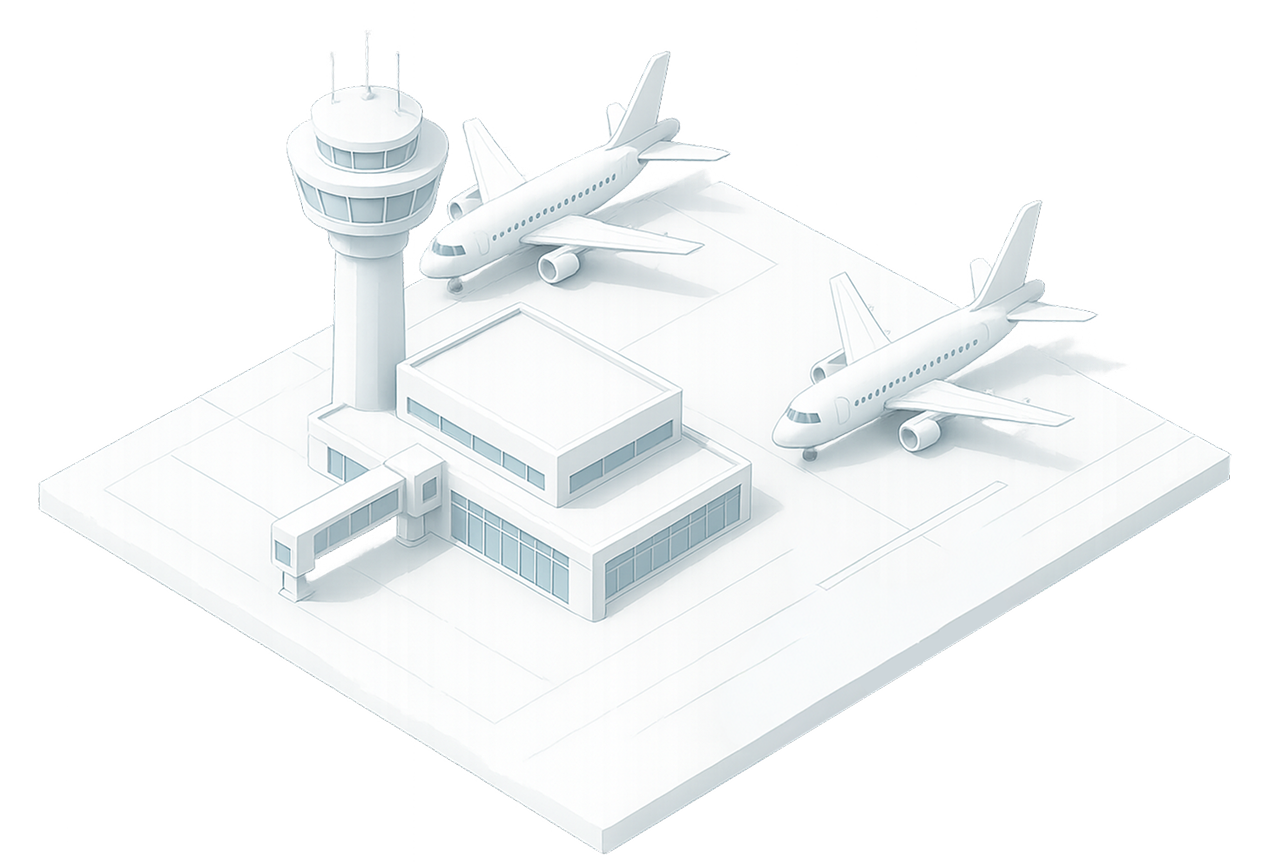

Overview of the Airport
Komatsu Airport (KMQ) is located 4.2 km west-southwest of Komatsu City in Ishikawa Prefecture, about 30 km from Kanazawa. It serves as the main air gateway to the Hokuriku region, offering both domestic and international flights, and shares facilities with the Japan Air Self-Defense Force.
36.4017, 136.4100
Growth Trend
Passenger traffic has shown steady recovery, increasing by 6.2% year-over-year in 2023.

Employment
1,200
Workers include airline staff, ground services, security, concessions, and airport administration.

Global Ranking
Market Share of Major Airlines
Capacity Expansion
Recent terminal upgrades have increased capacity to handle growing passenger and cargo demand.

Technological Advancements
Deployment of automated check-in kiosks and advanced baggage handling systems enhances operational efficiency.
Sustainability Initiatives
Implementation of energy-efficient lighting and waste reduction programs supports environmental goals.

Latest News & Updates
Recent developments and updates for Komatsu Airport.
Komatsu Airport to resume flights to Hong Kong starting Jan. 17
Komatsu Airport will resume flights to Hong Kong on January 17, 2026, after a suspension due to winter weather conditions. The flights will operate on Mondays, Thursdays, and Saturdays.
Komatsu Airport (KMQ) - Travel News and Guides from The Adept Traveler
The Adept Traveler reports on ongoing flight waivers and rail suspensions impacting travel through Komatsu Airport. They highlight the continued operation of charter flights between Komatsu and Hanoi.
小松空港 Komatsu Airport - Facebook Post: Charter flights to Hanoi
Komatsu Airport announced charter flights to Hanoi will operate from January 13 to January 6, 2026. This is a scheduled operation for the dates mentioned.
Operations Logistics & Timelines
Step-by-step process transit times for passengers and cargo.
For Clients
Passenger process times from arrival to gate.
- Check-in5-15 mins
- Security Screening15-30 mins
- Immigration7-10 mins
- Customs5-10 mins
- Baggage Claim10-20 mins
- Gate Arrival5-10 mins
For Employees
Cargo handling deadlines and operational procedures.
- General Cargo Cut-off60 mins pre-departure
- Manifest VerificationUpon Arrival
- Security ScreeningImmediately After Manifest
- Load Planning & WeighingFollowing Security
- Stowage & SecuringDuring Loading Process
- Cargo Booking ConfirmationFinal Stage of Loading
- Final Walkthrough & InspectionBefore Departure
Passengers' Tips & Tricks
- 1
Arrive Early
Komatsu Airport can get busy, especially during peak hours. Allow ample time for check-in, security, and potential delays to ensure a smooth travel experience.
- 2
Utilize Local Transportation
Several bus routes connect Komatsu Airport to Komatsu City and surrounding areas. Research these options in advance or use the airport's information desk for assistance.
- 3
Check Baggage Restrictions
Be mindful of baggage allowances and restrictions, particularly for low-cost carriers. Confirm requirements with your airline before travel.
- 4
Explore Terminal Facilities
Komatsu Airport offers various amenities, including restaurants, shops, and waiting areas. Familiarize yourself with the terminal layout to navigate efficiently.
- 5
Confirm Flight Details
Double-check your flight details (time, gate number, baggage allowance) with the airline and airport staff, especially if traveling internationally.
Cargo Tips & Tricks
- 1
Book in Advance
Due to its unique capabilities – including a 3,000-meter runway and Jumbo Jet services – Komatsu Airport is a strategic gateway for cargo. Booking shipments well in advance is crucial to securing capacity on cargolux aircraft and maximizing efficiency, especially considering the airport’s dual use by the Air Self-Defense Force.
- 2
Leverage Runway Length
KMQ’s 3,000-meter runway allows for operations by jumbo jets, a significant advantage over many Japanese airports. Utilize this capability for oversized or high-volume cargo shipments to reduce handling times and transportation costs.
- 3
Utilize Strategic Location
As the largest airport in the Hokuriku region, KMQ serves both Ishikawa and Fukui Prefectures, offering access to key markets. Coordinate logistics to capitalize on this central location for efficient distribution.
- 4
Coordinate with Air Self-Defense Force
Given that Komatsu Airport is used by the Air Self-Defense Force, establishing clear communication and coordination processes is essential for seamless operations and expedited handling of military or sensitive cargo.
- 5
Optimize Ground Handling
Utilize the airport's ground handling services efficiently, ensuring rapid loading and unloading of cargo. The airport’s proximity to major cities and its ICAO code (RJNK) facilitates streamlined import/export procedures.
Tools & Resources
Essential tools, portals, and resources for clients and partners.
Data & Reports
Official statistics, research reports, and data tracking for Komatsu Airport.
Komatsu Airport - Wikipedia
Wikipedia page providing basic information about Komatsu Airport, including its location, IATA and ICAO codes, and a brief description.
Airport Statistics and Traffic Data | ACI World
ACI World provides global airport traffic data, including passenger and cargo statistics, aircraft movements, and rankings.
IATA - World Air Transport Statistics (WATS)
IATA WATS provides aviation statistics covering demand and traffic, route performance, passenger and freight forecasts, and airline/airport rankings.
Aviation Data
ICAO's Aviation Data/Statistics program provides accurate, reliable, and consistent aviation data for States and international organizations.
Airport Statistics Komatsu | KMQ
Live airport statistics for Komatsu Airport, including Delay Index and Airport Movements Chart, updated from a flight database.
Location & Maps
Find Komatsu Airport on popular mapping services.
Interactive Map
Map Legend
Loading Google Maps...
Frequently Asked Questions
Common inquiries about operations and logistics at Komatsu Airport.
How does passenger processing work at KMQ?
Passengers proceed through security screening and then to the baggage claim area. Customs procedures are typically completed before exiting the terminal building, with assistance available from airport staff.
What cargo/freight services are available?
Komatsu Airport handles a variety of cargo shipments, primarily focusing on general cargo and express freight. Handling services include warehousing and customs clearance, facilitating efficient global trade.
What transport options are available to/from the airport?
Taxi services are readily available outside the terminal. Bus routes connect the airport to Komatsu Station and surrounding areas, offering convenient public transport options.
For More Info
Third-party resources, government portals, ratings, and more.
