Memmingen Airport
Germany's fastest-growing airport, serving as a major hub for low-cost carriers Ryanair and Wizz Air.


Overview of the Airport
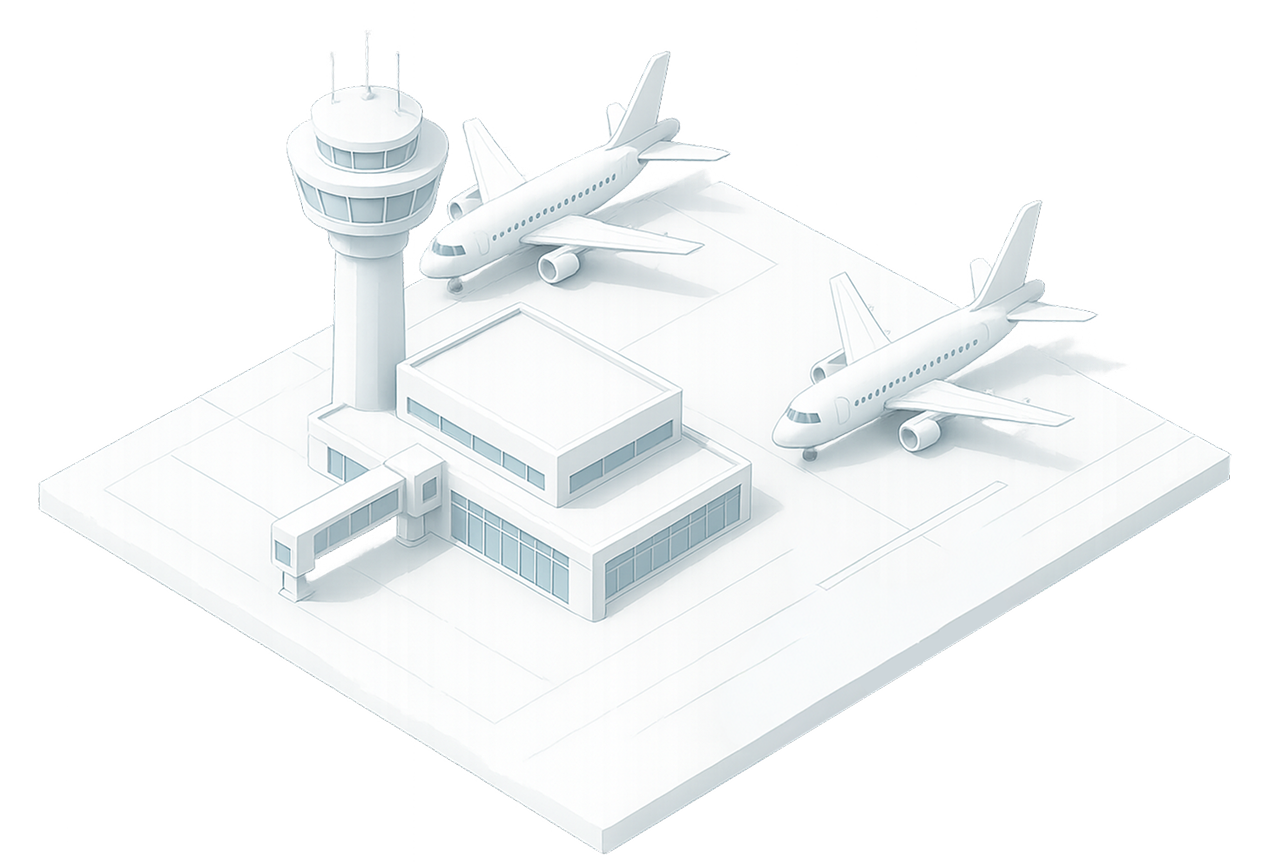
Memmingen Airport (FMM) is located about 110 km west of Munich, serving southern Germany as a key gateway for budget travel. It connects over 53 destinations across Europe, North Africa, and the Middle East, and is the 10th busiest airport in Germany.
47.9888, 10.2396
Growth Trend
Passenger traffic increased by 14.8% year-over-year in 2024, continuing rapid expansion.

Employment
1,200
Employees include airline staff, ground handling, security, retail, and airport operations.

Global Ranking
Market Share of Major Airlines
Capacity Expansion
Ongoing terminal and apron expansions will increase capacity to accommodate over 4 million passengers annually.

Technological Advancements
Deployment of automated check-in kiosks and digital passenger information systems enhances efficiency.

Sustainability Initiatives
Implementation of solar energy systems and electric ground vehicles supports environmental targets.

Latest News & Updates
Recent developments and updates for Memmingen Airport.
Memmingen Airport expands its partnership with Lufthansa
Memmingen Airport has announced an extension of its partnership with Lufthansa, solidifying the airline's presence at the airport and boosting passenger numbers. The expansion includes increased flight frequencies and a strengthened commitment to regional connectivity.
Memmingen Airport celebrates record passenger numbers in 2023
Memmingen Airport reported a significant increase in passenger numbers for 2023, exceeding previous records and demonstrating a strong return to travel demand. The airport attributes this success to its strategic location and collaborative relationships with airlines.
Memmingen Airport: New Route to Naples Announced
Memmingen Airport has unveiled a new route to Naples, Italy, expanding its network and providing passengers with enhanced travel options to Southern Europe. This route launch is part of the airport's ongoing strategy to cater to growing tourist and business travel demands.
Operations Logistics & Timelines
Step-by-step process transit times for passengers and cargo.
For Clients
Passenger process times from arrival to gate.
- Arrival at Memmingen Airport5-10 mins
- Passport Control & Baggage Claim20-45 mins
- Baggage Carousel to Terminal Transfer5-15 mins
- Terminal Walk to Gate2-7 mins
For Employees
Cargo handling deadlines and operational procedures.
- General Cargo Cut-Off - Domestic60 mins pre-departure
- General Cargo Cut-Off - Int'l90 mins pre-departure
- Hand Baggage Cut-Off - Domestic30 mins pre-departure
- Hand Baggage Cut-Off - Int'l60 mins pre-departure
- Passenger Boarding Cut-Off (Domestic)15 mins pre-departure
- Passenger Boarding Cut-Off (Int'l)30 mins pre-departure
- Aircraft Turnaround Time Target90 mins
- Max Cargo Weight per Aircraft45,000 kg
- Minimum Cargo Size0.5 m3
- Dangerous Goods RegulationsADR/IATA compliant
- Security RegulationsStrict adherence to airport security protocols
- Load Planning ResponsibilityCargo Handlers & Load Planners
- Documentation RequirementsBill of Lading, Packing List, Shipper's Declaration
- Temperature Sensitive Cargo HandlingRequires designated equipment and procedures
Passengers' Tips & Tricks
- 1
Check FMM Module Connection
Ensure the FMM module is securely connected to your Apex controller. Disconnections are a common issue reported on Reef2Reef, so verify the connections and look for signs of a 'disconnected' state as discussed in several forum threads.
- 2
Verify Sensor Functionality
Confirm that both optical sensors included with the FMM module are functioning correctly. The sensors are critical for the FMM to operate properly; problems with the sensors can lead to inaccurate readings and ATO failure, as highlighted in multiple discussions.
- 3
Review Apex Programming (ATO)
Double-check your Apex controller's programming, specifically the settings related to your Automatic Top-Off (ATO) system. Ensure the ‘Fallback OFF’ setting is correctly configured to prevent outputs from being activated if the FMM disconnects – a detail found in Apex programming tutorials.
- 4
Inspect FMM Ports on Apex Controller
Be aware of potential issues with the FMM ports on your Apex controller. Some users have reported problems with these ports, so verify their functionality and ensure the FMM module is properly seated.
- 5
Monitor for Disconnection Errors
Regularly monitor your Apex controller's display or logs for any error messages indicating a disconnected FMM module. Promptly addressing disconnection errors as described on Reef2Reef can prevent ATO failures.
Cargo Tips & Tricks
- 1
Understand FMM Module Issues
The FMM module (often used with Apex controllers) can experience connectivity issues, as evidenced by multiple Reef2Reef forum discussions. Regularly check for disconnection and resetting the module by unplugging and replugging the USB cables. Consider updating firmware if available.
- 2
Verify FMM Port Configuration
As reported on Reef2Reef, ensure the FMM ports on your Apex controller are correctly configured within Fusion. Incorrect port assignments can lead to the FMM not being recognized.
- 3
Fallback Settings in Programming
Review the 'Fallback OFF' setting in your Apex programming. This setting prevents the Apex from continuing to operate if the FMM is disconnected, potentially preventing unexpected behavior and ATO malfunctions.
- 4
Sensor Connectivity and Calibration
The FMM relies on optical sensors. Verify that these sensors are properly connected and functioning correctly. Consider recalibrating the sensors within Fusion to ensure accurate readings.
- 5
Regular Diagnostics & Monitoring
Utilize Fusion's diagnostic tools to monitor the FMM's status and sensor readings. Proactive monitoring can help identify and address issues before they impact ATO functionality.
Tools & Resources
Essential tools, portals, and resources for clients and partners.
Data & Reports
Official statistics, research reports, and data tracking for Memmingen Airport.
Memmingen Airport Statistics
Detailed statistics covering passenger volumes, total number of flights, and destinations with connections to Memmingen Airport. Includes monthly data for comparison.
ACI World Data Center
Provides vital airport and air travel industry data, including passenger and cargo traffic statistics, aircraft movements, and rankings.
IATA - World Air Transport Statistics (WATS)
Access airline, airport, and country rankings based on selected passenger and freight metrics, airline rankings based on financial, fleet, and employee data.
Memmingen Airport Facts & Figures
Airport Statistics for Memmingen Airport (FMM)Data Center - ACI World
Location & Maps
Find Memmingen Airport on popular mapping services.
Interactive Map
Map Legend
Loading Google Maps...
Frequently Asked Questions
Common inquiries about operations and logistics at Memmingen Airport.
What is the passenger process like at Memmingen Airport (FMM)?
Passengers arriving at Memmingen Airport typically follow a standard arrival procedure. After disembarking, you'll proceed through passport control (if required), baggage claim, and customs. Transfer to and from the city of Memmingen is easily facilitated by bus services (Line 666) which run frequently and connect directly to the airport terminal. Taxi services are also readily available.
What type of cargo handling does Memmingen Airport offer?
Memmingen Airport primarily focuses on general cargo and charter flights. It boasts a modern cargo facility offering services such as warehousing, sorting, customs clearance, and trucking services. It's particularly suitable for time-sensitive cargo and smaller shipments, although it has limited capabilities for large, heavy-lift operations.
What transport options are available to and from Memmingen Airport?
Besides the frequent bus service (Line 666) connecting to Memmingen city, taxis are readily accessible. Rental car agencies are located nearby. The airport is approximately 10 kilometers (6.2 miles) from Memmingen, and private car services can be arranged for direct transport.
Does Memmingen Airport have a dedicated heliport?
Yes, Memmingen Airport operates a small but strategically important heliport. It's primarily used for emergency medical services (EMS) operations, particularly for transporting patients to the University Hospital in Tübingen. This heliport adds a unique dimension to the airport's operations.
For More Info
Third-party resources, government portals, ratings, and more.
