Nnamdi Azikiwe International Airport
Nigeria's second busiest airport and the primary gateway to the nation's capital.

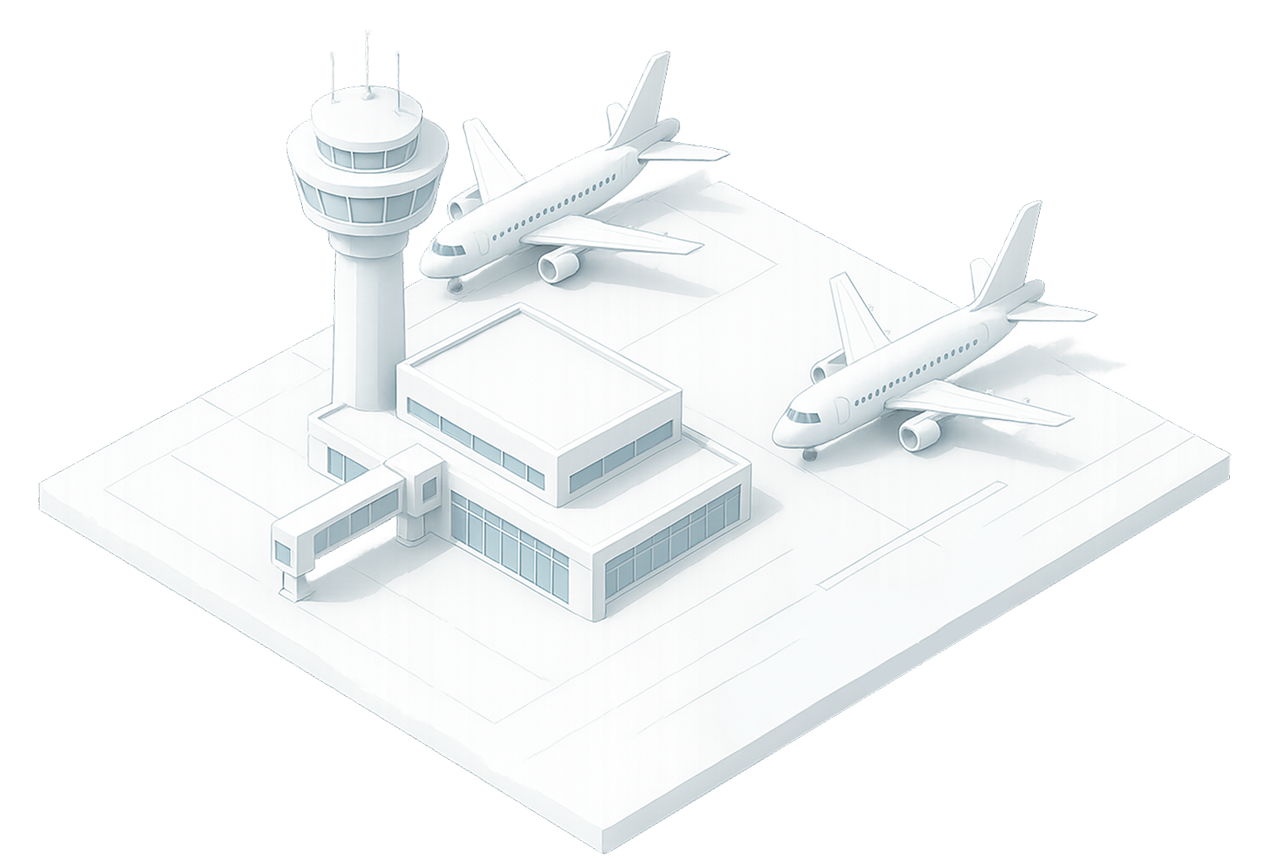

Overview of the Airport
Nnamdi Azikiwe International Airport (ABV) is located about 20 km west of Abuja's city center. It serves as the main international and domestic airport for Nigeria's capital, with two terminals and a new international facility inaugurated in 2023.
{"latitude":9.00679,"longitude":7.26317}
Growth Trend
Passenger traffic has shown steady growth with the opening of the new terminal in 2023.

Employment
5,000
Employees include airline staff, ground handlers, security, concessions, and airport authority personnel.

Global Ranking
Market Share of Major Airlines
Capacity Expansion
The new international terminal increases annual passenger capacity to 15 million, with plans for a second runway and expanded cargo facilities.

Technological Advancements
Recent upgrades include advanced baggage handling, digital check-in, and improved security screening systems.
Sustainability Initiatives
Initiatives include energy-efficient terminal design and plans for solar power integration.

Latest News & Updates
Recent developments and updates for Nnamdi Azikiwe International Airport.
Nigeria's Azikiwe Airport resumes operations after shutdown
The Nnamdi Azikiwe International Airport in Enugu, Nigeria, reopened on Monday after a three-day shutdown due to a strike by airport workers demanding improved conditions.
Enugu Airport workers resume duty after meeting with FG
Following a three-day strike, airport workers at Nnamdi Azikiwe International Airport have resumed their duties after meeting with federal government officials.
Nnamdi Azikiwe Airport shuts down over workers’ strike
The Nnamdi Azikiwe International Airport in Enugu was temporarily shut down on Friday due to a strike by airport workers protesting poor working conditions and alleged unfair treatment.

Operations Logistics & Timelines
Step-by-step process transit times for passengers and cargo.
For Clients
Passenger process times from arrival to gate.
- Arrival & Baggage Claim15-30 mins
- Immigration & Customs30-60 mins
- Baggage Reclaim (if needed)15-45 mins
- Ground Transportation to Gate10-20 mins
- Check-in/Security20-45 mins
- Boarding10-15 mins
For Employees
Cargo handling deadlines and operational procedures.
- General Cargo Cut-off60 mins pre-departure
- Arrival ProcessingUpon arrival, aircraft is directed to the General Cargo Ramp.
- Document VerificationGround staff verifies all import/export documents (Bill of Lading, Commercial Invoice, Packing List, etc.)
- Security ScreeningCargo undergoes security screening procedures as per IATA regulations.
- Scanning & WeighingCargo is scanned and weighed accurately.
- Staging & SortingCargo is staged and sorted based on destination and flight schedule.
- Loading onto AircraftCargo is loaded onto the designated aircraft by trained handlers.
- Final Security CheckA final security check is conducted before departure.
Passengers' Tips & Tricks
- 1
Arrive Early
Due to frequent security screenings and potential traffic delays, it's highly recommended to arrive at least 3 hours before your international flight departure. Domestic flights may require 2 hours.
- 2
Visa Requirements
Ensure you have the necessary visa for Nigeria well in advance of your travel date. Processing times can be lengthy, and obtaining a visa on arrival is not always guaranteed.
- 3
Currency Exchange
While some vendors accept international credit cards, it's advisable to exchange a small amount of currency (Naira) upon arrival for local expenses, transportation, and smaller vendors.
- 4
Airport Transportation
Pre-book a reliable airport transfer service or taxi to avoid potential scams and ensure a smooth journey to your final destination. Ride-hailing apps may have limited coverage.
- 5
Mobile Connectivity
Purchase a local SIM card upon arrival for convenient and affordable mobile data and communication. Ensure your phone is unlocked before travelling.
Cargo Tips & Tricks
- 1
Book in Advance
Air freight capacity at ABV is highly dynamic, especially during peak seasons and major events. Booking cargo shipments well in advance – ideally 4-6 weeks – significantly increases the chances of securing space and obtaining the most favorable rates. Early booking allows for better planning and avoids last-minute surcharges.
- 2
Utilize Cargo Charter Options
For urgent or oversized shipments, explore cargo charter options. While more expensive, charter flights guarantee dedicated space and faster transit times, bypassing the constraints of scheduled cargo services. Engage with charter brokers specializing in African routes for optimal results.
- 3
Understand Customs Regulations Thoroughly
Nigeria’s Customs regulations are complex and subject to change. Comprehensive knowledge of import/export requirements, documentation needs (including CITES permits and phytosanitary certificates), and tariff classifications is crucial to avoid delays and penalties. Partner with a reputable customs broker experienced in ABV operations.
- 4
Leverage Strategic Partnerships with Forwarders
Working with experienced freight forwarders based in or near ABV can provide invaluable logistical support. Forwarders can manage documentation, customs clearance, ground transportation, and insurance, streamlining the shipping process and reducing operational risks. Choose a forwarder with strong relationships with local airlines and ground handlers.
- 5
Prepare for Infrastructure Limitations
ABV’s cargo infrastructure, including handling equipment and warehousing facilities, can experience capacity constraints. Thoroughly assess ground handling requirements, including ramp access, baggage handling systems, and temperature-controlled storage, and proactively plan for potential bottlenecks. Consider utilizing off-airport storage solutions where necessary.
Tools & Resources
Essential tools, portals, and resources for clients and partners.
Data & Reports
Official statistics, research reports, and data tracking for Nnamdi Azikiwe International Airport.
Nigeria Civil Aviation Authority - Airport Information - Nnamdi Azikiwe International Airport
Official information page from the NCAA detailing the airport's operations, facilities, and contact information.
Nigerian Meteorological Agency - Airport Data
Data related to weather conditions and airport operations provided by the Nigerian Meteorological Agency, which impacts ABV operations.
Federal Ministry of Aviation - Nnamdi Azikiwe International Airport
Official page from the Federal Ministry of Aviation outlining airport governance and projects.
Wikipedia - Nnamdi Azikiwe International Airport
General information about the airport's history, location, and facilities.
Airfield Guide - Nnamdi Azikiwe International Airport
Aviation resource providing details like runway lengths, approach procedures, and other operational data.
Location & Maps
Find Nnamdi Azikiwe International Airport on popular mapping services.
Frequently Asked Questions
Common inquiries about operations and logistics at Nnamdi Azikiwe International Airport.
What is the process for passenger security screening?
Passengers proceed through standard security screening procedures at the departure terminal. This includes screening of carry-on baggage and personal belongings to ensure a safe travel environment. All passengers are required to present valid identification documents.
How does the airport handle cargo shipments?
ABV handles cargo through dedicated freight terminals equipped with specialized handling equipment. Customs and excise officials inspect all shipments to ensure compliance with regulations. Cargo operations are primarily managed through coordinated ground transport.
What transport options are available to and from the airport?
Taxi services and ride-hailing apps are readily available for transport to and from the airport. The airport also offers a dedicated airport shuttle service, connecting to major hotels and city centers. Public bus routes are available but may have limited schedules.
For More Info
Third-party resources, government portals, ratings, and more.
