Okayama Momotaro Airport
A key regional gateway in western Japan, connecting Okayama to major domestic and select international destinations.

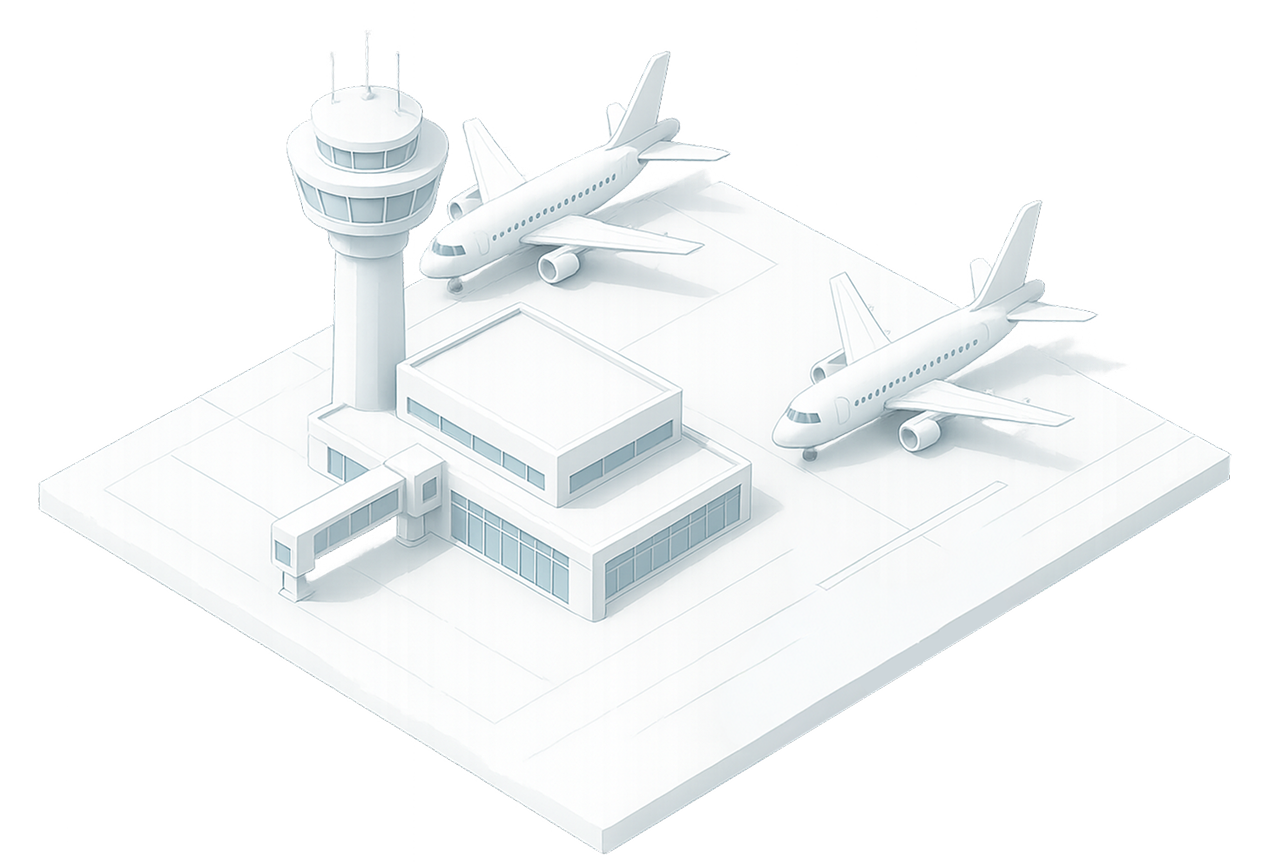

Overview of the Airport
Okayama Momotaro Airport (OKJ) is located 18 km northwest of central Okayama City, serving as the primary air transport hub for Okayama Prefecture. The airport supports both domestic and limited international flights, with a 3,000-meter runway accommodating mid-sized aircraft.
34.756944, 133.855278
Growth Trend
Passenger traffic showed a modest recovery in 2023 following pandemic-related declines.

Employment
1,200
Staff includes airline personnel, ground handlers, security, concessions, and airport operations.

Global Ranking
Market Share of Major Airlines
Capacity Expansion
The airport's 3,000-meter runway and recent terminal upgrades support steady passenger and cargo volumes.

Technological Advancements
Deployment of service robots and digital signage enhances passenger experience and operational efficiency.

Sustainability Initiatives
Energy-efficient lighting and waste reduction programs are in place to minimize environmental impact.

Latest News & Updates
Recent developments and updates for Okayama Momotaro Airport.
Okayama Momotaro Airport’s terminal expansion plans unveiled
Okayama Momotaro Airport has announced plans to remodel and expand its terminal building, aiming to complete the project by 2032. The expansion is intended to accommodate increased passenger traffic and improve the overall travel experience.
Okayama Momotaro Airport marks 60 years of operation
Okayama Momotaro Airport celebrated its 60th anniversary of operation on March 18, 2026. The airport has played a vital role in connecting Okayama to domestic and international destinations over the past six decades.
Flights from Okayama Momotaro Airport to Tokyo (Haneda) - Timetables
Okayama Momotaro Airport offers domestic and international flight schedules, including connections to Tokyo (Haneda). Passengers can find detailed timetables and information on accessing the airport via car, bus, or taxi.

Operations Logistics & Timelines
Step-by-step process transit times for passengers and cargo.
For Clients
Passenger process times from arrival to gate.
- Arrival & Baggage Claim10-20 mins
- Immigration & Customs15-30 mins
- Collect Luggage5-10 mins
- Transfer to Gate5-15 mins
- Boarding5-10 mins
For Employees
Cargo handling deadlines and operational procedures.
- General Cargo Cut-off60 mins pre-departure
- Cargo Booking & DocumentationTBD
- Arrival Notification45 mins pre-departure
- Cargo Consolidation & ULD Loading30 mins pre-departure
- Weighing & Measurement20 mins pre-departure
- Security Screening & Customs Clearance15 mins pre-departure
- Final Loading & Flight Check10 mins pre-departure
Passengers' Tips & Tricks
- 1
Arrive Early
Due to Okayama Momotaro Airport’s location outside the city center (12km), allow extra time for transportation to and from the terminal, especially during peak hours or if you're taking a bus. Check-in and security lines can also be unpredictable.
- 2
Utilize Self-Service Kiosks
Japan Airlines operates self-service kiosks in Terminal 1 for domestic flights. This is a faster and more efficient way to check in and print your boarding pass, bypassing traditional check-in counters.
- 3
Confirm Transportation Options
Research and pre-book your transportation to and from the airport. Options include buses, taxis, and rental cars. Bus routes are available, but can be affected by traffic. Taxis are readily available but more expensive.
- 4
Check Baggage Allowance Carefully
Review your airline's baggage allowance rules carefully to avoid any unexpected fees at the airport. Weigh your luggage before traveling to ensure compliance.
- 5
Explore Terminal 1 Amenities
Terminal 1 offers amenities such as shops, restaurants, and ATMs. Take advantage of these facilities during your layover or before your flight.
Cargo Tips & Tricks
- 1
Book in Advance
Air freight capacity at Okayama Momotaro Airport (OKJ) can be limited, especially during peak seasons. Booking your cargo shipments well in advance ensures availability and potentially better rates.
- 2
Utilize Terminal Services
Okayama Momotaro Airport offers both self-service kiosk machines and traditional check-in counters for Japan Airlines domestic flights. Leveraging these options can streamline your cargo handling process.
- 3
Confirm Korean Air Connections
Korean Air operates direct flights from Okayama Momotaro Airport (OKJ) to Seoul. Confirming these connections in advance is crucial for seamless cargo transport.
- 4
Local Logistics Partners
Engage with local Okayama logistics partners familiar with Okayama Momotaro Airport's operations. They can assist with ground transportation, customs clearance, and warehousing.
- 5
Airport Terminal Familiarization
Familiarize yourself with the layout of Terminal 1, where Japan Airlines operates, to optimize cargo drop-off and pick-up procedures. Note that the airport is 12 km from the city center.
Tools & Resources
Essential tools, portals, and resources for clients and partners.
Data & Reports
Official statistics, research reports, and data tracking for Okayama Momotaro Airport.
Okayama Airport - Wikipedia
Wikipedia page providing basic information about Okayama Momotaro Airport, including its location and IATA/ICAO codes.
ACI World Data Center
ACI World's data center provides access to a wide range of airport and air travel industry data, including passenger and cargo statistics.
IATA Cargo Data
IATA's cargo data provides monthly traffic statistics for cargo traffic, offering insights into trends and shifts in the air cargo industry.
ICAO Aviation Data/Statistics Programme
ICAO's aviation data/statistics programme provides accurate and reliable aviation data for States and international organizations.
Japanese Airports by Total Cargo Volume
Data from Japan Aviation Hub detailing total cargo & mail volume for Japanese airports, spanning from 2004-2022.
Location & Maps
Find Okayama Momotaro Airport on popular mapping services.
Interactive Map
Map Legend
Loading Google Maps...
Frequently Asked Questions
Common inquiries about operations and logistics at Okayama Momotaro Airport.
What is the passenger processing like at OKJ?
Passengers typically experience efficient check-in and security screening. Automated systems and dedicated staff streamline the process, minimizing wait times for departures. Clear signage guides travelers throughout the terminal.
How is cargo handled at Okayama Airport?
Okayama Airport handles cargo through dedicated freight terminals. Cargo operations primarily focus on general cargo and perishable goods, utilizing temperature-controlled facilities. Customs clearance and sorting are conducted in accordance with regulations.
What transport options are available to/from OKJ?
Several bus routes connect Okayama Airport to Okayama Station and surrounding areas. Taxi services are also readily available outside the terminal. Rental car agencies provide vehicle access for travelers.
For More Info
Third-party resources, government portals, ratings, and more.
