Ostend–Bruges International Airport
A key Belgian regional airport, specializing in leisure travel and air cargo operations.

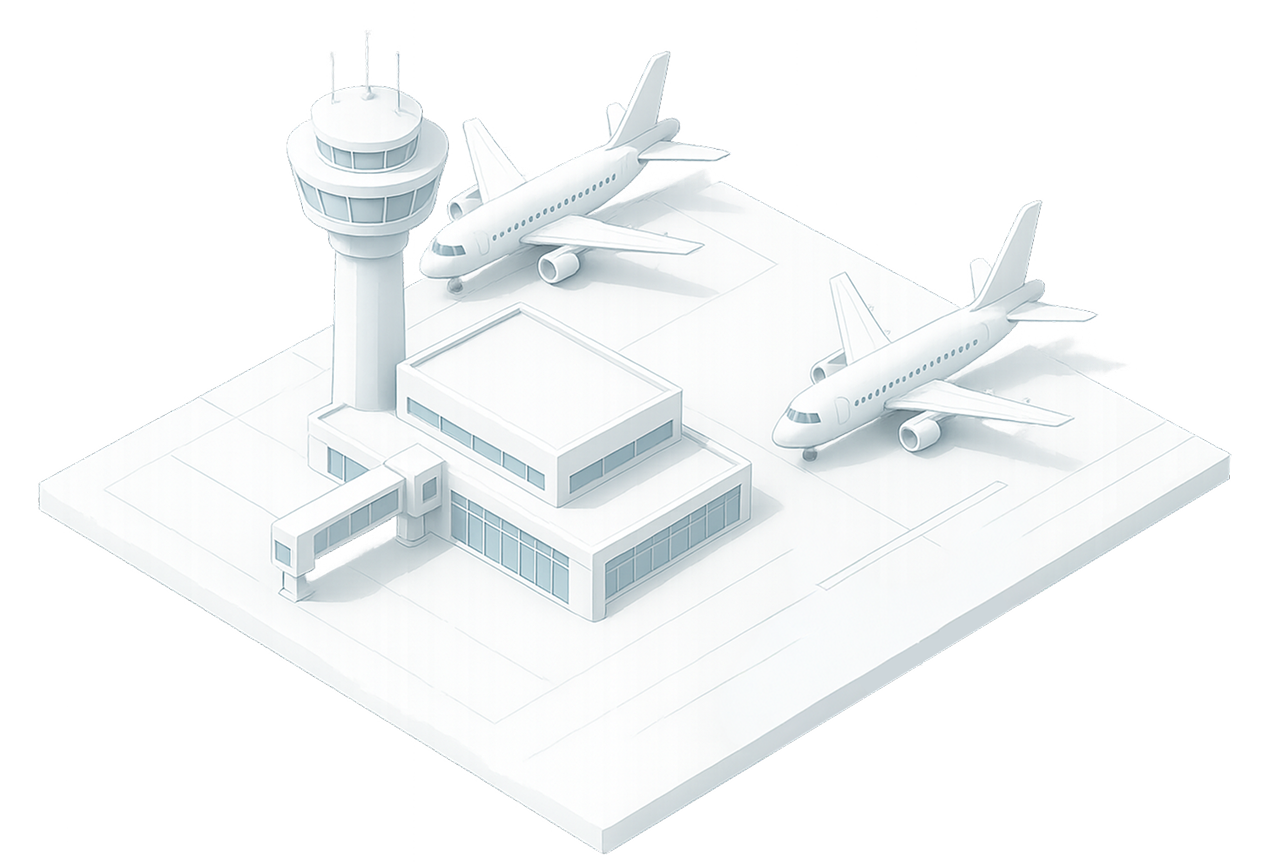

Overview of the Airport
Ostend–Bruges International Airport (OST) is located 5 km south-west of Ostend and 25 km from Bruges. It serves as a regional hub for passenger flights, charter operations, and significant air cargo activities, connecting West Flanders to European and Mediterranean destinations.
51.1989, 2.8622
Growth Trend
Passenger traffic increased by 4.6% year-over-year in 2023, while cargo volumes declined by 35%.

Employment
350
Staff include airline, ground handling, cargo, security, and airport operations personnel.

Global Ranking
Market Share of Major Airlines
Capacity Expansion
Recent investments, including a new 12,000 m² cargo warehouse, enhance cargo and passenger handling capabilities.

Technological Advancements
Deployment of advanced security screening and digital passenger processing systems improves efficiency.

Sustainability Initiatives
Initiatives include energy-efficient terminal upgrades and support for sustainable aviation fuels (SAF).

Latest News & Updates
Recent developments and updates for Ostend–Bruges International Airport.
Brussels Airport expects 1.7 million passengers in 2024 – but still relies on Schiphol
Ostend–Bruges International Airport (OST) is expecting to handle 1.7 million passengers in 2024, although the airport continues to rely on connections through Amsterdam Schiphol Airport for much of its traffic.
Ostend Airport passengers up 18% in first quarter
Ostend–Bruges International Airport has reported a 18% increase in passenger numbers for the first quarter of 2024 compared to the same period last year, driven by a strong recovery in transatlantic flights.
Ostend-Bruges Airport welcomes first flight of the season
Ostend–Bruges International Airport welcomed its first flight of the season on January 11th, marking the official start of the winter schedule and the resumption of transatlantic flights.
Operations Logistics & Timelines
Step-by-step process transit times for passengers and cargo.
For Clients
Passenger process times from arrival to gate.
- Arrival & Baggage Claim30-60 mins
- Immigration & Customs15-45 mins
- Terminal Navigation to Check-in5-15 mins
- Check-in & Security30-75 mins
- Gate Arrival10-20 mins
For Employees
Cargo handling deadlines and operational procedures.
- General Cargo Cut-off (Standard Cargo)90 minutes pre-departure
- General Cargo Cut-off (Expedited Cargo)30 minutes pre-departure
- Dangerous Goods Submission Cut-off60 minutes pre-departure
- Over-Size/Over-Weight Cargo Cut-off90 minutes pre-departure
- Hand Baggage Cut-off (for Check-in)60 minutes pre-departure
- Passenger Boarding Cut-off15 minutes pre-departure
- Manifest Close30 minutes pre-departure
- Fueling Cut-off60 minutes pre-departure
- Aircraft Turnaround Time (Target)90-120 minutes
- Airport Operating HoursTypically 06:00 - 23:00, subject to change
Passengers' Tips & Tricks
- 1
Utilize the Airport Lounges
Ostend-Bruges International Airport offers several lounge options (e.g., Plaza Premium, AX Lounge) for a more comfortable and productive departure experience. Consider purchasing a day pass for access to Wi-Fi, refreshments, and quiet seating.
- 2
Navigating the Terminal is Easy
The terminal is relatively small and easy to navigate. Follow the signs clearly marked for Arrivals, Departures, Baggage Claim, and Car Rental. There's also a helpful information desk if you need assistance.
- 3
Currency Exchange is Available
While Belgium uses the Euro (€), it's wise to have some Euros on hand for smaller purchases or emergencies. The airport has a currency exchange facility, but rates may not be the most competitive.
- 4
Train Connections to Bruges are Frequent
Bruges is just a short train ride away (approximately 10-15 minutes). Trains depart regularly from the station located directly within the airport. Purchase your ticket in advance for faster boarding.
- 5
Check Baggage Handling Times
While generally efficient, baggage handling times can vary. Allow ample time to collect your luggage and ensure it’s properly tagged for your final destination to minimize potential delays.
Cargo Tips & Tricks
- 1
Understand Luggage Allowance Limits
Ostend-Bruges International Airport (OST) adheres to standard European Union baggage allowance rules. Be sure to check with your airline beforehand regarding size and weight restrictions for both checked and carry-on luggage to avoid excess baggage fees. Carry-on limits are generally stricter than checked baggage limits.
- 2
Consider Airport Location & Transportation
OST is located in Zeebrugge, a port town near Bruges. Factor in travel time to and from Bruges (approximately 30-45 minutes by car or bus) when planning your arrival and departure. Taxis and buses are readily available, but pre-booking a transfer can simplify the process.
- 3
Check Customs Regulations for Belgium
Belgium has specific customs regulations regarding goods you can bring in. Declare any goods exceeding the duty-free allowances. Be aware of restrictions on certain agricultural products or items requiring permits. The Belgian Customs website ([https://www.douane.be/en](https://www.douane.be/en)) provides comprehensive information.
- 4
Utilize Airport Services for Large Shipments
For larger freight or cargo shipments, it's recommended to contact the airport's cargo services department directly. They can assist with handling logistics, customs clearance, and potentially arrange ground transportation to your final destination in Belgium or beyond. Contact information can be found on the airport website.
- 5
Allow Ample Time for Transfers and Customs
Due to potential delays at customs and airport transfers to Bruges, allow yourself at least 2-3 hours between your flight arrival and pickup, and a similar amount for departure. This buffer will reduce stress and ensure a smooth transition.
Tools & Resources
Essential tools, portals, and resources for clients and partners.
Data & Reports
Official statistics, research reports, and data tracking for Ostend–Bruges International Airport.
Airport Statistics Ostend | Bruges | OST
Provides constantly updated airport statistics for Ostend|Bruges airport, including Delay Index and Airport Movements Chart. Allows for use of the data with source attribution.
OSTEND-BRUGES AIRPORT Cargo
Details the airport's cargo operations, highlighting its flexibility, efficiency, and position as a high-performance cargo hub in Western Europe.
Ostend-Bruges Airport handled 51,000 tonnes of cargo in 2022
Reports on the airport’s 2022 cargo volume, stating that 51,000 tonnes were handled, with comparison to previous years and passenger numbers.
Airport Statistics Ostend | Bruges | OST
Provides constantly updated airport statistics for Ostend|Bruges airport, including Delay Index and Airport Movements Chart. Allows for use of the data with source attribution.
Location & Maps
Find Ostend–Bruges International Airport on popular mapping services.
Interactive Map
Map Legend
Loading Google Maps...
Frequently Asked Questions
Common inquiries about operations and logistics at Ostend–Bruges International Airport.
What is the passenger process like at Ostend-Bruges International Airport (OST)?
Passengers arriving at OST typically proceed through security screening and then to baggage claim. Departing passengers check in at their respective airline counters, complete security, and then head to the departure lounge. The airport offers several shops, restaurants, and a lounge for passenger comfort.
What type of cargo handling services does OST offer?
OST handles a range of cargo, primarily focusing on general cargo and project cargo. They offer warehousing, customs clearance, and freight forwarding services, with connections to major European logistics networks. Specific capabilities include temperature-controlled storage and handling.
What transport options are available to and from Ostend-Bruges International Airport?
Several options are available. You can reach the airport by car (with easy access to the E40 motorway), taxi, or bus (lines 32 and 33). Train connections are available to Bruges and other destinations. Rental car companies are also located at the airport.
Does OST have a dedicated 'skyport' area for private jet operations?
Yes, OST operates a dedicated 'skyport' area designed specifically for private jet and business aircraft. This area provides a streamlined and convenient experience for these types of passengers, with private handling services and direct access to the terminal.
For More Info
Third-party resources, government portals, ratings, and more.
