Palanga International Airport
The third largest airport in Lithuania, serving as a key gateway to the Baltic Sea region.

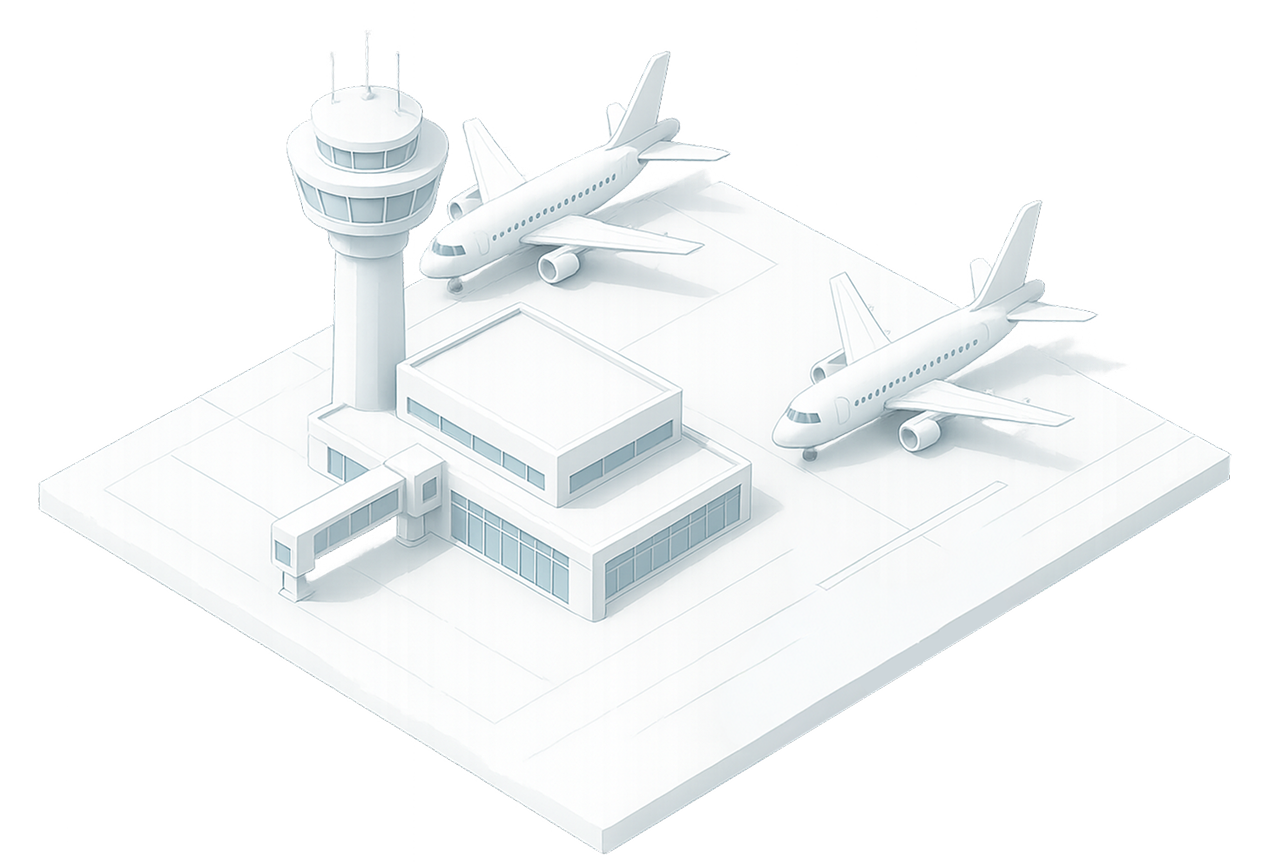

Overview of the Airport
Palanga International Airport (PLQ) is situated near the resort town of Palanga on Lithuania's Baltic Sea coast. It serves the western region, including Klaipėda and Samogitia, and offers short- and mid-range European connections.
55.97333, 21.09389
Growth Trend
Passenger traffic increased by 23% year-over-year in 2024.

Employment
350
Employees include airline staff, ground handlers, security, concessions, and airport operations personnel.

Global Ranking
Market Share of Major Airlines
Capacity Expansion
Ongoing infrastructure upgrades are enhancing terminal capacity and operational efficiency.

Technological Advancements
Deployment of self-service check-in kiosks and digital boarding systems improves passenger processing.
Sustainability Initiatives
Implementation of energy-efficient lighting and waste reduction aligns with Lithuanian Airports’ green strategy.

Latest News & Updates
Recent developments and updates for Palanga International Airport.
Palanga International Airport is being modernized with the construction of a new terminal
The Palanga International Airport is undergoing a major modernization project, including the construction of a new passenger terminal and expansion of the runway. This investment aims to increase the airport’s capacity and improve passenger experience.
Palanga Airport's Terminal A is now open for business
The first phase of the Palanga International Airport renovation, focusing on Terminal A, has been completed and is now operational. This upgrade significantly increases passenger flow and provides enhanced amenities for travelers.
Palanga Airport’s new terminal nears completion as airport undergoes ambitious expansion
The construction of Palanga International Airport’s new terminal is nearly finished, marking a significant step in the airport's extensive development project. The ambitious expansion is expected to dramatically improve the airport's services and attract more international flights.
Operations Logistics & Timelines
Step-by-step process transit times for passengers and cargo.
For Clients
Passenger process times from arrival to gate.
- Arrival & Baggage Claim15-45 mins
- Customs & Immigration30-90 mins
- Terminal Navigation to Departure Area5-15 mins
- Gate Check-in/Bag Drop (if applicable)10-30 mins
- Boarding5-15 mins
For Employees
Cargo handling deadlines and operational procedures.
- General Cargo Cut-off - Domestic Flights60 mins pre-departure
- General Cargo Cut-off - International Flights90 mins pre-departure
- Dangerous Goods Submission Deadline48 hours pre-departure
- Pallet Loading Deadline - All Flights30 mins pre-departure
- Hand Baggage Check-in Deadline60 mins pre-departure
- Passenger Boarding Cut-off - Domestic30 mins pre-departure
- Passenger Boarding Cut-off - International60 mins pre-departure
- Baggage Sorting System Downtime NotificationImmediately upon occurrence
- Flight Manifest VerificationDaily
- Weight & Balance VerificationPrior to each loading operation
Passengers' Tips & Tricks
- 1
Arrive Early for Potential Delays
Palanga International Airport (PLQ) can experience congestion, especially during peak season. Allow ample time for check-in, security, and potential delays, particularly if traveling during summer months or holidays. We recommend arriving at least 2 hours before your scheduled departure for international flights and 1.5 hours for domestic.
- 2
Currency Exchange Options Limited
While there's a currency exchange booth in the arrivals hall, options are limited and rates might not be the most competitive. It's highly recommended to exchange currency before your trip or use ATMs upon arrival at Palanga International Airport.
- 3
Transportation to City Center is Available but Requires Planning
Taxi services are readily available outside the terminal, but fares can vary. Bus number 101 connects the airport to Palanga's city center. However, schedules may be limited, especially outside of peak season, so check the current timetable before your trip. Pre-booking a private transfer is an alternative.
- 4
Luggage Handling Can Be Slow
Due to the airport's size and volume of passengers, luggage handling can sometimes be slow. Be patient and allow extra time for retrieving your baggage after arrival. Consider using baggage tracking services if available to monitor your luggage's progress.
- 5
Limited Duty-Free Shopping
The duty-free shopping options at Palanga International Airport are relatively small. If you require duty-free purchases, it's best to purchase them before your flight or upon arrival in a destination with duty-free concessions.
Cargo Tips & Tricks
- 1
Optimize Cargo Manifests for Faster Processing
Palanga International Airport (PLQ) could significantly reduce processing times by implementing a digitized, standardized cargo manifest system. This allows for quick data entry and verification, minimizing delays due to manual checks and paperwork. Clear, concise information regarding cargo type, weight, and dimensions is crucial.
- 2
Leverage Strategic Partnerships with Logistics Providers
Establishing strong relationships with reliable freight forwarders and logistics companies operating in the Baltic region can streamline the entire import/export process. Prioritize partners with experience handling cargo to PLQ and understanding local regulations. Regular communication and collaborative tracking are key.
- 3
Invest in Enhanced Baggage Handling Systems
While primarily focused on freight, PLQ's baggage handling infrastructure can inform improvements for larger cargo operations. Modern scanning and sorting technologies can increase efficiency and reduce the risk of misrouted shipments. Consider investing in systems optimized for palletized cargo.
- 4
Proactive Customs Clearance Collaboration
Palanga Airport can improve its turnaround times by working closely with customs officials. Advance Notice of Cargo (AND/C) programs, pre-screening of shipments, and dedicated liaison officers can expedite clearance and prevent costly delays at the border. Regular data sharing is important.
- 5
Utilize Digital Tracking and Visibility Platforms
Implementing a real-time tracking system for all cargo shipments – from origin to destination – provides transparency and allows stakeholders to proactively address potential issues. Integration with logistics partners and customs authorities is crucial for maintaining complete visibility and improving operational efficiency.
Tools & Resources
Essential tools, portals, and resources for clients and partners.
Data & Reports
Official statistics, research reports, and data tracking for Palanga International Airport.
Palanga Airport Annual Report 2023
This report details the airport's operations and statistics for the year 2023.
Palanga Airport - Strategic Plan 2024-2028
Strategic plan outlining the airport's objectives and development strategies for the next five years.
Palanga Airport - Operational Statistics (2023)
Provides specific data on passenger numbers, aircraft movements, and cargo handled at Palanga Airport in 2023.
Palanga Airport - World Bank Report Extract
Excerpt from the World Bank report detailing Palanga Airport's characteristics and traffic volumes.
Location & Maps
Find Palanga International Airport on popular mapping services.
Interactive Map
Map Legend
Loading Google Maps...
Frequently Asked Questions
Common inquiries about operations and logistics at Palanga International Airport.
What is the passenger process like at Palanga International Airport?
Passengers arriving at PLQ typically proceed through security screening and then to baggage claim. Departure involves check-in, security, and boarding. The airport currently serves primarily domestic routes within Lithuania, offering a streamlined experience for short-haul flights. Passport control is located within the terminal building.
How does cargo handling work at Palanga Airport?
Palanga Airport's cargo operations are primarily handled by external logistics companies. There isn’t a dedicated, large-scale cargo terminal. Goods are typically transferred to trucking companies for onward transport to major Lithuanian ports like Klaipeda or Vilnius. Customs clearance is handled by the relevant authorities through this external logistics network.
What transportation options are available to and from Palanga International Airport?
Several taxi companies operate at PLQ, offering rides to destinations throughout Palanga and the surrounding region. Bus routes connect the airport to Palanga's city center. Car rental services are also available. Private car services can be arranged through the airport's information desk.
Palanga Airport is located directly on the Baltic Sea. Can passengers access the beach directly from the terminal?
While Palanga International Airport is situated adjacent to the Baltic Sea, there is currently no direct access to the beach from the terminal building. Passengers would need to utilize taxi or bus services to reach the beach promenade and beaches located approximately 1-2 kilometers away.
For More Info
Third-party resources, government portals, ratings, and more.
