Pisa International Airport Galileo Galilei
Tuscany’s busiest airport and Ryanair base, ranking 10th in Italy by passenger traffic.

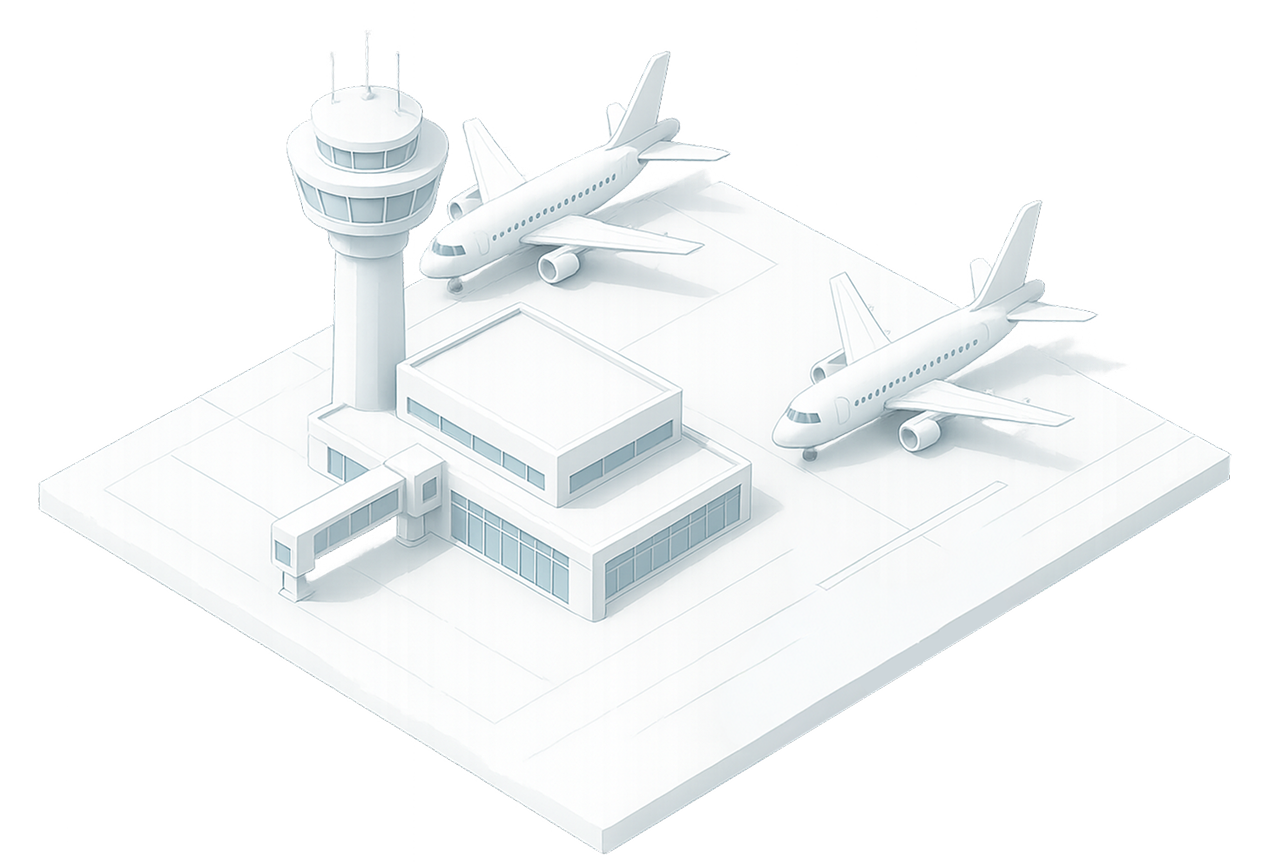

Overview of the Airport
Pisa International Airport Galileo Galilei (PSA) is located just 1 km south of central Pisa, serving as the main gateway for Tuscany. It is a key hub for low-cost carriers and connects the region to over 50 destinations across Europe, North Africa, and the Mediterranean.
43.68389, 10.39250
Growth Trend
Passenger traffic increased by 10.0% in the first half of 2025 compared to the previous year[1].

Employment
2,800
Staff includes airline personnel, ground services, concessions, and airport operations.
Global Ranking
Market Share of Major Airlines
Capacity Expansion
Ongoing terminal expansion will increase annual capacity to 6–7 million passengers[5].

Technological Advancements
Deployment of AI-driven operations and digital passenger services enhances efficiency and experience[6].

Sustainability Initiatives
Implementation of energy-efficient systems and green building practices supports environmental goals.

Latest News & Updates
Recent developments and updates for Pisa International Airport Galileo Galilei.
Pisa Airport reports record passenger numbers in 2023
Pisa International Airport (PSA) has announced a significant increase in passenger numbers for 2023, exceeding pre-pandemic levels. The airport attributed the growth to a strong recovery in international travel and a rise in domestic tourism.
Pisa Airport Sees Increase in Passengers in January 2024
January 2024 saw an increase in passenger traffic at Pisa International Airport (PSA), driven primarily by a surge in flights to and from London. The airport is anticipating continued growth throughout the year.
Pisa Airport to welcome new Ryanair route to Naples
Pisa International Airport (PSA) is set to expand its network with a new direct flight to Naples operated by Ryanair. This new route is expected to further boost tourism to the region and connect Pisa with Southern Italy.
Operations Logistics & Timelines
Step-by-step process transit times for passengers and cargo.
For Clients
Passenger process times from arrival to gate.
- Arrival at Terminal15-30 mins
- Immigration Control30-60 mins
- Baggage Claim15-45 mins
- Customs15-30 mins
- Collecting Tickets/Information5-15 mins
- Walking to Gate5-15 mins
For Employees
Cargo handling deadlines and operational procedures.
- General Cargo Cut-off (Standard Cargo)90 minutes pre-departure
- General Cargo Cut-off (Express Cargo)30 minutes pre-departure
- Dangerous Goods Cut-off90 minutes pre-departure
- Overweight Cargo Cut-off90 minutes pre-departure
- Live Animals Cut-off90 minutes pre-departure
- Manifest Deadline (Standard Cargo)60 minutes pre-departure
- Manifest Deadline (Express Cargo)30 minutes pre-departure
- Manifest Deadline (Dangerous Goods)30 minutes pre-departure
- Manifest Deadline (Overweight)30 minutes pre-departure
- Manifest Deadline (Live Animals)30 minutes pre-departure
- Security Check-in Deadline (All Cargo)60 minutes pre-departure
Passengers' Tips & Tricks
- 1
Utilize the AirTrain Pisa
Pisa Airport utilizes a free AirTrain system to connect the terminal to the Pisa Centrale train station. This is the fastest and most convenient way to reach the city center, avoiding potential taxi queues and traffic. Check the AirTrain schedule for operating times.
- 2
Pre-book Airport Transfers
To avoid long waits for taxis or private transfers, especially during peak season, consider pre-booking your airport transfer in advance through reputable companies. Several options are available, including private cars, shared shuttles, and taxis.
- 3
Check Baggage Regulations for Low-Cost Carriers
If flying with Ryanair or Wizz Air, be particularly aware of their strict baggage regulations, including size and weight limits. Paying for checked baggage at the airport is significantly more expensive than booking it online beforehand.
- 4
Currency Exchange at Terminal 2
While currency exchange services exist, the most advantageous rates are generally found in Terminal 2. Compare rates with other options before exchanging currency.
- 5
Mobile App for Flight Information
Download the 'Pisa Airport' mobile app for real-time flight information, gate changes, and announcements. This can help you quickly locate your gate and stay informed about any potential delays.
Cargo Tips & Tricks
- 1
Understand Cargo Terminal Access
PSA’s cargo operations are primarily handled through the separate ‘Cargo Terminal Pisa’ located within the airport complex. Access is generally restricted to freight forwarders, airlines, and authorized personnel. Confirm your company’s access arrangements beforehand to avoid delays.
- 2
Utilize the Cargo Terminal’s EDI System
Pisa International Airport utilizes an Electronic Data Interchange (EDI) system for cargo operations. Ensure your shipping documents and customs declarations are correctly formatted and submitted through the EDI system to streamline processing.
- 3
Customs Clearance Procedures
Italy’s customs regulations are strict. Be prepared for thorough inspections. Have all required documentation (commercial invoice, packing list, bill of lading, certificate of origin) readily available and accurately completed. Allow ample time for customs clearance, especially for high-value goods.
- 4
Consider Ground Transportation Options
Pisa is well-connected by road. Options include taxis, ride-sharing services, and private car services. Pre-booking transportation for your cargo can help ensure a smooth and timely delivery to your final destination. Consider proximity to the Cargo Terminal.
- 5
Check for Seasonal Volume Variations
Like many European airports, PSA can experience fluctuations in cargo volume based on seasonal factors (e.g., tourist season, Christmas peak). Planning your shipment accordingly and allowing for potential delays is crucial.
Tools & Resources
Essential tools, portals, and resources for clients and partners.
Data & Reports
Official statistics, research reports, and data tracking for Pisa International Airport Galileo Galilei.
Pisa Airport Statistics
Provides detailed statistics on passenger volumes, total number of flights, and connections to Pisa Airport.
Airport Statistics Pisa | Galileo Galilei | PSA
Offers constantly updated airport statistics, including Delay Index and Airport Movements Chart, from a flight database.
Passenger and flightdataby month forPisaAirport(PSA)
Displays passenger volumes and flight data over time at Pisa Airport, allowing for comparisons.
Airport Statistics Pisa | Galileo Galilei | PSA
Real-time airport statistics for Pisa Airport (PSA).
Location & Maps
Find Pisa International Airport Galileo Galilei on popular mapping services.
Interactive Map
Map Legend
Loading Google Maps...
Frequently Asked Questions
Common inquiries about operations and logistics at Pisa International Airport Galileo Galilei.
What is the typical passenger process for arriving at Pisa International Airport?
Upon arrival at Pisa International Airport (PSA), you will proceed through passport control if required based on your nationality. After customs, you'll find baggage claim carousels numbered according to the flight's arrival. Once you've collected your luggage, you can follow signs for ground transportation, including taxi stands, bus stops, and train stations.
How does cargo handling operate at Pisa International Airport?
PSA handles a significant volume of cargo through its dedicated cargo terminal. Cargo handlers, primarily from companies like DHL, FedEx, and UPS, manage the import and export of goods. Passengers typically won't directly interact with the cargo operations, but the cargo terminal is accessible to authorized personnel.
What transport options are available to and from Pisa International Airport?
A variety of transport options are available, including taxis (easily accessible outside the terminal), Pisa Mover (a light rail system connecting the airport to the city center), buses (operated by Marconi Airport Trasporti), and private car services. Train services also connect the airport to major cities like Florence and Genoa.
Does PSA have a dedicated ‘Spaceport’ for launching sounding rockets?
Yes, Pisa International Airport is home to the Spaceport – a facility operated by the Italian Space Agency (ASI) for launching sounding rockets used for atmospheric research and technology testing. This is a unique feature of the airport, offering passengers the potential to witness rocket launches from close proximity (subject to launch schedules and safety regulations).
For More Info
Third-party resources, government portals, ratings, and more.
