Rafael Núñez International Airport
The main gateway to Colombia’s Caribbean coast and the third busiest airport in the country.

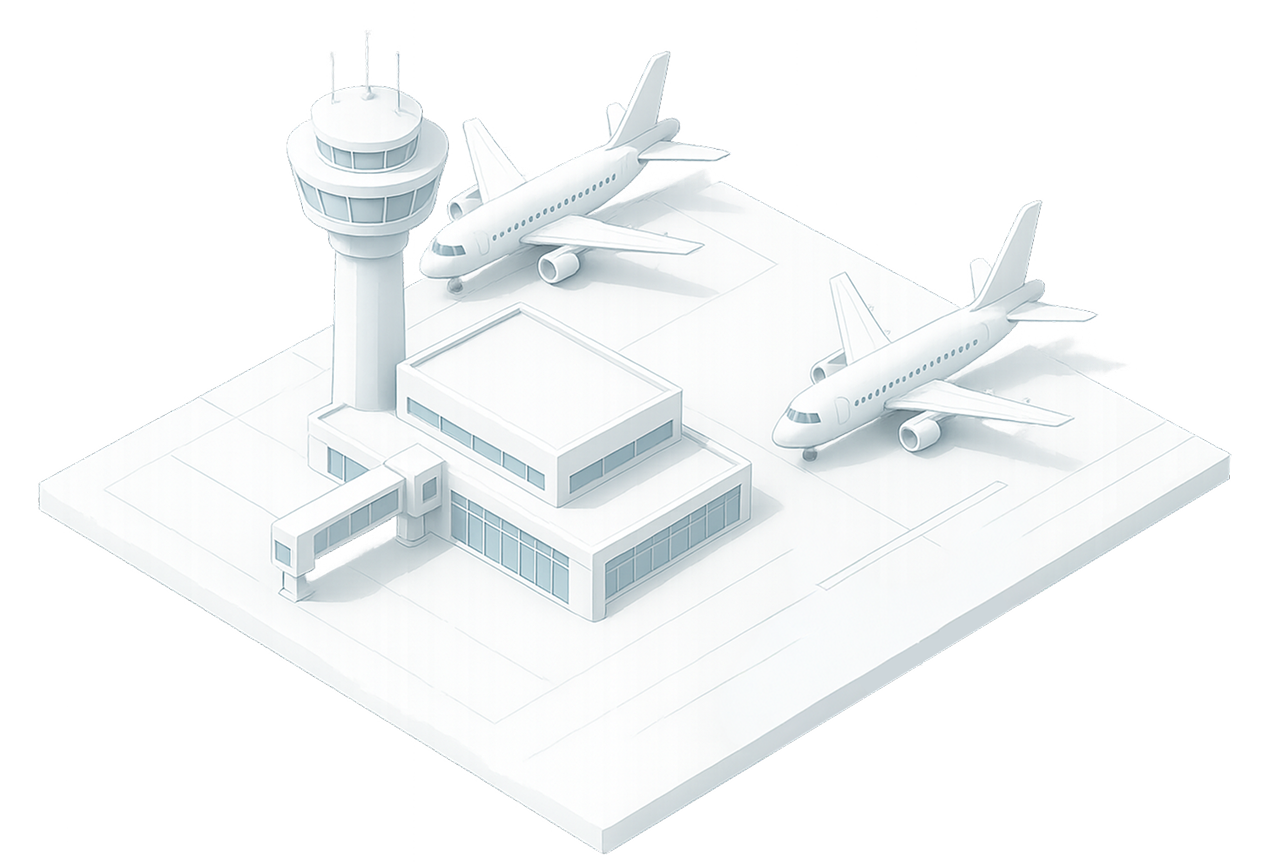

Overview of the Airport
Rafael Núñez International Airport (CTG) is located in the Crespo neighborhood, just 6 km north of Cartagena’s city center. It serves as the primary airport for Cartagena and the wider Caribbean region, handling both domestic and international flights. The airport provides convenient access to the city’s historic and tourist districts.
10.4424, -75.5130
Growth Trend
Passenger traffic reached a record 7.2 million in 2022, with continued growth expected as terminal expansion projects progress.

Employment
2,500
Staff includes airline personnel, ground services, security, concessions, and airport operations.

Global Ranking
Market Share of Major Airlines
Capacity Expansion
Ongoing terminal expansion projects will increase annual capacity beyond 8 million passengers and enhance operational efficiency.

Technological Advancements
Recent upgrades include automated check-in kiosks, improved security screening, and digital flight information systems.

Sustainability Initiatives
Implementation of energy-efficient lighting, water conservation systems, and waste reduction programs aligns the airport with environmental standards.

Latest News & Updates
Recent developments and updates for Rafael Núñez International Airport.
LATAM Increases Flights to Rafael Núñez International Airport in Camagüey
Low-cost airline LATAM increased its flights to Rafael Núñez International Airport (CTG) in Camagüey, Cuba, offering more options for travelers seeking affordable flights to the island.
Rafael Núñez International Airport Announces New Terminal Expansion
The Ministry of Transportation of Cuba announced plans for a significant expansion of the Rafael Núñez International Airport (CTG). The project aims to increase passenger capacity and improve the overall airport experience.
Flights to Camagüey Increase with New Routes
Several airlines have announced new routes to Rafael Núñez International Airport (CTG) in Camagüey, Cuba. This expansion reflects the growing interest in tourism and business travel to the region’s historical city.

Operations Logistics & Timelines
Step-by-step process transit times for passengers and cargo.
For Clients
Passenger process times from arrival to gate.
- Check-in5-15 mins
- Baggage Drop-off10-20 mins
- Security Screening20-45 mins
- Immigration/Customs15-30 mins
- Arrival at Gate5-10 mins
- Boarding10-15 mins
For Employees
Cargo handling deadlines and operational procedures.
- General Cargo Cut-off60 mins pre-departure
- Security Screening30 mins
- Baggage Drop-off15 mins
- Weight and Measurement Verification10 mins
- Load Planning & Stowing20 mins
- Cargo Manifest Verification15 mins
- Final Security Check10 mins
Passengers' Tips & Tricks
- 1
Arrive Early
Due to frequent weather-related delays and potential security lines, it's highly recommended to arrive at least 2-3 hours before your international flight departure at Rafael Núñez International Airport.
- 2
Check Baggage Restrictions Carefully
Colombian customs has strict regulations regarding items like electronics, certain foods, and medications. Thoroughly review the latest guidelines on the SENAN (National Narcotics Directorate) website to avoid confiscations or delays.
- 3
Utilize Airport Transportation Options
The airport offers a range of transportation services, including taxis, ride-sharing apps (Uber, Didi), and airport shuttles. Pre-booking a shuttle is often the most convenient and cost-effective option.
- 4
Currency Exchange & ATMs
While some establishments accept international credit cards, it's wise to have some Colombian Pesos (COP) on hand. ATMs are available in the airport, but exchange rates can be less favorable than at banks or authorized exchange houses.
- 5
Be Aware of Your Surroundings
Like any major airport, be mindful of your belongings and surroundings. Keep valuables secure and report any suspicious activity to airport security.
Cargo Tips & Tricks
- 1
Book in Advance
Air freight capacity at CTG can fluctuate significantly based on seasonal demand and events. Booking shipments well in advance, especially during peak tourism periods (December-April) or major events, allows for better visibility and secures space, often resulting in more competitive rates.
- 2
Utilize Local Forwarders
Partnering with reputable local forwarders experienced with CTG operations is crucial. They possess in-depth knowledge of customs procedures, ground handling requirements, and potential logistical challenges specific to the airport, streamlining the process.
- 3
Understand Customs Regulations
Colombia's customs regulations regarding import/export can be complex. Thoroughly research and understand requirements for your goods, including documentation, permits, and any restrictions, to avoid delays and penalties.
- 4
Optimize Cargo Manifestation
Accurate and timely cargo manifests are essential for efficient handling at CTG. Provide complete and up-to-date information on all shipments to minimize discrepancies and ensure smooth processing by customs and security personnel.
- 5
Leverage CTG’s Cargo Terminal Facilities
Take full advantage of CTG’s dedicated cargo terminal facilities, including temperature-controlled storage and handling equipment, to maintain cargo integrity and comply with specific product requirements. Confirm availability and operational hours in advance.
Tools & Resources
Essential tools, portals, and resources for clients and partners.
Data & Reports
Official statistics, research reports, and data tracking for Rafael Núñez International Airport.
2023 Airport Statistics
Official statistics for 2023 including passenger numbers, cargo volumes, and aircraft movements. This is a key data report for the airport.
Airport Master Plan 2023-2028
The airport's strategic plan outlining development goals, infrastructure improvements, and operational strategies for the next six years.
Environmental Impact Assessment (EIA) - Phase 1
The first phase of the Environmental Impact Assessment conducted for the airport's expansion project, detailing potential environmental considerations.
Airport Safety and Security Plan
This document outlines the airport's policies and procedures for ensuring the safety and security of passengers, employees, and aircraft.
Annual Report 2022
The airport's annual report summarizing operational performance, financial results, and key achievements for the year 2022.
Location & Maps
Find Rafael Núñez International Airport on popular mapping services.
Interactive Map
Map Legend
Loading Google Maps...
Frequently Asked Questions
Common inquiries about operations and logistics at Rafael Núñez International Airport.
What is the passenger processing like?
Passengers typically experience efficient processing through security and customs. Lines can vary depending on flight volume, but the airport strives to maintain a smooth flow. Biometric identification is utilized for expedited re-entry.
How does cargo/freight handling operate?
CTG offers cargo handling services for both domestic and international shipments. The cargo terminal handles various types of freight, including perishable goods and dangerous materials, adhering to strict safety regulations. Customs clearance is conducted within the terminal for efficient transfer.
What transport options are available to the airport?
Several taxi companies operate at CTG, providing direct service to hotels and other destinations. The airport also has a designated bus station with connections to the city center and surrounding areas. Private car services are readily available for booking.
For More Info
Third-party resources, government portals, ratings, and more.
