Red Sea International Airport
Saudi Arabia’s newest international gateway, designed for sustainable luxury tourism and global connectivity.

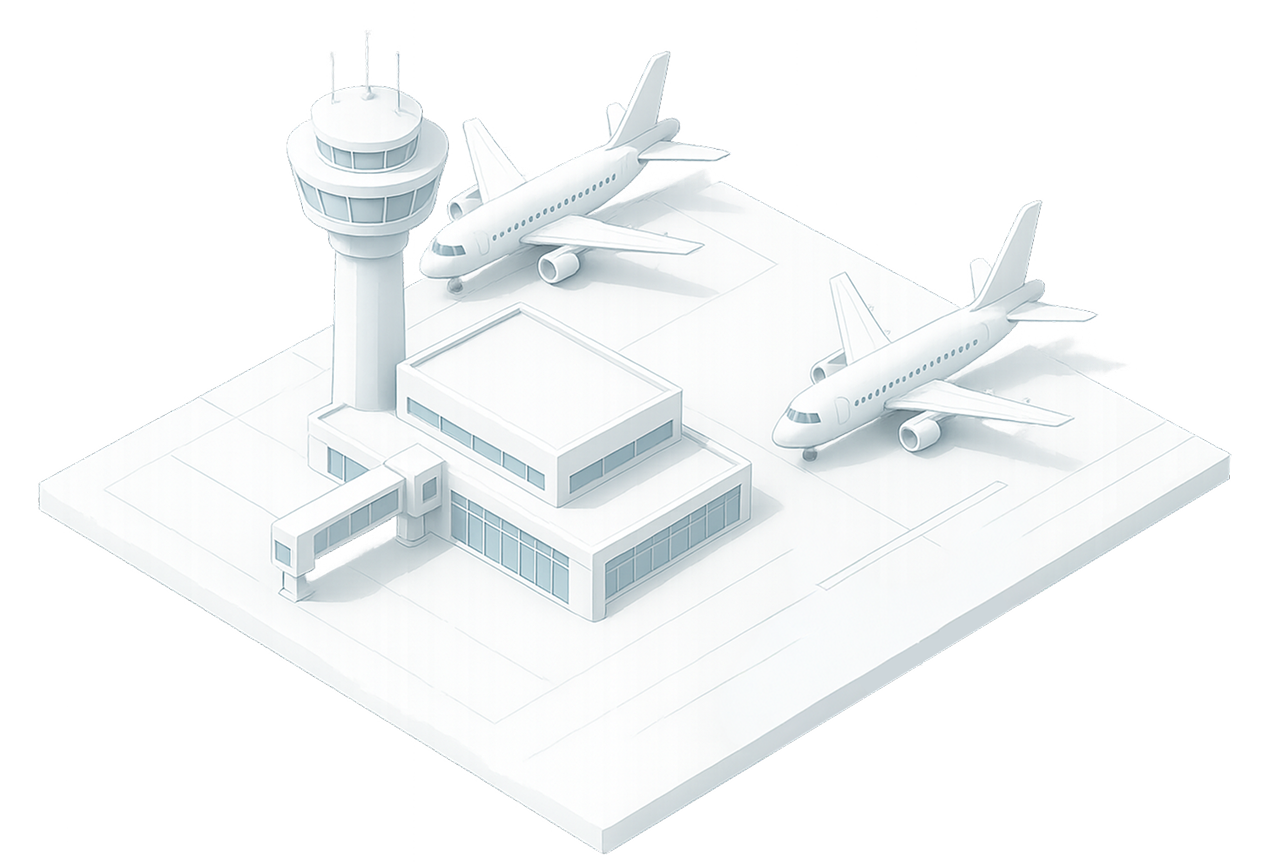

Overview of the Airport
Red Sea International Airport (RSI) is located in Hanak, Tabuk, 90km south of Al Wajh on Saudi Arabia’s Red Sea coast. It serves as the main entry point for The Red Sea Project, providing direct access to luxury resorts and pristine islands. Opened in September 2023, it is a key hub for domestic and international tourism.
25.63028, 37.07833
Growth Trend
Passenger numbers are projected to grow rapidly as new international routes and luxury resorts open through 2030.

Employment
2,500
Staff include airline, ground handling, hospitality, security, and facility management personnel.

Global Ranking
Market Share of Major Airlines
Capacity Expansion
Designed to handle one million passengers annually by 2030, with scalable infrastructure for future expansion.

Technological Advancements
Features biometric screening, contactless processing, and mobile app-based passenger services for a seamless experience.

Sustainability Initiatives
Powered entirely by renewable energy and constructed with eco-friendly materials to minimize environmental impact.

Latest News & Updates
Recent developments and updates for Red Sea International Airport.
Red Sea International Airport Saudi Arabia Soars Into 2026 With Workforce Growth Global Awards and Sustainable Aviation Leadership
The Red Sea International Airport (RSI) is projected to increase its weekly flights to 60 by 2030, driven by anticipated rising demand from international markets as the Red Sea destination matures.
Red Sea International Airport (RSI) in Saudi Arabia Expands Operations with First International Flights and Goal to
The Red Sea International Airport (RSI) now offers eight regular flights per week, increasing connectivity for residents in the Red Sea regions and aiming to serve 1 million guests annually.
News | The Red Sea International Airport | Routes
The Red Sea International Airport (RSI) is part of The Red Sea destination, a luxury tourism destination being built over 28,000 square kilometres on Saudi Arabia's west coast.
Operations Logistics & Timelines
Step-by-step process transit times for passengers and cargo.
For Clients
Passenger process times from arrival to gate.
- Arrival at Red Sea International Airport5-10 mins
- Immigration & Customs30-60 mins
- Baggage Claim15-30 mins
- Transportation to Terminal5-15 mins
- Terminal Navigation to Gate10-20 mins
For Employees
Cargo handling deadlines and operational procedures.
- General Cargo Cut-off - Domestic60 minutes pre-departure
- General Cargo Cut-off - International90 minutes pre-departure
- Dangerous Goods Submission Cut-off45 minutes pre-departure
- Live Animal Cut-off75 minutes pre-departure
- Oversized Cargo Cut-off120 minutes pre-departure
- Overweight Cargo Cut-off90 minutes pre-departure
- Passenger Aircraft Turn Time60 minutes
- Aircraft Turn Cut-off30 minutes post-turn
- Flight Manifest Deadline60 minutes pre-departure
- Ground Handling Team Briefing30 minutes prior to first flight of the day
Passengers' Tips & Tricks
- 1
Utilize the RedSea Express Shuttle
RSI offers a dedicated RedSea Express shuttle service connecting the airport to major hotels in Hurghada. This is the most convenient and often the fastest way to reach your accommodation, avoiding potential taxi queues and fixed fares. Check the shuttle schedule online before your arrival.
- 2
Pre-book Airport Transfers for Peace of Mind
While taxis are readily available, pre-booking an airport transfer through your hotel or a reputable transfer company guarantees a smooth pickup and avoids any confusion or potential scams. Many offer various vehicle types to suit your group size.
- 3
Be Aware of Taxi Meter Usage
If you choose to take a taxi, ensure the driver uses the meter. Agree on a fare before starting your journey to prevent disputes. Tipping is customary (around 10-15%).
- 4
Currency Exchange at the Airport
While you can exchange currency elsewhere, the airport offers currency exchange services. It's often convenient for immediate needs upon arrival. Compare exchange rates with other options before exchanging large sums.
- 5
Check Baggage Claim Zones Carefully
RSI has multiple baggage claim areas depending on your airline. Pay close attention to the monitors displaying flight information to quickly locate your luggage and minimize waiting times. Allow sufficient time for customs clearance.
Cargo Tips & Tricks
- 1
Optimize Cargo Routing for Reduced Transit Times
RSI's location presents unique opportunities to streamline cargo routes through the Red Sea. Implement advanced route optimization software and collaborate with shipping lines to minimize transit times, a critical factor for perishable goods and time-sensitive shipments. Focus on leveraging direct flights and efficient connections.
- 2
Invest in Temperature-Controlled Storage and Handling
Given the Red Sea climate, RSI should prioritize investments in temperature-controlled warehousing and specialized handling equipment for sensitive cargo, including pharmaceuticals, perishables (fruits, vegetables), and electronics. Maintain certifications to meet international shipping standards for these commodities.
- 3
Develop Strong Partnerships with Logistics Providers
Cultivate strategic alliances with leading global and regional logistics companies. This includes freight forwarders, customs brokers, and ground transportation providers. A robust network will enhance RSI’s ability to seamlessly manage cargo flows and navigate complex import/export regulations.
- 4
Streamline Customs Clearance Processes
Work closely with local and international customs authorities to implement efficient clearance procedures. Utilizing digital platforms for document submission, automated inspections, and real-time tracking can significantly reduce delays and improve cargo flow through RSI. Proactive communication is key.
- 5
Expand Cargo Capacity Through Infrastructure Improvements
Assess current cargo handling capacity and identify opportunities for expansion. This may involve upgrades to the baggage handling system, expanded warehouse space, and investment in additional ground handling equipment to accommodate growing freight volumes and diverse cargo types.
Tools & Resources
Essential tools, portals, and resources for clients and partners.
Data & Reports
Official statistics, research reports, and data tracking for Red Sea International Airport.
Wikipedia - Red Sea International Airport
Provides basic information about the airport, including its IATA code, location, operations start date, and projected passenger capacity.
RSI - Annual Reports
Contains the airport's annual reports from 2021 to 2024 in PDF format.
ACI World - Data Center
ACI World's data center provides a range of airport and air travel industry data.
IATA - World Air Transport Statistics (WATS)
A comprehensive database of aviation statistics updated annually by IATA, covering airline performance and demand.
Red Sea Airport RSI Official Website
The official website of the Red Sea International Airport, detailing its features and offering information for travelers.
Location & Maps
Find Red Sea International Airport on popular mapping services.
Interactive Map
Map Legend
Loading Google Maps...
Frequently Asked Questions
Common inquiries about operations and logistics at Red Sea International Airport.
What is the typical passenger process at Red Sea International Airport (RSI)?
Passengers arriving at RSI typically proceed through security screening after presenting their identification and boarding pass. After security, passengers follow signs to baggage claim for checked luggage or proceed directly to departure gates for domestic flights. International flights require immigration and customs processing before continuing to the departure area. We recommend allowing ample time for security, especially during peak travel periods.
How does RSI handle cargo shipments?
RSI operates a dedicated cargo terminal equipped to handle a range of cargo shipments, including general cargo, dangerous goods, and oversized items. The terminal offers customs clearance, warehousing, and sorting services. We partner with several reputable freight forwarders to facilitate seamless international cargo transport. Specific procedures vary depending on the cargo type and destination; please contact our cargo operations team for details.
What transport options are available to and from Red Sea International Airport (RSI)?
Several transport options are available to and from RSI. These include taxis (available outside the terminal), ride-sharing services (Uber, Careem), private car hire, and shuttle buses operating regular routes to major hotels and destinations within Jeddah. A dedicated parking facility is also available for vehicles.
Does RSI offer private jet services or handling for business aircraft?
Currently, RSI does not have dedicated private jet services or a designated business aviation terminal. However, we are actively exploring expansion capabilities to accommodate larger business aircraft in the future. For private jet arrangements, passengers are advised to utilize Jeddah King Abdulaziz International Airport (JED), which offers a wider range of private aviation facilities.
For More Info
Third-party resources, government portals, ratings, and more.
