All Other Belgium Ports, Belgium
All Other Belgium Ports serve as vital regional gateways, supporting trade, industry, and European connectivity.


Port Overview
Belgium hosts several significant ports beyond its primary facilities. The Port of Ghent, located along the Ghent-Terneuzen Canal, ranks as one of Europe's largest inland ports, handling over 48 million tonnes annually and specializing in dry bulk, steel, and automotive industries. The Port of Ostend in West Flanders serves as a crucial hub for offshore wind energy development and construction materials. The Port of Brussels, Belgium's second-largest inland port, handles approximately 5 million tonnes of containerized and bulk cargo, supporting the capital's urban logistics. The Port of Liège stands as Europe's third-largest inland port after Duisburg and Paris, spanning 26 kilometers along the Meuse River with direct connections to major seaports. These ports collectively strengthen Belgium's multimodal transport network and contribute significantly to the nation's €32 billion maritime economy.
Facilities & Infrastructure
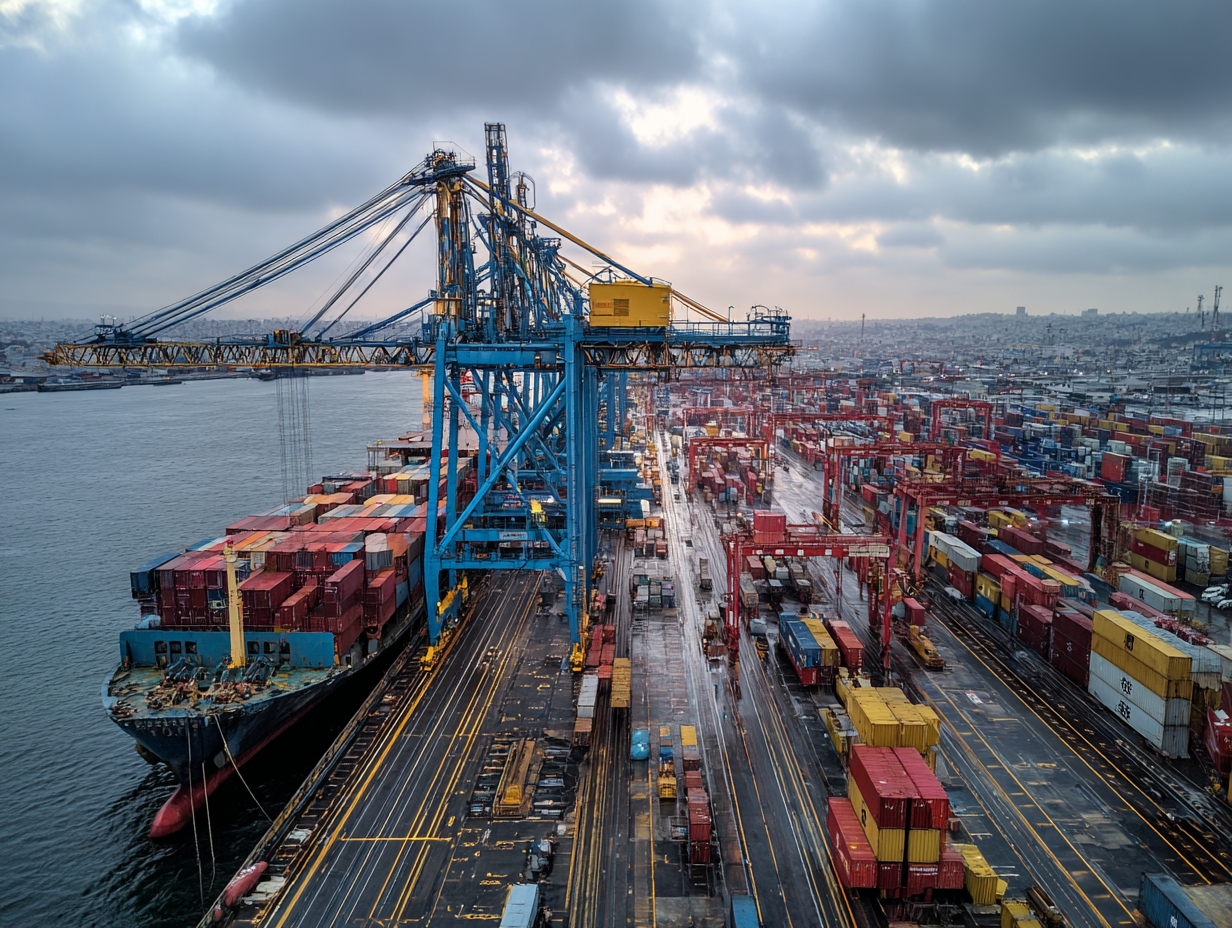
Belgium's other major ports include Port of Zeebrugge, known for vehicle transshipment, and Port of Brussels, which accommodates transport and logistics companies. Key facilities outside Antwerp include specialized terminals for breakbulk cargo and vehicle handling. Equipment typically includes dock-mounted cranes and logistics support systems. These ports contribute significantly to Belgium's maritime trade, offering diverse cargo handling capabilities and strategic locations.
Container Terminals
Belgium's ports, aside from Antwerp, include Zeebrugge and others. Zeebrugge is a significant container hub with a focus on ro-ro and breakbulk cargo. There are 44 container terminals across Belgium, with major operators like DP World and others managing these facilities. Automation levels vary, with some terminals investing in advanced technologies to enhance efficiency. The number of berths and capacity can differ significantly among these ports, with Zeebrugge offering substantial ro-ro capacity.
Port Services
Main Services at Belgium Ports
Belgium's ports, particularly Antwerp, Zeebrugge, and others, offer comprehensive maritime services:
Container Operations: Full container handling including gate operations for trucks, barges, and rail; vessel loading/discharge; depot services; container stuffing and stripping at freight stations.
Cargo Handling: Specialized stevedoring for RoRo cargo, breakbulk, project cargo, heavy-lift, iron & steel, bulk commodities, and general cargo with lashing and securing services.
Warehousing & Storage: Short and long-term storage facilities, rack storage, and bonded warehouses with value-added services including packaging, labeling, and cargo conditioning.
Transport & Logistics: Multimodal connections via road, rail, and barge; customs clearance support; and integrated logistics management for smooth cargo flows.
Global Connectivity
All other Belgium ports, including Ghent, Brussels, Ostend, Liège, and numerous inland terminals, offer robust connectivity via integrated road, rail, and inland waterway networks. These ports serve key regions such as Flanders, Wallonia, and Brussels, supporting industries like steel, automotive, agro-food, and logistics. Shipping routes link Belgium directly to major European markets, the UK, Scandinavia, and global destinations, ensuring efficient access for international trade.
Port Statistics
All Other Belgium Ports (excluding Antwerp-Bruges) collectively handle an estimated 1.5–2 million TEU annually, ranking outside the world’s top 50 container ports. Key ports include North Sea Port (Ghent), Zeebrugge (now merged with Antwerp), Ostend, Brussels, and Liège. These ports offer approximately 40–60 berths combined and cover a total area of around 1,500–2,000 hectares. Major global shipping lines such as MSC, Maersk, CMA CGM, and Hapag-Lloyd call at these ports, supporting both short-sea and inland shipping.
Operations Logistics & Timelines
Step-by-step process and transit times for international vessel berthing, customs clearance, transloading, and final delivery.
For Clients
Import & export process times from vessel arrival to cargo delivery.
- Booking confirmationsame day to 1 day
- Terminal gate-in and documentation4-24 hrs
- Cargo discharge or load planning12-48 hrs
- Final pickup or onward drayagesame day to 3 days
For Employees
Port authority inspection and transloading procedures and timelines.
- Berth planning and yard coordinationcontinuous
- Cargo handling operationsshift-based
- Customs and compliance processingsame day to 2 days
For Shareholders
Performance benchmarks, cargo throughput KPIs and reporting cadences.
- Throughput monitoringdaily / monthly
- Asset utilization reviewweekly / monthly
- Capital project trackingquarterly
International Import Tips & Tricks
- 1
Confirm cutoffs early
Confirm vessel cutoffs, customs filing deadlines, and drayage windows before cargo reaches the terminal to avoid storage and rollover costs.
- 2
Track utilization trends
Review berth productivity, dwell times, and throughput trends alongside capex progress to separate structural bottlenecks from short-term volume swings.
International Export Tips & Tricks
- 1
Keep gate data aligned
Keep appointment systems, yard status, and documentation status aligned to reduce avoidable delays in handoff and cargo release.
Tools & Resources
Tools and resources for shipping through All Other Belgium Ports, Belgium.
Data & Reports
Official statistics, research reports, and data tracking for All Other Belgium Ports, Belgium.
Official Port Search
Search results for the official site and public reports for All Other Belgium Ports, Belgium.
UNCTAD Maritime Transport
UN trade and maritime transport reference reports.
World Bank Logistics
Global logistics and trade performance reference.
Port Statistics Search
Search results for throughput, connectivity, and container statistics.
Latest News & Updates
Recent developments and updates for All Other Belgium Ports, Belgium.
Buyers' Guides
Port guides and logistics resources for All Other Belgium Ports, Belgium.
Location & Maps
Find All Other Belgium Ports, Belgium on popular mapping services.
For More Info
Third-party resources, government portals, ratings, and more.
Government & Resources
Ratings
Licenses & Certifications
Frequently Asked Questions
Common inquiries about operations and logistics at All Other Belgium Ports, Belgium.
What is the typical process for import containers moving through this international port?
Typical import flow is vessel arrival, berth assignment, discharge, customs review, terminal release, pickup or rail transfer, and final inland delivery. Timing depends on congestion, documentation, inspections, and local drayage capacity.
What affects export cargo timing at an international port?
Export timing depends on gate cutoff windows, booking confirmation, documentation readiness, customs requirements, terminal operating hours, and vessel schedule reliability.
Glossary / Terminology
Key terms relevant to international seaport operations and ocean freight.
