Chefoo, China
Historic treaty port and former summer station for the U.S. Asiatic fleet.


Port Overview
Chefoo, now known as Yantai, is a major seaport located on the northern coast of Shandong Peninsula in northeastern China, on the shores of the Yellow Sea and Bohai Gulf. As one of China's 25 main hub ports and 15 key Belt and Road Initiative ports, it serves as a critical passageway between southern and northern coastal areas and a key point on the New Eurasian Continental Bridge. The port consists of four port areas with 100 productive berths, including 87 deepwater berths, and handles over 500 million metric tons annually. Yantai is Shandong's largest fishing seaport and second-largest industrial city after Qingdao.
Facilities & Infrastructure
Chefoo, now known as Yantai, is a historic seaport on the northern Shandong coast featuring a natural deep-water harbor protected by Zhifu Island. The port operates general cargo and container terminals with a channel depth of 14 meters. As a small coastal harbor with a 2-meter tidal range, it handles various cargo types including traditional exports like silk and beans. However, the port's commercial significance declined after Qingdao's development in the early 20th century, which captured much of the region's export trade through superior facilities and rail connections.
Container Terminals
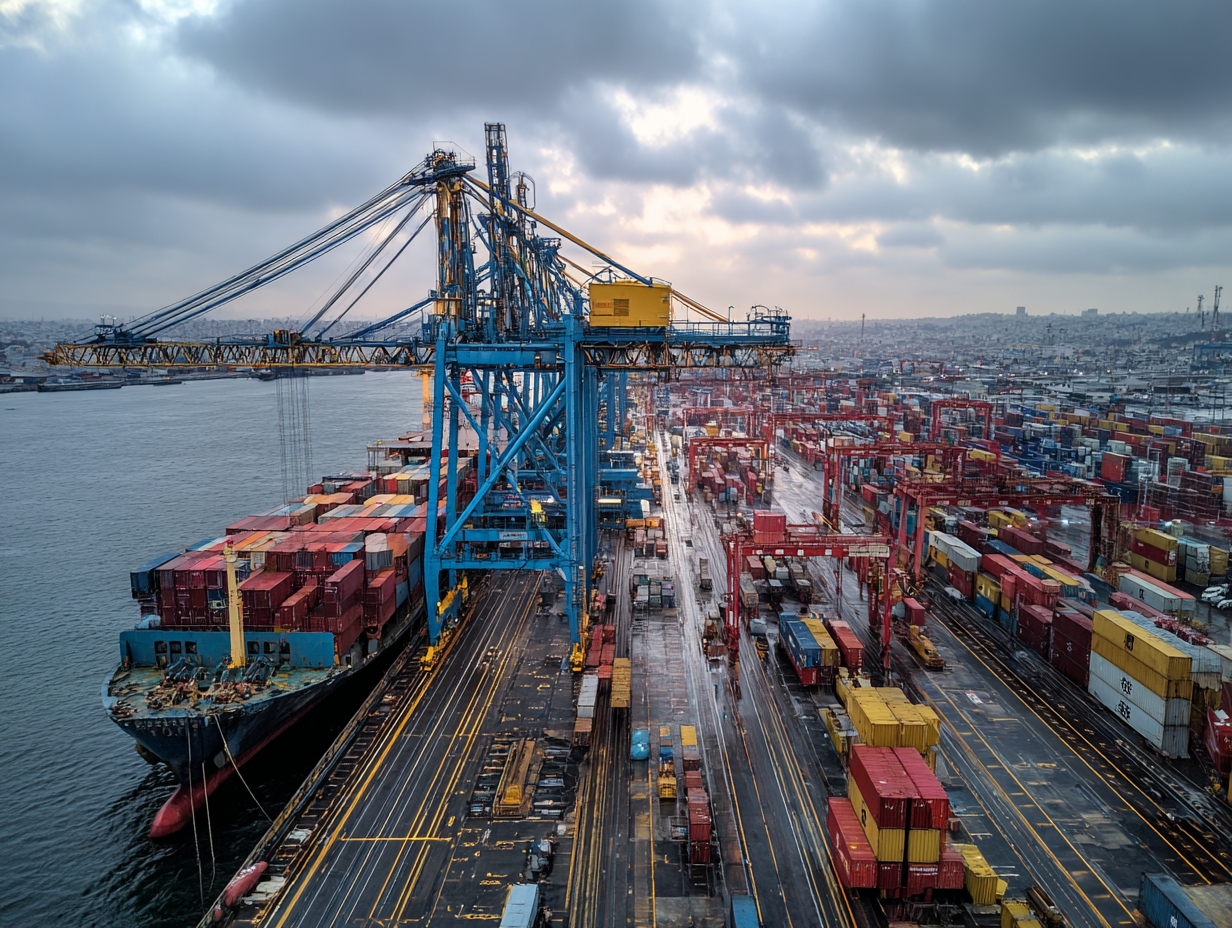
Chefoo (now Yantai), located in Shandong Province, is a mid-sized Chinese port with a focus on general cargo, bulk, and some container operations. The port features multiple berths, though exact numbers and container terminal specifics are not widely publicized in international maritime databases. Capacity is modest compared to China’s mega-ports, and automation levels are basic, with limited advanced systems. Major operators include local state-owned enterprises; international shipping lines call occasionally, but Chefoo is not a primary hub for global container carriers.
Port Services
Chefoo, now known as Yantai, historically offered services such as:
- Cargo Operations: Handling of goods like bean-cake, silk, and straw-braid.
- Ship Services: Regular port of call for tramp steamers.
- Customs: Managed by the Imperial Maritime Customs office.
- Warehousing: Limited, with a focus on local trade rather than large-scale storage.
Global Connectivity
Chefoo, now known as Yantai, is a historic seaport on the north coast of Shandong Province, China. It serves as a key regional hub, connecting northern Shandong and parts of the Bohai Rim to domestic and international markets. The port handles container, bulk, and general cargo, with shipping routes extending to major East Asian ports, including Japan, South Korea, and Southeast Asia, as well as trans-Pacific links to North America. While its prominence has been overshadowed by larger ports like Qingdao, Yantai remains an important node in China’s northern maritime network, supporting regional trade in agricultural products, machinery, and consumer goods.
Port Statistics
Based on available information, Chefoo (also known as Yantai) is not prominently featured among China's major container port statistics. The port primarily handles bulk cargo and general freight rather than significant container volumes.
Key characteristics:
- Not ranked among China's top container ports
- TEU throughput data not widely reported in major port rankings
- Functions primarily as a regional port serving Shandong Province
- Handles coal, ores, and agricultural products
- Limited international container shipping services compared to nearby Qingdao
For detailed container operations, Qingdao Port dominates the region with approximately 25.8 million TEUs annually.

Operations Logistics & Timelines
Step-by-step process and transit times for international vessel berthing, customs clearance, transloading, and final delivery.
For Clients
Import & export process times from vessel arrival to cargo delivery.
- Booking confirmationsame day to 1 day
- Terminal gate-in and documentation4-24 hrs
- Cargo discharge or load planning12-48 hrs
- Final pickup or onward drayagesame day to 3 days
For Employees
Port authority inspection and transloading procedures and timelines.
- Berth planning and yard coordinationcontinuous
- Cargo handling operationsshift-based
- Customs and compliance processingsame day to 2 days
For Shareholders
Performance benchmarks, cargo throughput KPIs and reporting cadences.
- Throughput monitoringdaily / monthly
- Asset utilization reviewweekly / monthly
- Capital project trackingquarterly
International Import Tips & Tricks
- 1
Confirm cutoffs early
Confirm vessel cutoffs, customs filing deadlines, and drayage windows before cargo reaches the terminal to avoid storage and rollover costs.
- 2
Track utilization trends
Review berth productivity, dwell times, and throughput trends alongside capex progress to separate structural bottlenecks from short-term volume swings.
International Export Tips & Tricks
- 1
Keep gate data aligned
Keep appointment systems, yard status, and documentation status aligned to reduce avoidable delays in handoff and cargo release.
Tools & Resources
Tools and resources for shipping through Chefoo, China.
Data & Reports
Official statistics, research reports, and data tracking for Chefoo, China.
Official Port Search
Search results for the official site and public reports for Chefoo, China.
UNCTAD Maritime Transport
UN trade and maritime transport reference reports.
World Bank Logistics
Global logistics and trade performance reference.
Port Statistics Search
Search results for throughput, connectivity, and container statistics.
Latest News & Updates
Recent developments and updates for Chefoo, China.
Buyers' Guides
Port guides and logistics resources for Chefoo, China.
Location & Maps
Find Chefoo, China on popular mapping services.
For More Info
Third-party resources, government portals, ratings, and more.
Information
Government & Resources
Ratings
Licenses & Certifications
Frequently Asked Questions
Common inquiries about operations and logistics at Chefoo, China.
What is the typical process for import containers moving through this international port?
Typical import flow is vessel arrival, berth assignment, discharge, customs review, terminal release, pickup or rail transfer, and final inland delivery. Timing depends on congestion, documentation, inspections, and local drayage capacity.
What affects export cargo timing at an international port?
Export timing depends on gate cutoff windows, booking confirmation, documentation readiness, customs requirements, terminal operating hours, and vessel schedule reliability.
Glossary / Terminology
Key terms relevant to international seaport operations and ocean freight.
