Hakata, Japan
Hakata: Japan’s historic gateway port, blending centuries of international trade, vibrant culture, and renowned ramen.


Port Overview
Hakata, located in Fukuoka City on Kyushu Island, is Japan's fifth-largest city and a significant maritime hub. Strategically positioned near Korea and China, it serves as a key international trade and cruise port. Hakata Port handles a substantial volume of cargo, with an annual container capacity exceeding 900,000 TEUs. Its strategic location facilitates trade with neighboring countries, making it a vital economic center in western Japan. The port's infrastructure supports both container and cruise operations, enhancing its role in regional maritime activities.
Facilities & Infrastructure
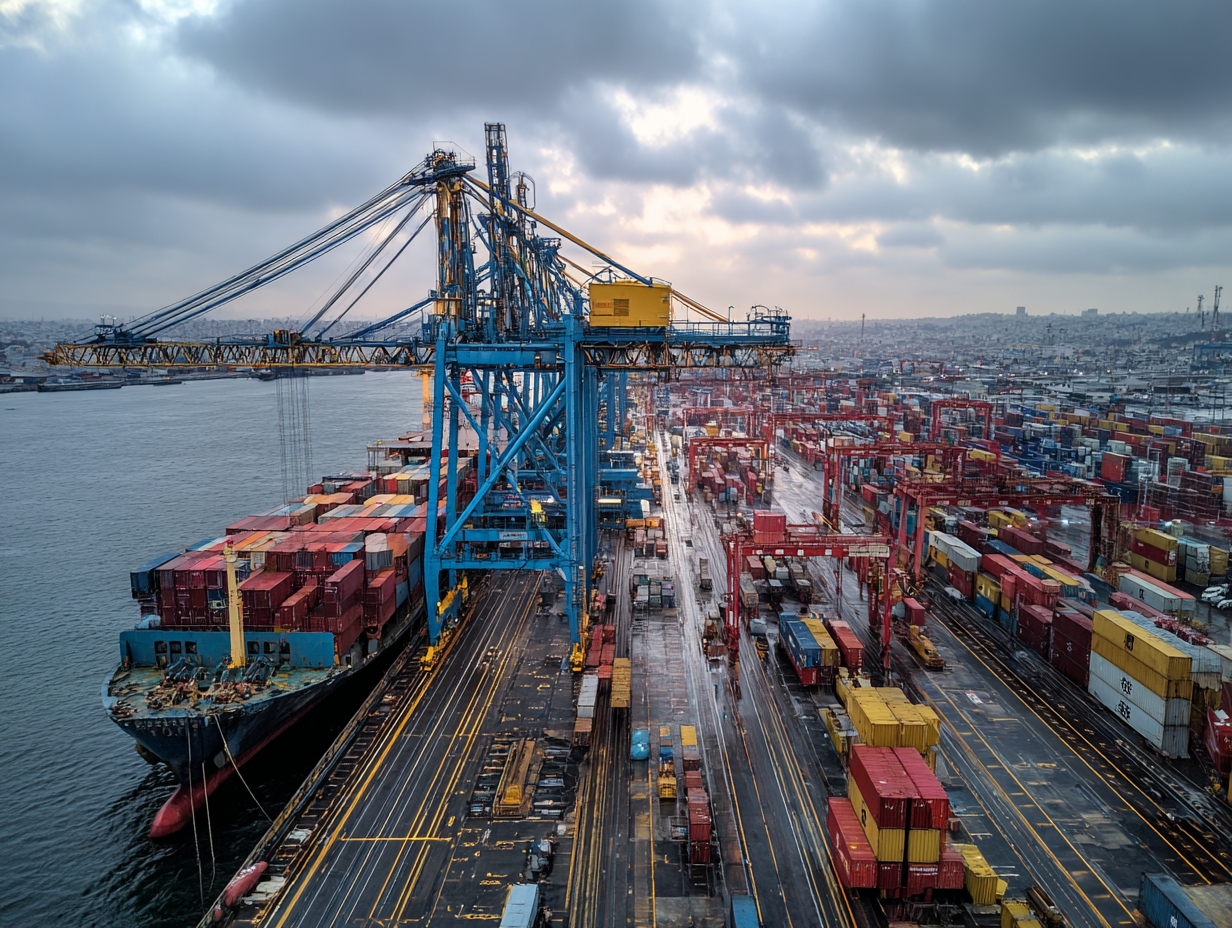
Hakata Port, located in Fukuoka, is a major Japanese hub with two principal container terminals: Island City and Kashii Park. Island City features 14m and 15m-deep berths for large vessels, six quay cranes, and rubber-tired gantry (RTG) systems, handling 60% of the port’s containers. Kashii Park offers 13m-deep berths, four quay cranes, and highly maneuverable straddle carriers, specializing in automobiles and bulk cargo. Both terminals have extensive open storage yards, modern cargo sheds, and efficient logistics support. The port also operates international passenger and cruise terminals, with comprehensive facilities for both cargo and travelers.
Container Terminals
Hakata, Japan’s container terminals comprise Island City and Kashii Park Port, offering a total of 10 deep-water berths. Island City handles about 60% of container traffic with 6 gantry cranes and RTG systems, while Kashii Park Port manages 40% using 4 gantry cranes and straddle carriers. Annual capacity exceeds 900,000 TEU. Automation is moderate, with advanced IT systems but no full automation. Major operator: Hakata Port Terminal Co., Ltd.
Port Services
Main Services at Hakata Port, Japan
- Container Handling: Comprehensive loading, unloading, and transfer of export/import containers using advanced quay cranes, RTGs, and straddle carriers.
- Cargo Operations: Efficient handling of general, refrigerated, and oversized cargo, including supplies for cruise ships and daily necessities.
- Ship Services: Provision of fuel, water, provisions, and limited ship repair; pilotage and tug assistance available.
- Warehousing: Modern, multi-story bonded warehouses for secure storage of imported/exported goods, including specialized facilities for heavy or non-standard cargo.
- Customs: Fast, accurate customs clearance with experienced specialists, supporting both standard and challenging commodities (e.g., textiles, chemicals).
Global Connectivity
Hakata Port serves as Fukuoka's main commercial gateway, strategically positioned approximately 200km from Busan, Korea and 900km from Shanghai, China. The port operates regular liner services to Busan with three-hour crossings, handling Japan's largest volume of international sea passengers. It connects domestically to nearby islands including Iki, Tsushima, and the Goto Islands, as well as Osaka and Kobe via ferry services. The port handles diverse cargo including containers, dry bulk, metals, forest products, petroleum products, and chemicals, serving northern Kyushu's trade needs with excellent road and rail infrastructure linking to the broader region.
Port Statistics
Hakata Port Statistics:
- TEU Throughput: Approximately 800,000 TEU annually.
- World Ranking: Not among the top global ports by TEU volume.
- Number of Berths: Multiple berths with varying depths.
- Area: Located in Fukuoka Prefecture, opposite Hakata Bay.
- Shipping Lines: Served by major lines like Evergreen, Wanhai, and ONE.

Operations Logistics & Timelines
Step-by-step process and transit times for international vessel berthing, customs clearance, transloading, and final delivery.
For Clients
Import & export process times from vessel arrival to cargo delivery.
- Booking confirmationsame day to 1 day
- Terminal gate-in and documentation4-24 hrs
- Cargo discharge or load planning12-48 hrs
- Final pickup or onward drayagesame day to 3 days
For Employees
Port authority inspection and transloading procedures and timelines.
- Berth planning and yard coordinationcontinuous
- Cargo handling operationsshift-based
- Customs and compliance processingsame day to 2 days
For Shareholders
Performance benchmarks, cargo throughput KPIs and reporting cadences.
- Throughput monitoringdaily / monthly
- Asset utilization reviewweekly / monthly
- Capital project trackingquarterly
International Import Tips & Tricks
- 1
Confirm cutoffs early
Confirm vessel cutoffs, customs filing deadlines, and drayage windows before cargo reaches the terminal to avoid storage and rollover costs.
- 2
Track utilization trends
Review berth productivity, dwell times, and throughput trends alongside capex progress to separate structural bottlenecks from short-term volume swings.
International Export Tips & Tricks
- 1
Keep gate data aligned
Keep appointment systems, yard status, and documentation status aligned to reduce avoidable delays in handoff and cargo release.
Tools & Resources
Tools and resources for shipping through Hakata, Japan.
Data & Reports
Official statistics, research reports, and data tracking for Hakata, Japan.
Official Port Search
Search results for the official site and public reports for Hakata, Japan.
UNCTAD Maritime Transport
UN trade and maritime transport reference reports.
World Bank Logistics
Global logistics and trade performance reference.
Port Statistics Search
Search results for throughput, connectivity, and container statistics.
Latest News & Updates
Recent developments and updates for Hakata, Japan.
Buyers' Guides
Port guides and logistics resources for Hakata, Japan.
Location & Maps
Find Hakata, Japan on popular mapping services.
Interactive Map
Map Legend
Loading Google Maps...
For More Info
Third-party resources, government portals, ratings, and more.
Information
Government & Resources
Ratings
Licenses & Certifications
Frequently Asked Questions
Common inquiries about operations and logistics at Hakata, Japan.
What is the typical process for import containers moving through this international port?
Typical import flow is vessel arrival, berth assignment, discharge, customs review, terminal release, pickup or rail transfer, and final inland delivery. Timing depends on congestion, documentation, inspections, and local drayage capacity.
What affects export cargo timing at an international port?
Export timing depends on gate cutoff windows, booking confirmation, documentation readiness, customs requirements, terminal operating hours, and vessel schedule reliability.
Glossary / Terminology
Key terms relevant to international seaport operations and ocean freight.
