High Seas,North Pacific
Vital international waters in the North Pacific supporting major fisheries, biodiversity, and global climate.

Port Overview
The High Seas of the North Pacific are located between the coasts of East Asia, North America, and the Arctic, spanning a vast area within the world’s largest ocean. Covering millions of square kilometers, the North Pacific ranks as a critical maritime corridor for global trade, connecting major ports in China, Japan, Korea, Russia, Canada, and the United States. Its strategic importance lies in facilitating trans-Pacific shipping routes and supporting fisheries and resource extraction. The annual TEU capacity of vessels traversing the North Pacific exceeds 30 million, underscoring its role in international containerized cargo movement.
Facilities & Infrastructure
High Seas, North Pacific’s main facilities center around Fishermen’s Terminal in Seattle, which provides moorage for approximately 400 commercial fishing vessels and work boats. Key infrastructure includes extensive dock space, on-site storage, and maintenance services. The terminal is equipped with heavy-duty cranes for cargo handling, cold storage for seafood, and support equipment for vessel servicing. Automated Guided Vehicles (AGVs) are not standard, as operations focus on fishing fleet logistics rather than containerized cargo automation.
Container Terminals
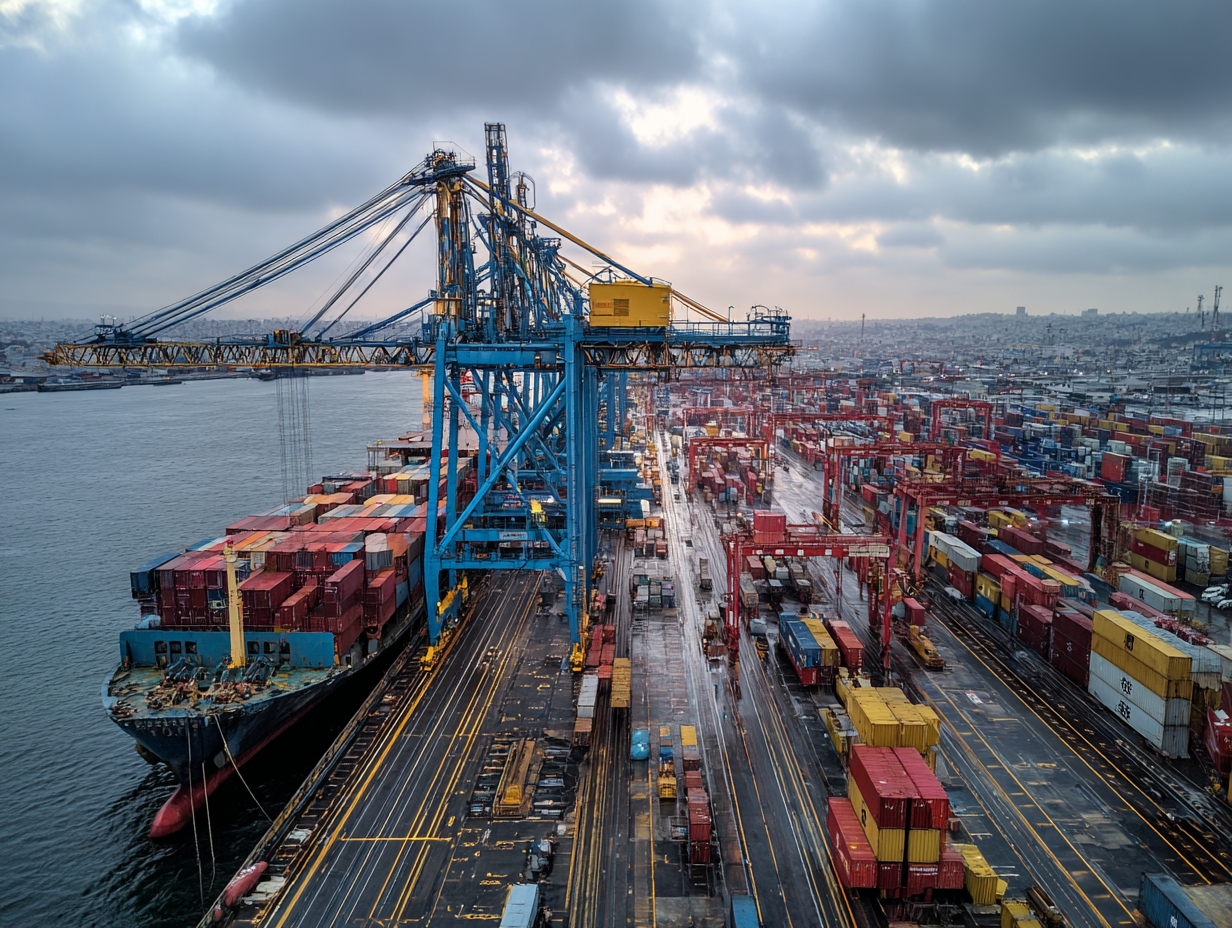
High Seas, North Pacific container terminals—primarily Los Angeles and Long Beach—feature over 80 container berths combined, with annual capacities exceeding 17 million TEU. Automation levels vary: some terminals use semi-automated systems, while others remain conventional. Major operators include APM Terminals, SSA Marine, Pacific Maritime Services, and COSCO. These terminals are equipped for mega-ships, offer on-dock rail, and are steadily increasing automation and sustainability initiatives.
Port Services
Main services at High Seas, North Pacific:
- Container handling: Transshipment and movement of containers between vessels during international voyages.
- Cargo operations: Loading, unloading, and securing various cargo types, including bulk and general cargo, often conducted ship-to-ship.
- Ship services: Provisioning, crew changes, refueling (bunkering), and technical support for vessels operating in international waters.
- Warehousing: Temporary storage solutions on board or via support vessels, as shore-based warehousing is not available in high seas areas.
- Customs: Compliance with international maritime regulations, inspection, and documentation for cargo and vessel activities beyond national jurisdictions.
Global Connectivity
High Seas, North Pacific connectivity centers on the Trans-Pacific shipping route, linking major Asian ports such as Shanghai, Shenzhen, Hong Kong, Busan, Tokyo, and Yokohama with North American West Coast ports including Vancouver, Seattle, Oakland, Los Angeles, and Long Beach. This corridor serves East Asia, North America, and Oceania, facilitating trade in electronics, machinery, and consumer goods. Key routes also connect to Australia, New Zealand, and via the Panama Canal to the Americas and Europe.
Port Statistics
High Seas, North Pacific (Cross-Pacific Container Shipping)
- TEU Throughput: Estimated annual throughput exceeds 20 million TEU, primarily on Asia–US West Coast routes.
- World Ranking: Ranks among the top 3 global container shipping corridors by volume.
- Number of Berths: Not applicable; the High Seas are shipping lanes, not a physical port.
- Area: Covers major shipping lanes between East Asia and North America, spanning thousands of nautical miles.
- Shipping Lines: Served by all major carriers, including Maersk, MSC, CMA CGM, COSCO, Hapag-Lloyd, and ONE, often operating within alliance networks.
Operations Logistics & Timelines
Step-by-step process and transit times for international vessel berthing, customs clearance, transloading, and final delivery.
For Clients
Import & export process times from vessel arrival to cargo delivery.
- Booking confirmationsame day to 1 day
- Terminal gate-in and documentation4-24 hrs
- Cargo discharge or load planning12-48 hrs
- Final pickup or onward drayagesame day to 3 days
For Employees
Port authority inspection and transloading procedures and timelines.
- Berth planning and yard coordinationcontinuous
- Cargo handling operationsshift-based
- Customs and compliance processingsame day to 2 days
For Shareholders
Performance benchmarks, cargo throughput KPIs and reporting cadences.
- Throughput monitoringdaily / monthly
- Asset utilization reviewweekly / monthly
- Capital project trackingquarterly
International Import Tips & Tricks
- 1
Confirm cutoffs early
Confirm vessel cutoffs, customs filing deadlines, and drayage windows before cargo reaches the terminal to avoid storage and rollover costs.
- 2
Track utilization trends
Review berth productivity, dwell times, and throughput trends alongside capex progress to separate structural bottlenecks from short-term volume swings.
International Export Tips & Tricks
- 1
Keep gate data aligned
Keep appointment systems, yard status, and documentation status aligned to reduce avoidable delays in handoff and cargo release.
Tools & Resources
Tools and resources for shipping through High Seas,North Pacific.
Data & Reports
Official statistics, research reports, and data tracking for High Seas,North Pacific.
Official Port Search
Search results for the official site and public reports for High Seas,North Pacific.
UNCTAD Maritime Transport
UN trade and maritime transport reference reports.
World Bank Logistics
Global logistics and trade performance reference.
Port Statistics Search
Search results for throughput, connectivity, and container statistics.
Latest News & Updates
Recent developments and updates for High Seas,North Pacific.
Buyers' Guides
Port guides and logistics resources for High Seas,North Pacific.
Location & Maps
Find High Seas,North Pacific on popular mapping services.
For More Info
Third-party resources, government portals, ratings, and more.
Government & Resources
Ratings
Licenses & Certifications
Frequently Asked Questions
Common inquiries about operations and logistics at High Seas,North Pacific.
What is the typical process for import containers moving through this international port?
Typical import flow is vessel arrival, berth assignment, discharge, customs review, terminal release, pickup or rail transfer, and final inland delivery. Timing depends on congestion, documentation, inspections, and local drayage capacity.
What affects export cargo timing at an international port?
Export timing depends on gate cutoff windows, booking confirmation, documentation readiness, customs requirements, terminal operating hours, and vessel schedule reliability.
Glossary / Terminology
Key terms relevant to international seaport operations and ocean freight.
