Isdemir, Turkey
Isdemir is Turkey’s largest integrated iron and steel plant, uniquely producing both long and flat steel products.


Port Overview
Isdemir Port is located in southern Turkey near Iskenderun, serving the Iskenderun Iron & Steel plant. Covering a large industrial area, it is one of Turkey’s significant private ports, primarily handling bulk imports and exports of steel products. Strategically positioned on the Eastern Mediterranean, Isdemir is vital for industrial exports and regional logistics, connecting Turkey to the Middle East and global markets. The port’s annual container capacity is approximately 710,600 TEUs, with ongoing expansion aiming to reach 1.33 million TEUs.
Facilities & Infrastructure
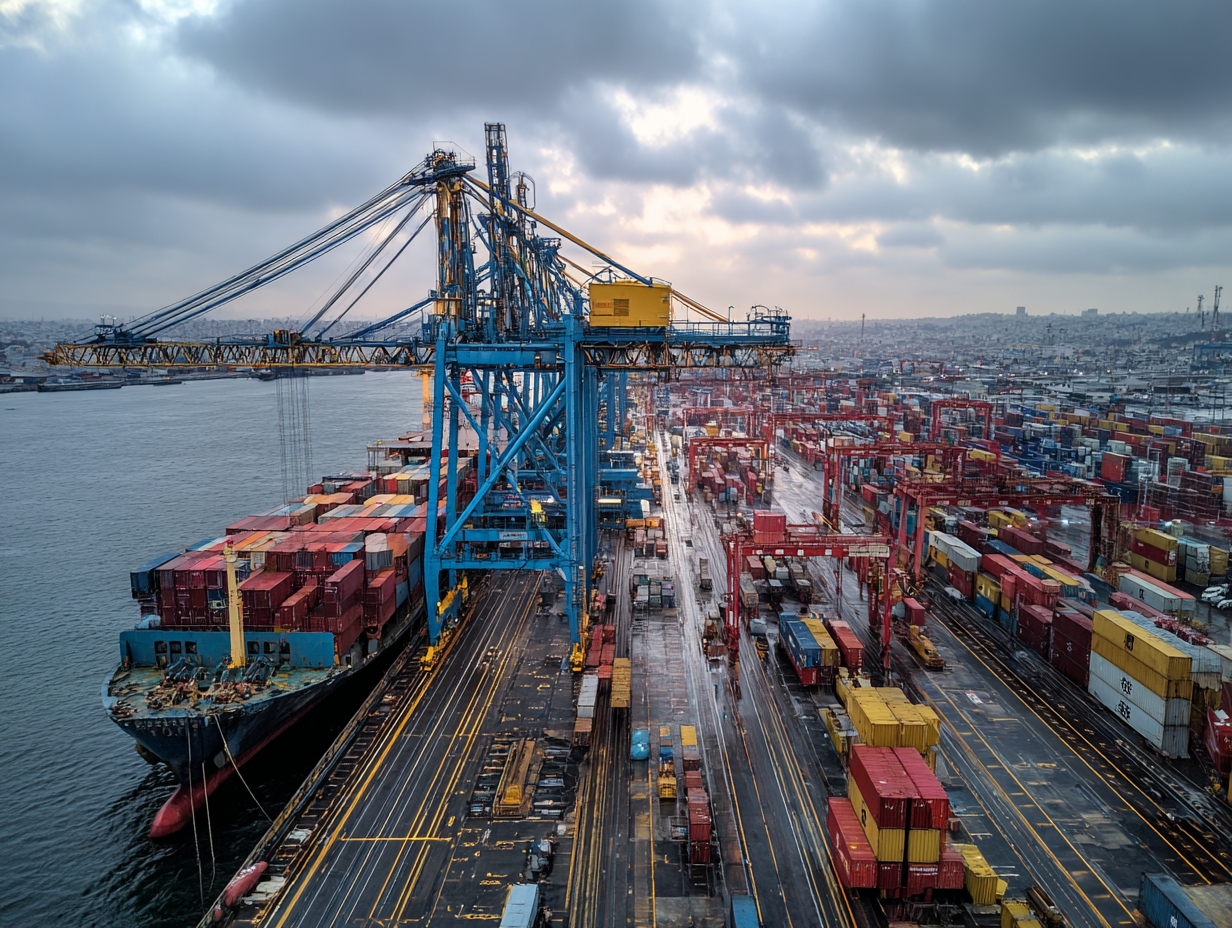
Isdemir, located in İskenderun Bay, operates one of Turkey’s largest integrated steel plants and port facilities. The port features key terminals for bulk solid, general, and liquid cargo, with a handling capacity of 21 million tons per year. Cargo facilities include berths for iron ore, coal, steel products, and general cargo. The port is equipped with ship-to-shore cranes, mobile harbor cranes, and conveyor systems. Automated Guided Vehicles (AGVs) are not currently reported in regular operations.
Container Terminals
Isdemir Port, serving the Iskenderun Iron and Steel Works, features 5 main berths with a maximum draft of 16 meters. The port primarily handles bulk and general cargo, with limited container operations and no advanced automation. Annual capacity is focused on bulk cargo, with total throughput around 12 million tonnes; container handling is minimal. The port is operated by Iskenderun Iron & Steel Inc., part of OYAK Maden Metallurgy Group.
Port Services
- Cargo operations: Bulk cargo handling (loading and unloading of raw materials and finished products), with 24/7 operations and high-capacity cranes.
- Ship services: Pilotage, towage, mooring, waste collection, and maritime police services.
- Warehousing: Storage facilities for various cargo types.
- Customs: On-site customs clearance and inspection, operating around the clock.
- Container handling: Limited; the port primarily focuses on bulk and general cargo rather than containerized shipments.
Global Connectivity
Isdemir Port, located in Iskenderun on Turkey’s eastern Mediterranean coast, is well connected to national highways and railways, serving key industrial regions in southeastern and central Turkey. It primarily handles dry bulk cargo, especially iron ore and steel, and connects with major Turkish ports like Mersin and international markets in the Mediterranean, Middle East, and Europe via established shipping routes. This connectivity supports both regional industry and global trade flows.
Port Statistics
Isdemir Port, Turkey – Key Statistics (2025):
- TEU Throughput: Approximately 710,600 TEUs (2020); recent expansion targets up to 1.334 million TEUs annually.
- World Ranking: Not in the Lloyd’s List Top 100 container ports.
- Number of Berths: 5 main berths.
- Area: Port covers about 400,000 m².
- Shipping Lines: Serviced by major regional and international lines, supporting bulk, general cargo, and containers.

Operations Logistics & Timelines
Step-by-step process and transit times for international vessel berthing, customs clearance, transloading, and final delivery.
For Clients
Import & export process times from vessel arrival to cargo delivery.
- Booking confirmationsame day to 1 day
- Terminal gate-in and documentation4-24 hrs
- Cargo discharge or load planning12-48 hrs
- Final pickup or onward drayagesame day to 3 days
For Employees
Port authority inspection and transloading procedures and timelines.
- Berth planning and yard coordinationcontinuous
- Cargo handling operationsshift-based
- Customs and compliance processingsame day to 2 days
For Shareholders
Performance benchmarks, cargo throughput KPIs and reporting cadences.
- Throughput monitoringdaily / monthly
- Asset utilization reviewweekly / monthly
- Capital project trackingquarterly
International Import Tips & Tricks
- 1
Confirm cutoffs early
Confirm vessel cutoffs, customs filing deadlines, and drayage windows before cargo reaches the terminal to avoid storage and rollover costs.
- 2
Track utilization trends
Review berth productivity, dwell times, and throughput trends alongside capex progress to separate structural bottlenecks from short-term volume swings.
International Export Tips & Tricks
- 1
Keep gate data aligned
Keep appointment systems, yard status, and documentation status aligned to reduce avoidable delays in handoff and cargo release.
Tools & Resources
Tools and resources for shipping through Isdemir, Turkey.
Data & Reports
Official statistics, research reports, and data tracking for Isdemir, Turkey.
Official Port Search
Search results for the official site and public reports for Isdemir, Turkey.
UNCTAD Maritime Transport
UN trade and maritime transport reference reports.
World Bank Logistics
Global logistics and trade performance reference.
Port Statistics Search
Search results for throughput, connectivity, and container statistics.
Latest News & Updates
Recent developments and updates for Isdemir, Turkey.
Buyers' Guides
Port guides and logistics resources for Isdemir, Turkey.
Location & Maps
Find Isdemir, Turkey on popular mapping services.
Interactive Map
Map Legend
Loading Google Maps...
For More Info
Third-party resources, government portals, ratings, and more.
Information
Government & Resources
Ratings
Licenses & Certifications
Frequently Asked Questions
Common inquiries about operations and logistics at Isdemir, Turkey.
What is the typical process for import containers moving through this international port?
Typical import flow is vessel arrival, berth assignment, discharge, customs review, terminal release, pickup or rail transfer, and final inland delivery. Timing depends on congestion, documentation, inspections, and local drayage capacity.
What affects export cargo timing at an international port?
Export timing depends on gate cutoff windows, booking confirmation, documentation readiness, customs requirements, terminal operating hours, and vessel schedule reliability.
Glossary / Terminology
Key terms relevant to international seaport operations and ocean freight.
