San Francisco International Airport
A leading West Coast gateway for transpacific and domestic flights, renowned for its international connectivity.

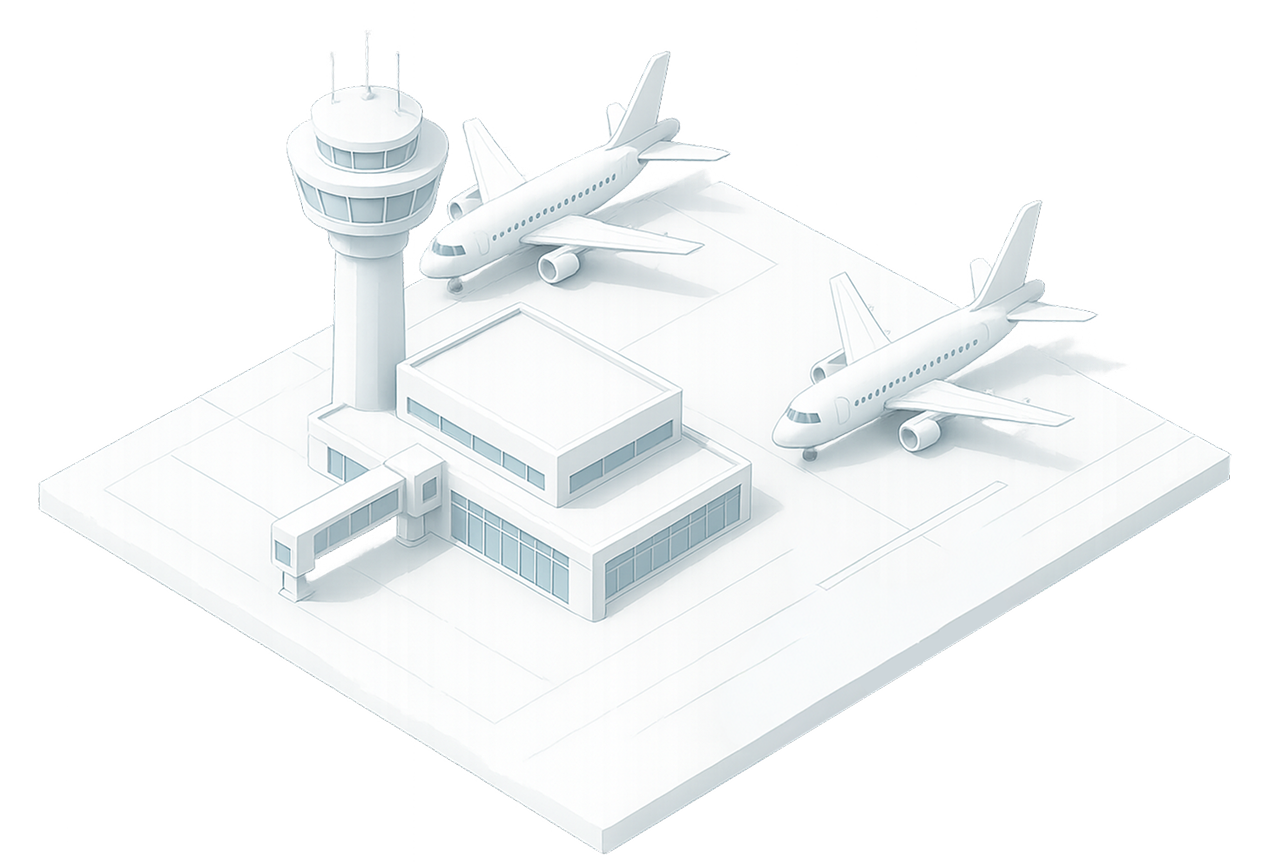

Overview of the Airport
San Francisco International Airport (SFO) is located 13 miles south of downtown San Francisco. It serves as a major hub for transpacific, domestic, and international travel, connecting the Bay Area to destinations worldwide.
37.6213, -122.3790
Growth Trend
Passenger traffic increased by 6.5% year-over-year, outpacing national trends and nearing pre-pandemic levels.

Employment
46,000
Workers across airlines, ground services, concessions, security, and airport operations.
Global Ranking
Market Share of Major Airlines
Capacity Expansion
Ongoing terminal renovations and airfield upgrades are expanding SFO’s capacity for both passengers and cargo.

Technological Advancements
Deployment of biometric screening, automated security lanes, and advanced baggage handling systems enhances efficiency and security.
Sustainability Initiatives
SFO leads with sustainable aviation fuel adoption, LEED-certified buildings, and aggressive waste reduction programs.

Latest News & Updates
Recent developments and updates for San Francisco International Airport.
San Francisco denies Palo Alto appeal of airport enhancement plan
San Francisco International Airport. Photo by Bill Larkins; obtained via Wikimedia Commons under Creative Commons Attribution-Share Alike 2.0 Generic license. San Francisco will proceed with its airline development plan for SFO after rejecting an appeal on ...
San Francisco International Airport expects delays starting in March
Travelers should expect delays at San Francisco International Airport starting March 30, as the airport will close one runway for six months to perform repairs and improvements. During this period, ...
2 days inside SFO: Airport rescue and untold stories
Discover the hidden gems and untold stories of San Francisco International Airport (SFO), which serves over 50 million passengers annually, making it the largest airport in the Bay Area and the second ...
Operations Logistics & Timelines
Step-by-step process transit times for passengers and cargo.
For Clients
Passenger process times from arrival to gate.
- Arrival & Baggage Claim10-20 mins
- Check-in/Bag Drop15-45 mins
- TSA Security Screening15-45 mins
- Boarding5-15 mins
- Walking to Gate5-10 mins
For Employees
Cargo handling deadlines and operational procedures.
- General Cargo Cut-off60 mins pre-departure
- Shipment TenderAllow sufficient time prior to departure to tender shipment.
- Handling TimeRecovery time: Minimum time for cargo to be taken off plane/availability.
- Processing & ScreeningProcessing and screening procedures need to be completed prior to the posted cutoff time.
- Storage CapacityLimited storage capacity for VAL available (SASCargo).
- Clearance RequiredClearance for handling must be obtained before shipping.
- Special Handling ChargesSpecial handling and storage charges apply (SASCargo).
Passengers' Tips & Tricks
- 1
Arrive Early
SFO can experience significant delays due to weather (fog is common) and high traffic volume. Allow at least 2-3 hours for domestic flights and 3-4 hours for international flights to account for security lines, potential delays, and transportation to/from your destination.
- 2
Utilize the AirTrain
The AirTrain is a free system that connects Terminals 1, 2, and 3. It’s a much faster and less congested option than taking a taxi or rideshare, especially when traveling between terminals. Familiarize yourself with its routes beforehand.
- 3
Consider Rental Cars Strategically
While SFO offers a Rental Car Center, parking can be expensive and traffic around the airport can be heavy. Weigh the cost and convenience of renting a car versus using public transportation or rideshares.
- 4
Security Lines Vary Greatly
Security wait times at SFO can fluctuate dramatically. Weekends and holidays are typically the busiest. Opt for TSA PreCheck or Global Entry if available to expedite the process.
- 5
Explore Terminal Options
SFO has multiple terminals (1, 2, and 3). Check your airline’s terminal to minimize walking and potential delays associated with navigating a larger terminal.
Cargo Tips & Tricks
- 1
Book in Advance
Air freight capacity at SFO fluctuates based on demand. Booking shipments well in advance, particularly during peak seasons, secures space and often results in better rates.
- 2
Utilize Multiple Forwarders
SFO handles cargo for numerous airlines. Engage with multiple freight forwarders to explore all available options and leverage their networks for optimal routing and service.
- 3
Understand SFO's Warehouse Network
SFO has a complex network of cargo warehouses managed by Swissport and other operators. Knowing which warehouse your cargo will be routed through streamlines the process and reduces potential delays.
- 4
Optimize Cargo Manifestation
Accurate and timely cargo manifestation is crucial for smooth processing at SFO. Ensure all documentation is complete and submitted promptly to avoid delays and customs complications.
- 5
Leverage Ground Services Providers
Utilize ground service providers like Swissport for handling services such as customs brokerage, documentation, and secure storage, ensuring efficient and compliant cargo operations.
Tools & Resources
Essential tools, portals, and resources for clients and partners.
Data & Reports
Official statistics, research reports, and data tracking for San Francisco International Airport.
San Francisco International Airport - Wikipedia
Provides an overview of SFO, including its ranking as the largest airport in the Bay Area and the second-busiest in California.
SFO Annual Report 2024
Annual report detailing passenger traffic and other data for fiscal year 2023-2024, with over 51.3 million passengers.
Air Traffic Statistics
Provides data on cargo volume into and out of SFO, including monthly totals by airline, region, and aircraft type.
Airport (SFO) - SFGov Data Portal
CSV dataset containing logs of Airport Terminal Patrol and Inspection Logs and Incident Logs.
Data.gov - SFO Air Traffic Cargo Dataset
Dataset containing air traffic cargo data for San Francisco International Airport (SFO).
Location & Maps
Find San Francisco International Airport on popular mapping services.
Interactive Map
Map Legend
Loading Google Maps...
Frequently Asked Questions
Common inquiries about operations and logistics at San Francisco International Airport.
What is SFO's address?
San Francisco International Airport, P.O. Box 8097, San Francisco, CA 94128.
Does SFO have an on-airport hotel?
Yes, SFO has an on-airport hotel. Please visit [https://www.flysfo.com/faqs](https://www.flysfo.com/faqs) for more information.
Where can I find information about cargo operations at SFO?
Asiana Cargo is located at 648 West Field Road, San Francisco, CA 94128. You can also find cargo information at [https://www.flysfo.com/passengers/flight-info/cargo](https://www.flysfo.com/passengers/flight-info/cargo).
What ground transportation options are available to and from SFO?
SFO offers a variety of ground transportation options including public transit, Lyft/Uber/Wingz & Taxis, autonomous rides with Waymo, SFO rental cars, and hotel shuttles. More details can be found at [https://www.flysfo.com/passengers/ground-transportation](https://www.flysfo.com/passengers/ground-transportation).
For More Info
Third-party resources, government portals, ratings, and more.
