Santa Barbara Municipal Airport
The busiest commercial airport on California's central coast, connecting the region to major national hubs.

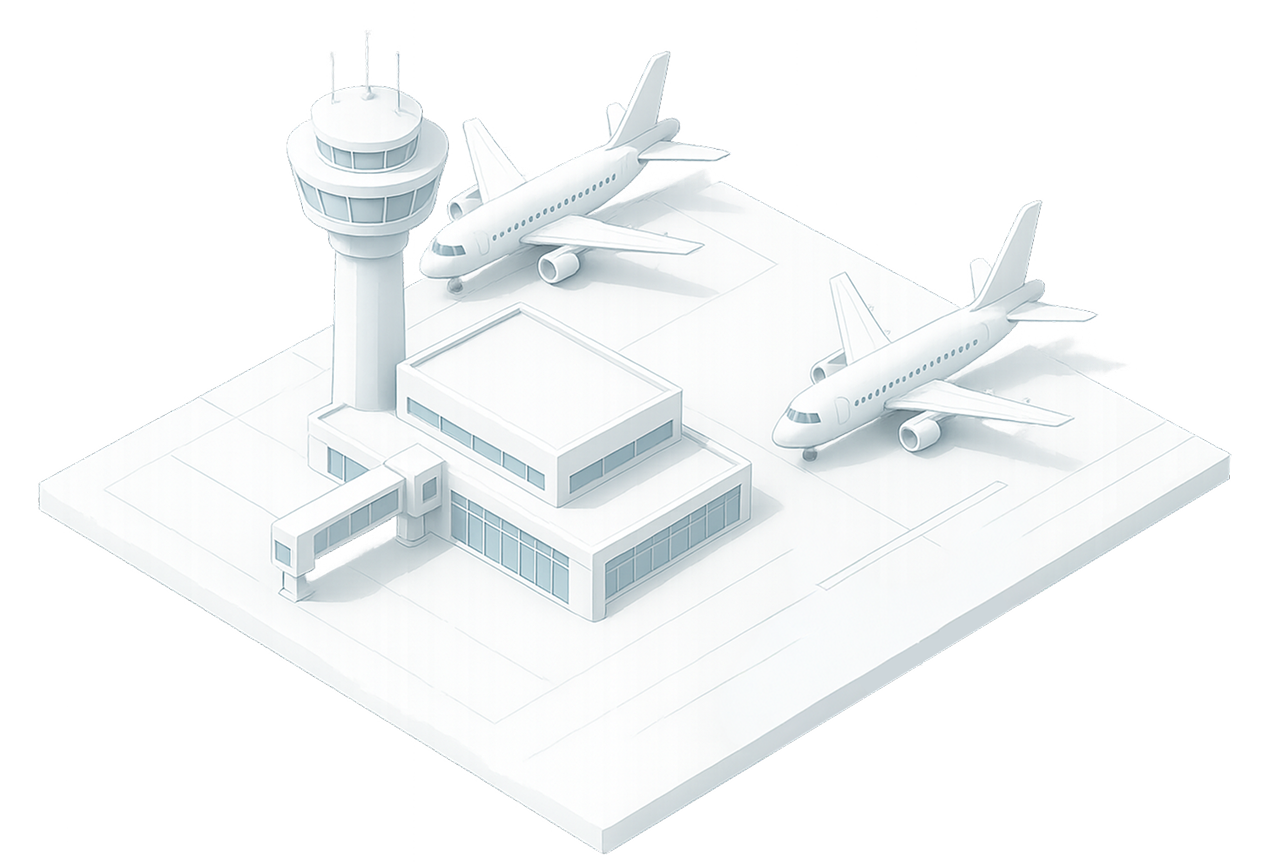

Overview of the Airport
Santa Barbara Municipal Airport (SBA) is located 7 miles west of downtown Santa Barbara, near Goleta and the University of California, Santa Barbara. It serves as a small hub primary airport and is the main gateway for air travel in Santa Barbara County.
34.42611, -119.84028
Growth Trend
Passenger traffic increased by 11.1% year-over-year in 2024, setting a new record for the airport[1][2].

Employment
1,200
Workers include airline staff, ground services, concessions, security, and municipal operations.

Global Ranking
Market Share of Major Airlines
Capacity Expansion
Expansion projects include terminal upgrades and new gates to support increasing passenger volumes and direct routes[1].

Technological Advancements
Recent investments in digital wayfinding, contactless check-in, and advanced baggage screening enhance passenger experience.
Sustainability Initiatives
Programs include solar energy installations, electric ground vehicles, and wetland conservation to reduce environmental impact.

Latest News & Updates
Recent developments and updates for Santa Barbara Municipal Airport.
2025 Airport Year in Review | Fly SBA
Santa Barbara Airport (SBA) experienced a record-breaking year in 2025, with 1,481,605 commercial passengers utilizing the airport, marking a 4.4% increase over the previous year.
Development Projects - Fly SBA
Santa Barbara Airport is currently undertaking capital development projects focused on updating technology, enhancing customer experiences, and ensuring safe, standardized operations.
SBA News - Fly SBA
The Santa Barbara Airport will host a community blood drive on March 19, 2026, from 9am to 3pm inside the Historic Ovington Terminal.
Operations Logistics & Timelines
Step-by-step process transit times for passengers and cargo.
For Clients
Passenger process times from arrival to gate.
- Arrival & Baggage Claim5-10 mins
- Security Screening1-5 mins
- TSA PreCheck (if applicable)30-60 secs
- Gate Check-in/Boarding Pass Retrieval2-7 mins
- Boarding5-10 mins
- Final Preparations1-3 mins
For Employees
Cargo handling deadlines and operational procedures.
- General Cargo Cut-off60 mins pre-departure
- Arrival Notification30 mins pre-departure
- Cargo Verification15 mins pre-departure
- Load Planning10 mins pre-departure
- Securement5 mins pre-departure
- Flight Briefing2 mins pre-departure
- Final Check1 min pre-departure
Passengers' Tips & Tricks
- 1
Utilize TSA PreCheck
If eligible, enroll in TSA PreCheck to expedite your security screening process. This allows you to keep your shoes, belts, and light jackets on, and avoids removing laptops from your carry-on bags.
- 2
Arrive Early for Security
Allow extra time for security screenings, especially during peak travel periods. The airport has two security checkpoints, one for TSA PreCheck members.
- 3
Consider Global Entry
If you frequently travel internationally, explore the Global Entry program for expedited US customs clearance. Enrollment centers are located in nearby cities.
- 4
Renew Your TSA PreCheck Membership
Ensure your TSA PreCheck membership is current to continue enjoying the benefits of faster security screening.
- 5
Check for CLEAR Lanes
While SBA doesn't have dedicated CLEAR lanes, you can utilize CLEAR if traveling from an airport that does, potentially saving time.
Cargo Tips & Tricks
- 1
Optimize Cargo Volume Planning
Due to SBA’s size and regional focus, cargo operators should meticulously plan volume projections, considering seasonal tourism fluctuations and potential charter flights. Accurate forecasting is vital for efficient resource allocation.
- 2
Secure Early Aircraft Positioning
Given the limited runway length and local airspace considerations, freight operators should proactively secure early aircraft positioning slots at SBA, particularly during peak travel seasons or when accommodating larger cargo aircraft.
- 3
Streamline Ground Handling Procedures
Santa Barbara Municipal Airport has relatively small operations, so efficient and streamlined ground handling procedures are crucial to minimize turnaround times and maximize cargo flow. Collaboration between operators and airport staff is key.
- 4
Utilize Local Ground Transportation Options
With airport transfers being readily available through taxi and ride-sharing services, freight operators should leverage these options to expedite cargo delivery to destinations within Santa Barbara and the surrounding area.
- 5
Pre-Arrival Communication is Key
Given the airport’s smaller size and the potential for limited capacity, freight operators need to establish robust pre-arrival communication channels with SBA operations to coordinate landing clearances, baggage handling, and customs procedures effectively.
Tools & Resources
Essential tools, portals, and resources for clients and partners.
Data & Reports
Official statistics, research reports, and data tracking for Santa Barbara Municipal Airport.
2023 Airport Year in Review - Fly SBA
Official report detailing passenger and flight data for the 2023 airport year, including record-breaking passenger numbers and percentage increases compared to 2022.
Santa Barbara Municipal Airport Facts & Figures
Provides a range of statistics covering passenger volumes, total number of flights, and connections to Santa Barbara Municipal Airport.
Airport Data and Information Portal
FAA's Airport Data and Information Portal, offering access to various aeronautical information and tools.
Airport Statistics Santa Barbara | Municipal | SBA
Live, constantly updated airport statistics for Santa Barbara Municipal Airport, including delay index and movement charts.
Santa Barbara Municipal Airport - Wikipedia
Wikipedia page providing general information about the airport, including location, size, and runway details.
Location & Maps
Find Santa Barbara Municipal Airport on popular mapping services.
Interactive Map
Map Legend
Loading Google Maps...
Frequently Asked Questions
Common inquiries about operations and logistics at Santa Barbara Municipal Airport.
What is the Santa Barbara Municipal Airport (SBA)?
The Santa Barbara Municipal Airport (SBA) is the Tri-County regional airport of choice, focused on exceeding expectations for safety and quality of service while meeting the air transportation and economic development needs of its customers and partners.
What services are available at SBA?
SBA offers a variety of services including airlines, flight status, food options, security wait times, parking, transportation, connection times, and assistance. It also facilitates cargo operations and courier delivery services.
How can I get to and from the Santa Barbara Airport?
You can get to and from SBA Airport using various methods, including Uber, shuttles, and private transportation. There are also courier services available for same-day pickup and delivery.
Where is the Santa Barbara Municipal Airport located?
The Santa Barbara Municipal Airport (SBA) is located at 500 James Fowler Rd, Santa Barbara, CA 93117, United States.
For More Info
Third-party resources, government portals, ratings, and more.
