Hangzhou Xiaoshan International Airport
A major gateway in the Yangtze River Delta, ranking among China's top ten busiest airports.

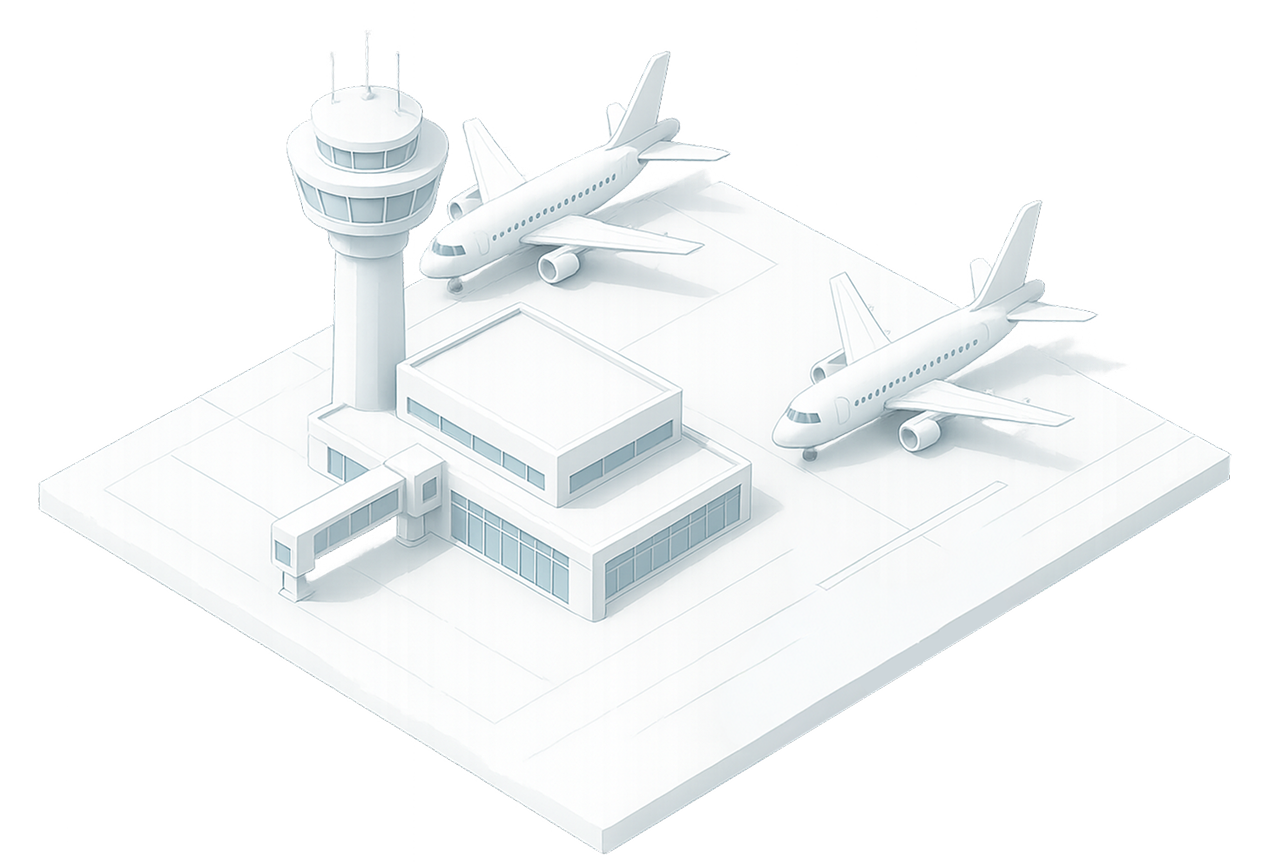

Overview of the Airport
Hangzhou Xiaoshan International Airport (HGH) is located 27 kilometers east of downtown Hangzhou, serving as a key hub for domestic and international flights in Zhejiang Province. It connects the region to major cities across Asia and beyond, supporting rapid economic growth and tourism.
30.2295, 120.4336
Growth Trend
Passenger traffic increased by 6.9% year-over-year in 2025, with international routes expanding rapidly.

Employment
18,000
Employees include airline staff, ground handlers, security, retail, and airport operations personnel.

Global Ranking
Market Share of Major Airlines
Capacity Expansion
Ongoing terminal expansions and new runways are increasing annual capacity to over 50 million passengers.

Technological Advancements
Deployment of facial recognition, smart security, and automated baggage handling enhances efficiency and safety.

Sustainability Initiatives
Implementation of solar energy systems and green building standards reduces the airport's environmental footprint.

Latest News & Updates
Recent developments and updates for Hangzhou Xiaoshan International Airport.
Hangzhou Xiaoshan International Airport handles 10.13 million passengers in 2026
Hangzhou Xiaoshan International Airport reported a significant increase in passenger traffic, handling 10.13 million passengers in 2026, marking a 5.5% year-over-year growth.
Hangzhou Xiaoshan International Cargo Airport Global Air Freight Hub
The Hangzhou Xiaoshan International Cargo Airport is a major air freight hub, operating an average of 180 cross-border flights daily and connecting to over 300 destinations worldwide.
Hangzhou Xiaoshan International Airport (IATA: HGH) - China Discovery
Hangzhou Xiaoshan International Airport, located 30km from the downtown, is a major aviation hub in Zhejiang province. The airport provides guidance, flight information, terminals, transportation, and travel tips for visitors planning a trip to Hangzhou.

Operations Logistics & Timelines
Step-by-step process transit times for passengers and cargo.
For Clients
Passenger process times from arrival to gate.
- Check-in15-45 mins
- Security20-60 mins
- Immigration5-15 mins
- Baggage Claim5-15 mins
- Gate Arrival5-10 mins
For Employees
Cargo handling deadlines and operational procedures.
- General Cargo Cut-off60 mins pre-departure
- Documentation ReviewUpon arrival at the handling counter
- Weight and Measurement VerificationAt the handling counter
- Security ScreeningAs per airport security protocols
- Cargo Booking and TaggingAt the handling counter
- Loading onto AircraftBased on flight schedule
- Customs Clearance (if applicable)As per regulations
- Warehouse Storage (if required)Temporary storage until departure
Passengers' Tips & Tricks
- 1
Arrive Early
Due to potential traffic congestion and airport procedures, it’s highly recommended to arrive at least 2-3 hours before your international flight departure to ensure a smooth and stress-free experience.
- 2
Utilize the Metro
The Hangzhou Xiaoshan International Airport is easily accessible via the Metro. Line 3 connects directly to the airport, offering a fast and affordable transportation option from the city center.
- 3
Taxi/Rideshare Options
Taxis and rideshare services (like Didi) are readily available outside the airport terminals. Ensure the driver uses the meter or confirm the fare beforehand to avoid unexpected costs.
- 4
Check Time Zone Difference
Hangzhou operates on China Standard Time (CST), which is UTC+8. Be aware of the 8-hour time difference compared to destinations like London to avoid scheduling errors.
- 5
Airport Location & Travel Time
The airport is located in Xiaoshan District, approximately 27 km from the city center. Driving to the city center typically takes around 35 minutes, depending on traffic conditions.
Cargo Tips & Tricks
- 1
Book in Advance
Air freight capacity at Hangzhou Xiaoshan International Airport (HGH) fluctuates significantly. Booking shipments well in advance – ideally 2-4 weeks – ensures greater availability, particularly during peak seasons and for specific routes, maximizing your chances of securing space and favorable rates.
- 2
Leverage the Hub Status
HGH is a major air freight hub in the Yangtze River Delta, connecting to over 300 destinations globally. Utilize this strategic location to efficiently route your cargo to key markets, especially within Asia, Europe, and the Americas. Collaboration with airlines serving these routes is key.
- 3
Utilize Ground Handling Services
Partner with experienced ground handling companies like JSID or other providers operating at HGH to streamline your cargo operations. Their services – including passenger handling, aircraft management, and truck flights – can significantly reduce turnaround times and operational complexities.
- 4
Understand Regional Focus
Given HGH’s strong focus on markets like Japan, Southeast Asia, and Europe & America, tailoring your cargo offerings to these regions can be highly beneficial. Aligning your shipments with the airport’s established trade flows optimizes transportation efficiency.
- 5
Consider Port Proximity
The airport’s proximity to Jiaxing/Zhapu Seaport (73km) offers opportunities for combined sea-air logistics. Explore integrating your shipments with maritime transport for enhanced supply chain flexibility and cost-effectiveness, especially for larger cargo volumes.
Tools & Resources
Essential tools, portals, and resources for clients and partners.
Data & Reports
Official statistics, research reports, and data tracking for Hangzhou Xiaoshan International Airport.
Airport Statistics Hangzhou | Xiaoshan | HGH
Provides real-time arrival and departure data, a delay index, and airport movement charts for Hangzhou Xiaoshan International Airport.
杭州萧山机场门户网站 - hzairport
Official portal website for Hangzhou Xiaoshan International Airport, providing information about the airport's operations, passenger services, and facilities.
Hangzhou Xiaoshan Airport (HGH) | Key Data & 2025 Insights
Offers key data points and insights, including passenger and cargo traffic figures, for Hangzhou Xiaoshan International Airport.
Airport Statistics Hangzhou | Xiaoshan | HGH
Contains detailed flight data and statistics for Hangzhou Xiaoshan International Airport, including delay indices and charts.
Hangzhou (HGH) - Air China Cargo Co., Ltd.
Details the cargo terminal of Air China Cargo Co., Ltd. at Hangzhou Xiaoshan International Airport, including floor area, storage capacity, and annual cargo processing capacity.
Location & Maps
Find Hangzhou Xiaoshan International Airport on popular mapping services.
Interactive Map
Map Legend
Loading Google Maps...
Frequently Asked Questions
Common inquiries about operations and logistics at Hangzhou Xiaoshan International Airport.
How long does passenger processing take?
Passenger processing at HGH typically takes between 30 and 60 minutes for domestic flights and 60 to 90 minutes for international flights. This time includes security checks, baggage drop-off, and immigration procedures. Peak hours may slightly extend processing times.
What cargo services are available?
HGH offers comprehensive cargo handling services, including warehousing, sorting, and customs clearance. The airport supports both general cargo and specialized freight, with connections to major global trade routes. Dedicated cargo terminals ensure efficient handling of shipments.
How can I access the airport?
Multiple transportation options are available to reach HGH, including the Metro Line 2, buses, and taxis. The airport also has a dedicated airport express service. Ride-sharing services are available at designated pick-up points.
For More Info
Third-party resources, government portals, ratings, and more.
