Josep Tarradellas Barcelona–El Prat Airport
Spain's second-busiest airport, serving as a major Mediterranean gateway for Europe, Africa, and the Americas.


Overview of the Airport
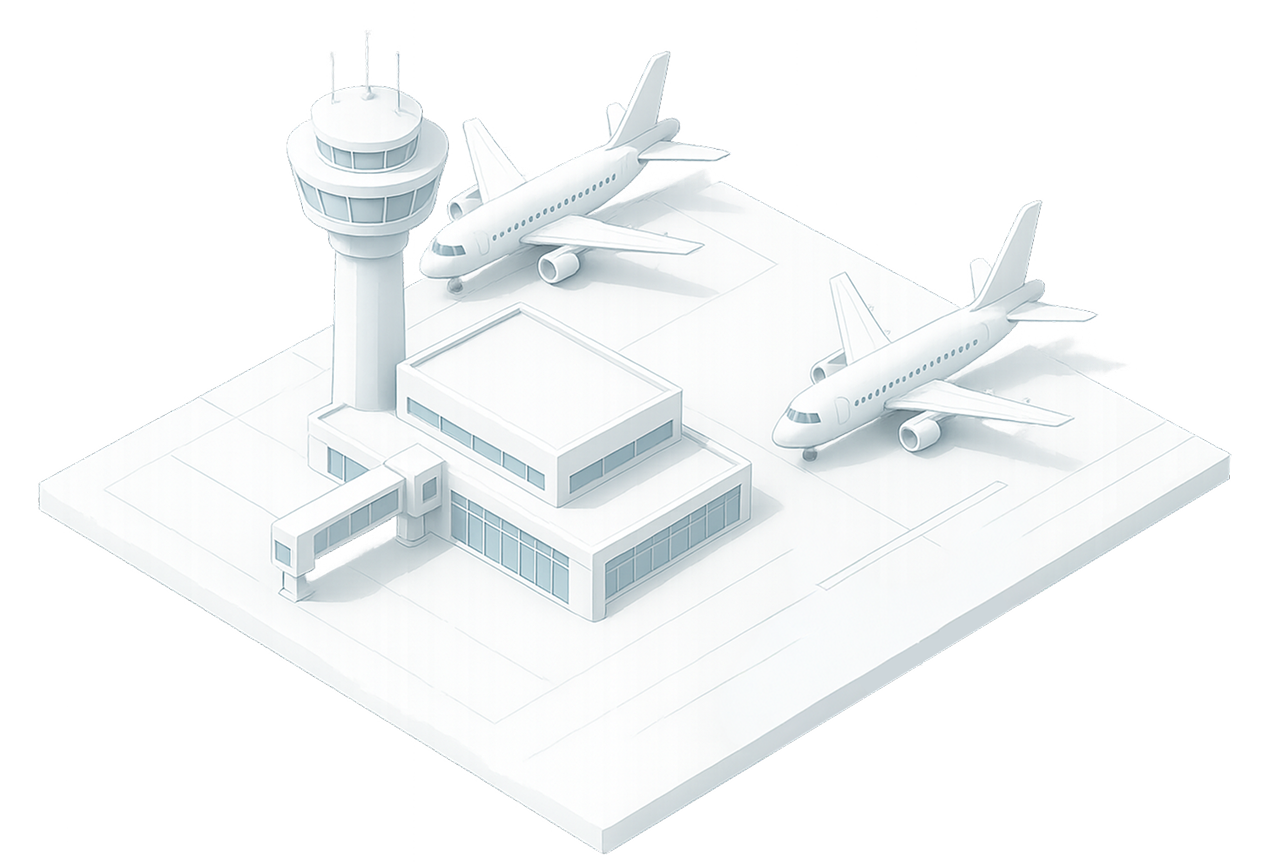
Josep Tarradellas Barcelona–El Prat Airport (BCN) is located 12 km southwest of central Barcelona. It is the primary international airport for Catalonia and a key hub for Vueling and Level, offering extensive connections across Europe and beyond.
41.2971, 2.0785
Growth Trend
Passenger traffic increased by 4.1% year-over-year, continuing a record-breaking trend in 2025.

Employment
20,000
Workers include airline staff, ground handlers, security, concessions, and airport management.

Global Ranking
Market Share of Major Airlines
Capacity Expansion
Ongoing terminal expansions and airfield upgrades are increasing capacity for both passengers and cargo.

Technological Advancements
Deployment of biometric boarding, automated security lanes, and digital wayfinding enhances efficiency and passenger flow.
Sustainability Initiatives
Implementation of solar energy, electric ground vehicles, and sustainable aviation fuel programs supports environmental goals.

Latest News & Updates
Recent developments and updates for Josep Tarradellas Barcelona–El Prat Airport.
Barcelona Airport announces €400 million investment to improve passenger experience
BCN has announced a significant investment of €400 million aimed at enhancing the passenger experience through improvements to terminal layouts, digital services, and sustainability initiatives. The project is expected to alleviate congestion and modernize the airport's facilities.
Barcelona Airport to use AI to ‘predict’ passenger flows and improve efficiency
BCN is piloting an AI-powered system designed to predict passenger flow and optimize resource allocation, aiming to reduce wait times and streamline operations. This technology is intended to adapt in real-time to changing demand patterns.
BCN to open new baggage drop-off area in Terminal 1
A new self-service baggage drop-off area is set to open in Terminal 1 of BCN, offering passengers a quicker and more convenient way to check in their luggage. The move is part of an ongoing effort to reduce congestion and improve passenger flow within the airport.
Operations Logistics & Timelines
Step-by-step process transit times for passengers and cargo.
For Clients
Passenger process times from arrival to gate.
- Arrival at Terminal to Baggage Claim10-30 mins
- Baggage Claim to Customs15-45 mins
- Customs to Passport Control5-15 mins
- Passport Control to Meet and Greet/Transfer Point5-15 mins
- Meet and Greet/Transfer Point to Gate10-30 mins
For Employees
Cargo handling deadlines and operational procedures.
- General Cargo Cut-off - Domestic90 mins pre-departure
- General Cargo Cut-off - International60 mins pre-departure
- Dangerous Goods Submission Deadline48 hours pre-departure
- Live Animals Cut-off90 mins pre-departure
- Oversized Cargo Cut-off72 hours pre-departure
- Palletized Cargo Cut-off90 mins pre-departure
- Hand Baggage Cut-off30 mins pre-departure
- Passenger Boarding Cut-off15 mins pre-departure
- Aircraft Turnaround Time (Domestic)90 mins
- Aircraft Turnaround Time (International)120 mins
- Security Checkpoint Cut-off60 mins pre-departure
- Contact Airport Operations for Specific RequirementsAs Required
Passengers' Tips & Tricks
- 1
Utilize the Fast Track Security Lanes
BCN has several Fast Track security lanes available for passengers with Priority Pass, VIP Lounge access, or who purchase a separate Fast Track service. This can significantly reduce your wait time during security checks, especially during peak hours.
- 2
Take Advantage of the Aerobus
The Aerobus is a fast and affordable way to get from BCN to Plaça Catalunya in the city center. It’s a direct route and avoids potential traffic congestion, and tickets can be purchased online or at the airport.
- 3
Explore the Food Options Beyond the Main Terminal
While the main terminal offers a variety of restaurants, consider exploring the shops in Terminal 1 for additional food options like street food vendors and smaller cafes, often with more reasonable prices.
- 4
Check for Mobile Check-in & Bag Drop
If your airline offers mobile check-in and bag drop, utilize it to save time at the check-in counters. This is particularly useful for airlines like Vueling and Ryanair.
- 5
Be Aware of Luggage Storage Facilities
If you anticipate arriving early or departing late, consider using one of the luggage storage facilities located within the airport. Several reputable companies offer secure storage options for your belongings.
Cargo Tips & Tricks
- 1
Utilize the Dedicated Cargo Terminal
BCN Airport boasts a dedicated cargo terminal (T2) specifically designed for freight operations. Utilizing this terminal streamlines customs procedures, reduces wait times, and offers specialized handling services compared to the passenger terminals.
- 2
Leverage the Airport's Customs Efficiency
Josep Tarradellas Airport has implemented initiatives to expedite customs clearance for cargo shipments. Familiarize yourself with the documentation requirements and utilize the online pre-clearance options where available to minimize delays.
- 3
Consider Shipping Options for Quick Transit
BCN offers various cargo transport modes including air freight, road freight, and sea freight connections. Evaluate your shipping needs carefully to select the most efficient option for your timeline and cargo type. Consider express services for urgent deliveries.
- 4
Pre-Arrange Handling and Storage
To avoid potential issues upon arrival, proactively arrange for cargo handling and storage services in advance. Several reputable logistics providers operate within the airport vicinity and can offer secure storage, consolidation, and distribution services.
- 5
Stay Updated on Regulations and Procedures
International trade regulations and airport procedures can change. Regularly check the AENA (Aeropuertos de España y Andorra) website and relevant customs authorities for the most up-to-date information on import/export requirements, security protocols, and any specific restrictions for your cargo shipment.
Tools & Resources
Essential tools, portals, and resources for clients and partners.
Data & Reports
Official statistics, research reports, and data tracking for Josep Tarradellas Barcelona–El Prat Airport.
AENA - Josep Tarradellas Barcelona – El Prat Airport
Official AENA page detailing passenger statistics, airport operations, and overall airport information.
Barcelona Airport (BCN) | Josep Tarradellas El Prat Info
Information page from UnisCo highlighting the airport's growth and key features.
Business data on Josep Tarradellas Barcelona - El Prat ...
AENA data on passenger numbers, operations, and cargo transported at the airport.
Josep Tarradellas Barcelona–El Prat Airport - Wikipedia
Wikipedia page providing a comprehensive overview of the airport, including its history, location, and key data.
Location & Maps
Find Josep Tarradellas Barcelona–El Prat Airport on popular mapping services.
Interactive Map
Map Legend
Loading Google Maps...
Frequently Asked Questions
Common inquiries about operations and logistics at Josep Tarradellas Barcelona–El Prat Airport.
What is the typical passenger process for arriving and departing from Josep Tarradellas Barcelona–El Prat Airport (BCN)?
Arrival: Passengers arriving at BCN will typically proceed through Passport Control, Baggage Claim, and Customs. Departing: Passengers departing from BCN will go through Check-in, Security Screening, and finally, to their boarding gate. Allow ample time for security and customs, especially during peak travel periods. The airport is divided into terminals (T1, T2, T3) with transfers available.
What cargo handling services are available at BCN?
BCN offers a wide range of cargo handling services through its dedicated cargo terminal (T2C). These include freight forwarding, warehousing, customs brokerage, trucking, and airside storage. The airport supports both full freighter and general cargo operations, connecting Europe to global markets.
What transport options are available to and from Josep Tarradellas Barcelona–El Prat Airport?
BCN is well-connected by various transport modes: The Aerobus provides a rapid service to Plaça de Catalunya and other key locations in Barcelona. Metro Line L9 Sud connects the airport to the city center. Numerous bus lines operate to surrounding areas. Taxi stands and ride-sharing services are readily available. Rental car companies are located within the airport.
Does BCN offer a dedicated 'Green Route' initiative to minimize environmental impact?
Yes, BCN has a robust ‘Green Route’ program focused on sustainability. This encompasses initiatives like the use of renewable energy, electric vehicles for airport operations, optimized logistics to reduce emissions, and collaborations with airlines and businesses to minimize carbon footprints. BCN is committed to achieving carbon neutrality by 2050.
For More Info
Third-party resources, government portals, ratings, and more.
