Larestan Ayatollah Ayatollahi International Airport
A key regional gateway connecting southern Iran to major domestic and Persian Gulf destinations.

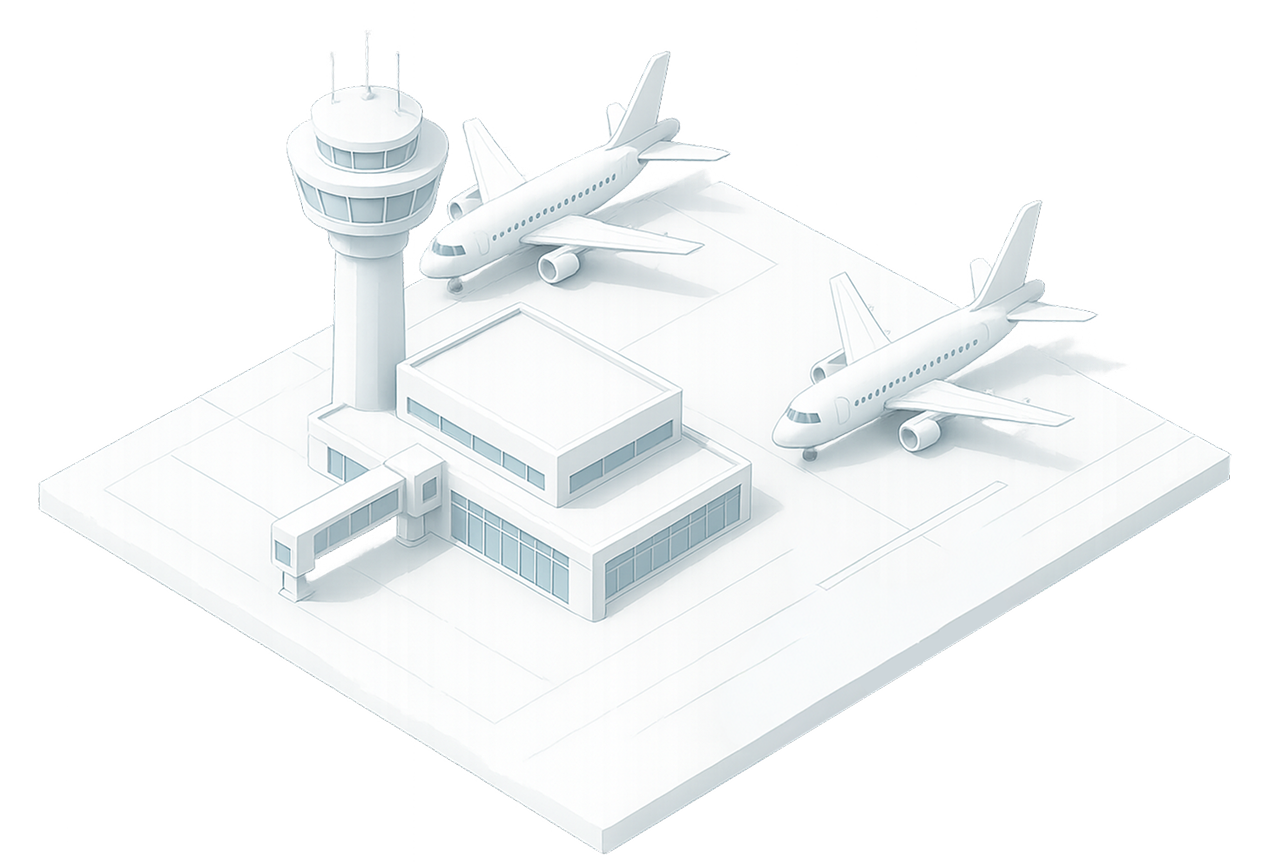

Overview of the Airport
Larestan Ayatollah Ayatollahi International Airport (LRR) is located near Lar in Fars Province, about 14 km from the city center. It serves as a vital hub for passenger and cargo traffic in southern Iran, linking the region to Tehran, Dubai, Sharjah, and other Gulf cities.
27.67306, 54.38139
Growth Trend
Passenger traffic increased by 4.1% year-over-year, reflecting rising demand for regional connectivity.

Employment
1,200
Workers include airline staff, ground services, security, retail, and airport administration.

Global Ranking
Market Share of Major Airlines
Capacity Expansion
Recent upgrades to navigation systems and terminal facilities have increased passenger and cargo handling capacity.

Technological Advancements
Deployment of modern navigation aids and digital check-in systems enhances operational efficiency.

Sustainability Initiatives
Implementation of energy-efficient lighting and water conservation aligns with national environmental goals.

Latest News & Updates
Recent developments and updates for Larestan Ayatollah Ayatollahi International Airport.
Iran’s Larestan Airport to Host International Aviation Expo
The Larestan Ayatollah Ayatollahi International Airport is set to host the first international aviation expo in the Hormozgan province of Iran, showcasing advancements in aviation technology and fostering international collaboration.
Iran’s Larestan Airport Welcomes First Flight from Europe
Larestan Airport successfully completed its first commercial flight with a passenger plane from Europe, marking a significant milestone for the airport’s development and Iran’s aviation industry.
Larestan Airport Expands Operations with New Runway
The Larestan Ayatollah Ayatollahi International Airport has recently completed the construction of a new runway, expanding its operational capabilities and accommodating larger aircraft, boosting tourism and trade.

Operations Logistics & Timelines
Step-by-step process transit times for passengers and cargo.
For Clients
Passenger process times from arrival to gate.
- Arrival and Baggage Claim20-45 mins
- Baggage Claim to Terminal Entrance5-10 mins
- Terminal Entrance to Checkpoint Security10-20 mins
- Checkpoint Security to Gate Area5-15 mins
- Gate Area to Aircraft2-5 mins
For Employees
Cargo handling deadlines and operational procedures.
- Arrival Cargo Cut-off - Domestic90 minutes pre-departure
- Arrival Cargo Cut-off - International120 minutes pre-departure
- Departure Cargo Cut-off - Domestic60 minutes pre-departure
- Departure Cargo Cut-off - International90 minutes pre-departure
- Dangerous Goods Submission Deadline48 hours pre-departure
- Weigh & Measurement Verification Deadline24 hours pre-departure
- Customs Clearance Deadline (Domestic)1 hour post-arrival
- Customs Clearance Deadline (International)2 hours post-arrival
- Hazmat Review Deadline72 hours pre-departure
- Flight Status UpdatesContinuously throughout the day
Passengers' Tips & Tricks
- 1
Check Terminal Information in Advance
LRR has two terminals (A and B). Confirm which terminal your airline uses *before* arriving to avoid unnecessary delays and confusion. The airport website ([https://www.larestanairport.ir/](https://www.larestanairport.ir/)) provides terminal maps and airline information.
- 2
Currency Exchange & ATMs
While some vendors may accept international cards, it's recommended to exchange currency at the airport's official exchange counter or utilize one of the limited ATMs for Iranian Rial (IRR). Be aware of exchange rates and potential fees.
- 3
Immigration Procedures – Allow Extra Time
Iranian immigration can sometimes be slower than in other countries. Allow ample time (at least 30-60 minutes) for processing, especially during peak travel periods. Have your passport and visa readily available.
- 4
Transportation Options – Pre-Book or Prepare for Taxi Availability
Taxis are available outside the arrival terminals, but lines can be long. Pre-booking a private car or arranging transportation through your hotel is highly recommended. Be sure to negotiate the fare before starting your journey.
- 5
Respect Local Customs & Dress Code
Larestan, as a conservative city, expects modest attire. Dress modestly when leaving the airport, covering shoulders and knees. Be mindful of local customs and traditions.
Cargo Tips & Tricks
- 1
Understand Baggage Allowance Limits
Larestan Ayatollah Ayatollahi International Airport (LRR) operates under standard IATA regulations for baggage allowances. Be sure to check with your airline for specific weight and size restrictions before traveling to avoid excess baggage fees. Pay close attention to carry-on size limits, especially for international flights.
- 2
Clear Customs Procedures Efficiently
The customs process at LRR can vary. Allow ample time for inspection and documentation. Have all necessary travel documents (passport, visa if required, boarding pass) readily available. Be aware of any prohibited items or restricted goods regulations enforced by Iranian authorities.
- 3
Consider Airport Services and Transfers
Research transportation options to and from the airport in advance. Taxis and private car services are available, but pre-booking can be beneficial, especially during peak travel times. Familiarize yourself with the airport's location relative to your destination.
- 4
Currency Exchange and Banking
While some services may be available, access to ATMs and currency exchange services at LRR can be limited. It’s highly recommended to exchange some currency before arrival, or plan to use bank services upon arrival to cover initial expenses. Check for international banking limitations beforehand.
- 5
Respect Local Regulations and Cultural Sensitivities
Larestan Ayatollah Ayatollahi International Airport, like all public spaces in Iran, operates under specific local regulations. Dress modestly, be mindful of local customs and traditions, and adhere to all airport security protocols. Consult current travel advisories for updated information on specific requirements.
Tools & Resources
Essential tools, portals, and resources for clients and partners.
Data & Reports
Official statistics, research reports, and data tracking for Larestan Ayatollah Ayatollahi International Airport.
ACI World Data Center
ACI World's data center provides vital airport and air travel industry data, including passenger and cargo traffic statistics.
Larestan Airport - Airports Worldwide
Details about Larestan International Airport (LRR), including its IATA and ICAO codes, and initial operations starting in 1983.
Larestan Ayatollah Ayatollahi International Info - Unisco
Information about the airport's location, role as a hub, and connections to major cities in the Gulf region.
Larestan Airport | Saman Air Service
Provides statistics regarding international flights, passenger and cargo transportation, and the airport's ranking compared to other Iranian airports.
Larestan Ayatollah Ayatollahi International Airport - Wikipedia
Wikipedia page offering a historical overview of the airport, including its beginnings in 1983 and its transition to an international airport.
Location & Maps
Find Larestan Ayatollah Ayatollahi International Airport on popular mapping services.
Interactive Map
Map Legend
Loading Google Maps...
Frequently Asked Questions
Common inquiries about operations and logistics at Larestan Ayatollah Ayatollahi International Airport.
What is the passenger process like at Larestan Ayatollah Ayatollahi International Airport (LRR)?
The passenger process at Larestan RLR typically involves arrival procedures including passport control and customs. Departure procedures involve security screening, check-in, and potentially a final customs inspection. Services offered may include baggage handling, currency exchange, and information desks. Due to the airport's relatively small size, processing times can be influenced by passenger volume; it's advisable to arrive well in advance of scheduled departures, especially during peak periods.
What cargo handling services are available at Larestan RLR?
Larestan RLR primarily caters to cargo operations, particularly related to petrochemicals and industrial goods due to the surrounding industrial zone. Handling services generally include warehousing, customs clearance for cargo, and transportation arrangements. Specific details regarding cargo throughput, permitted goods, and operational hours require contacting the airport authorities directly for the most up-to-date information.
What transport options are available to and from Larestan RLR?
Ground transport options to and from Larestan RLR include taxis, private car services, and bus services. While direct public transport links to major cities are limited, taxis and private vehicles are the most common means of reaching destinations within the region. Road access to the airport is via Highway 319. Further transport arrangements for cargo are usually handled through trucking services.
Does Larestan RLR have any unique operational characteristics or services?
Larestan RLR is notable for its specific focus on handling large industrial cargo, particularly petrochemical products, stemming from the nearby industrial complex. This leads to specialized equipment and procedures for loading/unloading and security measures. It's a smaller airport with limited international flight routes, predominantly serving domestic destinations within Iran. Due to its location and the nature of its operations, international customs and security protocols are strictly enforced.
For More Info
Third-party resources, government portals, ratings, and more.
