Decision-Making Gaps Persist Despite Technology Investment in Freight

Sarah Williams
Operational Insights: The State of Freight Decision-Making
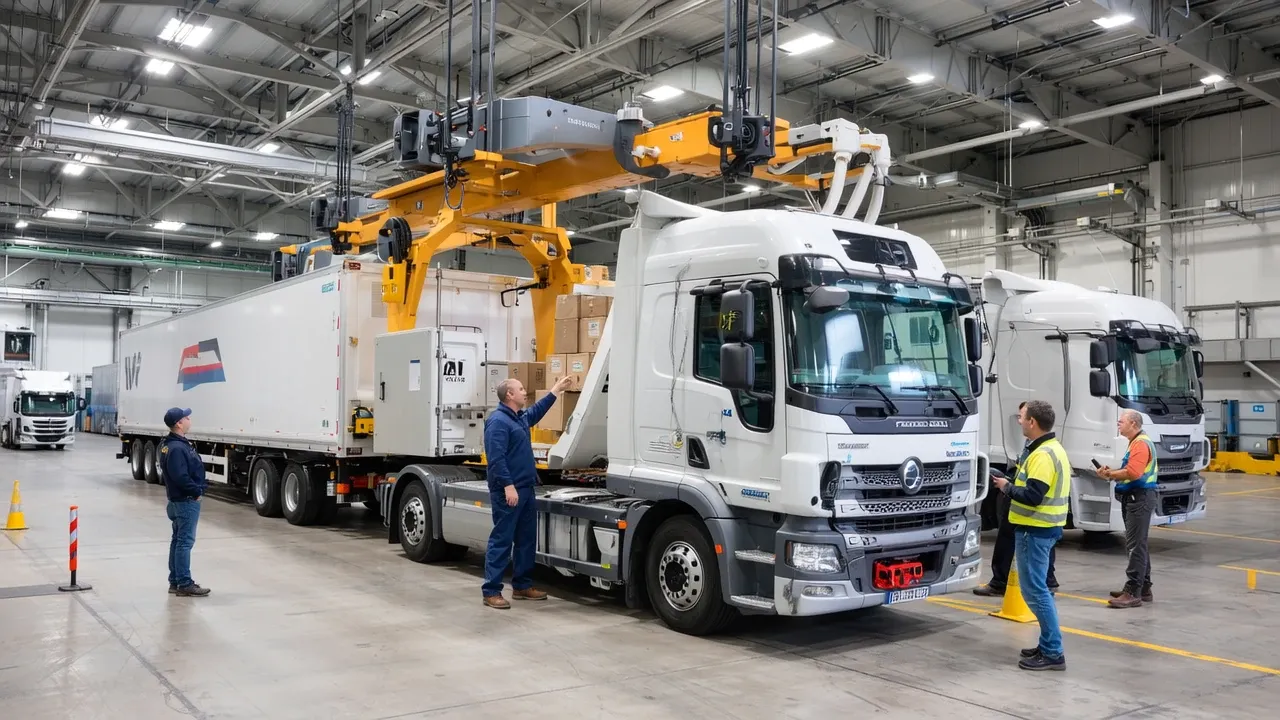
A recent analysis by Magaya highlights a persistent gap between technology adoption and operational effectiveness within the freight industry. The findings indicate that a significant majority of freight firms do not rate their internal decision-making processes as excellent. Specifically, only 13% of freight firms reported high satisfaction with their current decision-making capabilities. This suggests that while investment in technology is occurring, the integration and application of these tools are not yet translating into optimal operational outcomes.
This trend is particularly noteworthy given the increasing complexity of global supply chains. Modern logistics demands real-time data synthesis, predictive modeling, and rapid adaptation to market volatility. Firms are clearly investing in digital infrastructure, yet the bottleneck appears to be in the cognitive and systemic layers of how decisions are made using that data. This challenge touches upon core areas such as freight-systems-integration and the effective use of advanced analytical tools.
The industry faces pressures from various regulatory and economic shifts. For instance, fluctuations in global trade patterns, as monitored by organizations like the USTR, require highly agile responses. Furthermore, the evolving landscape of liability, such as considerations around the freight-broker-liability-ruling, necessitates robust, data-driven decision frameworks rather than reactive measures. The push toward better visibility, often supported by freight-tracking-systems, is not inherently solving the decision-making problem if the data silos remain intact.
Improving decision quality requires more than just installing new software; it demands a fundamental rethinking of how data flows across the entire operational ecosystem. This includes ensuring seamless communication between disparate systems, from initial quoting to final delivery confirmation. Effective management of complex variables, such as those encountered in FCL Ocean Freight, relies heavily on integrated intelligence. As the industry moves toward greater automation, the ability to interpret complex data sets—perhaps through advanced applications like freight-cognitive-engineering—becomes a critical differentiator. The findings from this study here underscore that technological investment alone is insufficient without corresponding improvements in process architecture and human capital utilization.
Explore More Articles
The Path Forward: Integration and Intelligence
The disparity between technology spend and decision quality points toward critical opportunities in integration. Many firms possess individual technological components—a TMS, a WMS, a visibility platform—but these components often operate in silos. True operational excellence in logistics is achieved when these systems communicate fluidly, creating a unified operational picture. This concept is central to achieving robust freight-systems-integration.
To move beyond the 13% satisfaction rate, firms must focus on holistic integration. This involves connecting transactional data (like invoicing and payment) with operational data (like transit times and capacity). For example, integrating freight-accounting-systems-integration directly with real-time shipment status allows for immediate, accurate financial reconciliation, reducing administrative lag and improving forecasting accuracy. This level of connectivity is vital for managing the financial complexities inherent in international trade, including terms like Cost, Insurance, and Freight (CIF)-.
Furthermore, the adoption of Artificial Intelligence (AI) must move beyond simple automation. AI's value is realized when it can synthesize disparate data points to offer probabilistic insights—predicting delays, optimizing routing, or flagging potential compliance risks before they materialize. This moves the function from data reporting to prescriptive guidance. While the industry is investing, the next phase requires sophisticated application of these tools to enhance freight-network-redundancy and overall resilience. Regulatory bodies, such as the Department of Transportation (DOT), continue to emphasize the need for transparent and reliable operations, making proactive, intelligent decision-making a compliance necessity, not just a competitive edge. Supporting data from the Bureau of Labor Statistics (BLS) on industry labor trends further suggests that leveraging technology to augment human decision-making is a strategic imperative.
Loading comments...